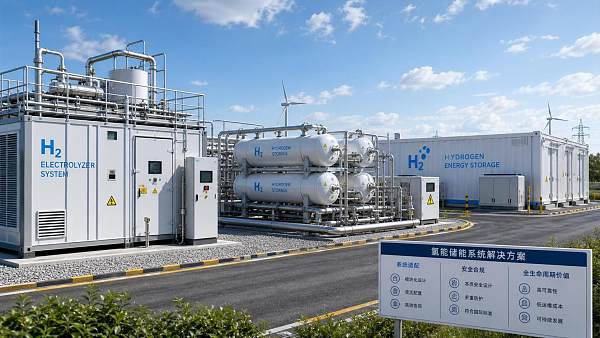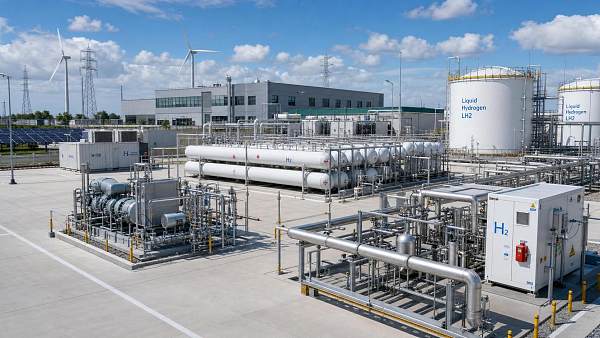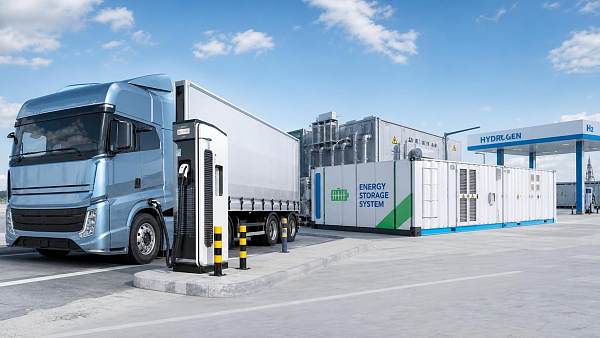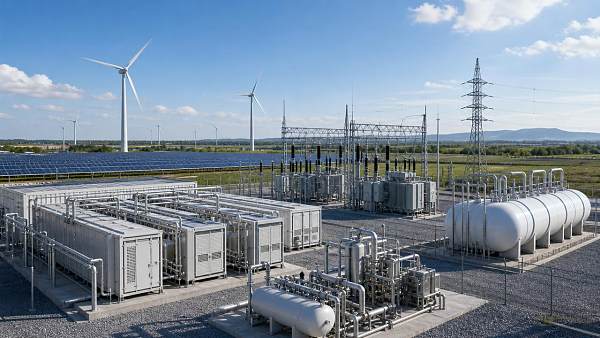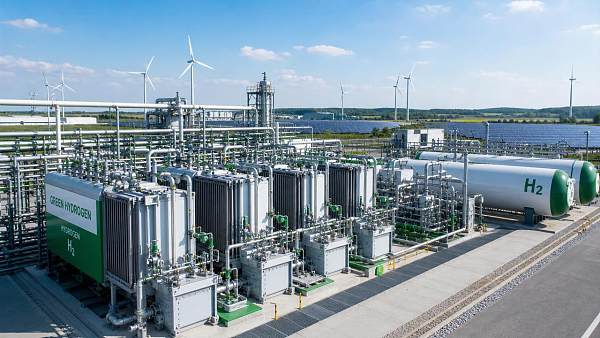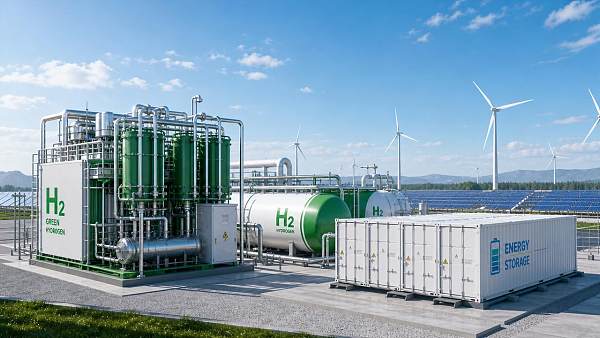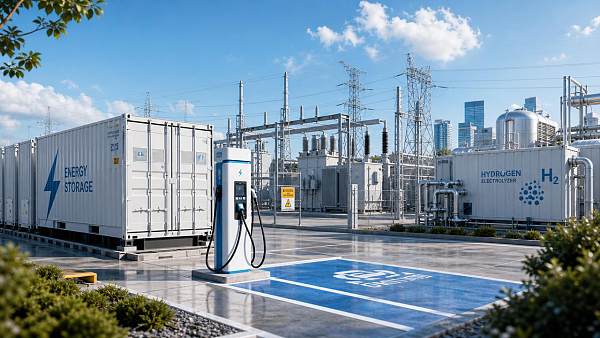
As 2026 approaches, hydrogen energy infrastructure is moving from pilot ambition to board-level scrutiny. For enterprise decision-makers, the real question is no longer whether hydrogen will scale, but whether supply chains, safety standards, grid integration, and investment models are ready for reliable deployment.
This article examines the key risks, readiness signals, and strategic choices shaping hydrogen infrastructure in a fast-evolving global energy landscape. It focuses on what matters most to decision-makers: deployment confidence, commercial viability, operational risk, and timing.
What enterprise decision-makers are really asking in 2026
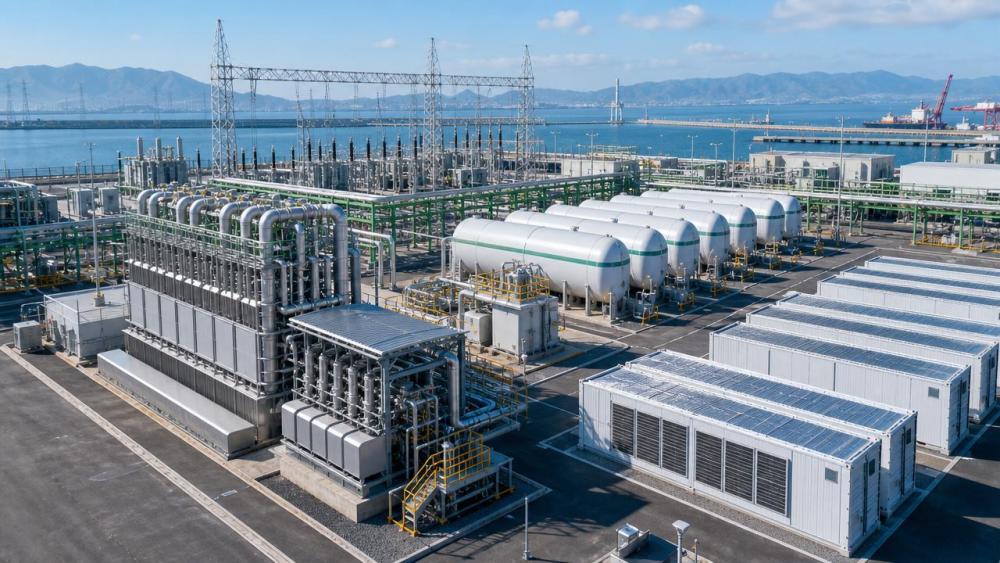
The core search intent behind hydrogen energy infrastructure is practical, not academic. Decision-makers want to know whether the market is ready for scaled investment, where the bottlenecks remain, and how to separate credible opportunities from policy-driven hype.
By 2026, hydrogen is no longer judged only by its long-term decarbonization promise. It is judged by infrastructure readiness across power supply, electrolyzer delivery, transport logistics, storage integrity, permitting, safety compliance, and end-use demand certainty.
For boards, infrastructure risk is now a timing question as much as a technology question. Investing too early can trap capital in underutilized assets, while waiting too long can mean losing industrial positioning, offtake contracts, and strategic market access.
The most useful way to assess hydrogen energy infrastructure is to ask one simple question: can this project move from engineered concept to dependable cash-generating operation within a realistic risk envelope?
Overall readiness in 2026: stronger than pilot stage, weaker than full industrial maturity
The short answer is that hydrogen infrastructure in 2026 is materially more mature than it was three years ago, but still uneven across regions, applications, and value-chain segments. Readiness exists, yet it is selective rather than universal.
Electrolyzer manufacturing capacity has expanded, project pipelines have become more sophisticated, and more industrial buyers now treat hydrogen as part of procurement strategy rather than a public-relations experiment. That is meaningful progress.
However, real deployment readiness still depends on local electricity economics, grid access, water availability, transport distance, permitting speed, safety capabilities, and bankable offtake structures. Hydrogen success remains highly site-specific.
For enterprise leaders, this means hydrogen should not be evaluated as a single global market. It should be assessed as a portfolio of infrastructure conditions, where some use cases are nearing commercial discipline and others remain structurally premature.
Where the biggest infrastructure risks still sit
The biggest risks in hydrogen energy infrastructure are no longer limited to technical feasibility. The harder problems now involve coordination risk across multiple systems that must all function together at industrial scale.
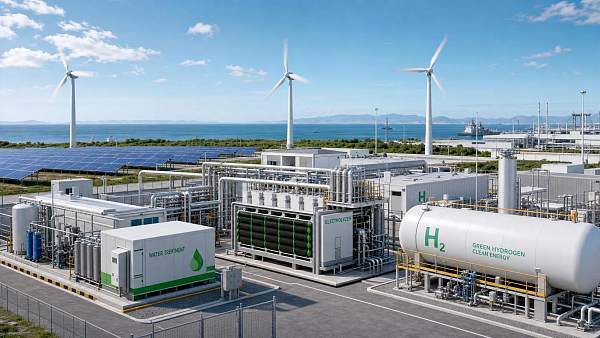
First, electricity sourcing remains decisive. Green hydrogen depends on stable access to low-carbon power at predictable prices. If renewable power is intermittent, grid-constrained, or exposed to volatile tariffs, hydrogen production economics quickly deteriorate.
Second, transport and storage can undermine otherwise attractive projects. Hydrogen has low volumetric energy density, which makes compression, liquefaction, pipeline transport, or derivative conversion expensive and infrastructure-intensive.
Third, demand risk is still substantial. Many announced hydrogen projects rely on future industrial demand assumptions, but buyers often remain cautious unless pricing, volume commitments, and reliability guarantees are contractually clear.
Fourth, supply-chain fragility continues to affect execution. Electrolyzers, balance-of-plant components, compression systems, power electronics, specialized valves, and high-integrity storage equipment all face procurement and quality-control pressure.
Fifth, safety and compliance are board-level risks, not operational footnotes. Hydrogen’s flammability range, leakage behavior, and material compatibility issues demand stronger design discipline, hazard analysis, and emergency response planning than many organizations initially expect.
Why grid integration is becoming a make-or-break issue
One of the most underestimated aspects of hydrogen energy infrastructure is its relationship with the grid. Electrolyzers do not operate in a vacuum. Their economics and reliability are tightly linked to transmission access, curtailment patterns, and power quality.
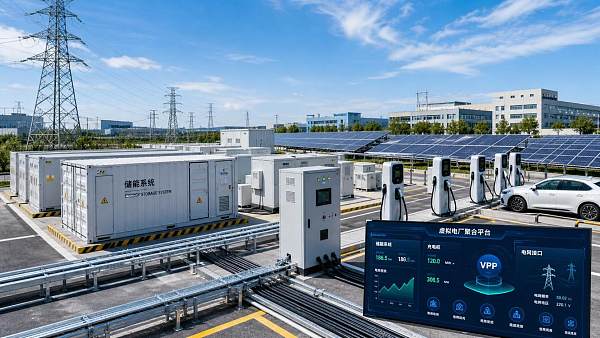
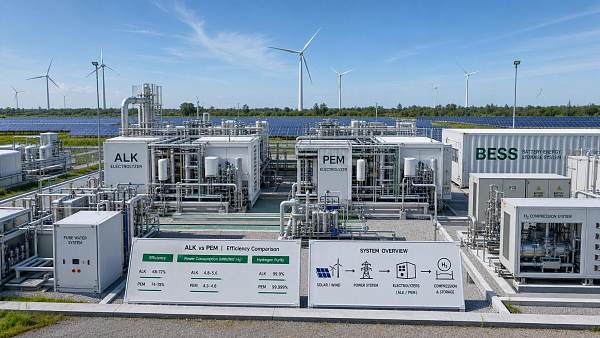
In many markets, the best hydrogen projects are not simply attached to renewable generation. They are integrated into broader energy systems where battery storage, smart dispatch, and flexible load management improve electrolyzer utilization and reduce power-cost volatility.
This matters because low utilization can destroy project economics. Electrolyzers are capital-intensive assets, so they need enough operating hours or enough margin per operating hour to justify investment. Grid limitations can weaken both.
That is why sophisticated developers increasingly pair hydrogen planning with BESS containers, digital energy management, and transmission strategy. The question is no longer just whether power is green, but whether power is deliverable, controllable, and bankable.
For industrial buyers, this creates a major screening criterion. A hydrogen project with weak grid visibility may look competitive in a presentation deck, but fragile in real operations once curtailment, congestion, or ancillary power costs appear.
Safety readiness: the difference between demonstration and durable scale
Hydrogen infrastructure cannot scale credibly without visible safety maturity. Enterprise decision-makers should treat safety readiness as a core indicator of project quality, institutional capability, and long-term insurability.
By 2026, the market is improving. More operators now incorporate leak detection, ventilation design, separation distances, pressure management, and material selection into early engineering rather than late-stage retrofits. This is a healthy sign.
Still, readiness is inconsistent. Inexperienced project teams may underestimate how hydrogen affects piping integrity, sealing systems, compression design, ignition control, and maintenance protocols. These gaps can delay approval or increase lifecycle risk.
The strongest projects tend to show three things early: clear compliance mapping, experienced EPC and safety engineering partners, and scenario-based risk planning for commissioning, routine operations, and incident response.
For boards, the practical takeaway is simple. If safety planning is presented as a generic compliance checklist rather than a detailed operational discipline, the project is probably less mature than claimed.
Commercial readiness depends on end-use, not hydrogen alone
Hydrogen energy infrastructure becomes investable when the end-use case is disciplined. This means decision-makers should evaluate hydrogen through the lens of specific industrial demand segments, not broad decarbonization narratives.
Some sectors show clearer near-term readiness. Refining, ammonia, methanol, certain steel pathways, backup industrial feedstock substitution, and selected heavy transport corridors can support more credible infrastructure planning than diffuse general-market ambitions.
Other applications remain weaker if they depend on uncertain customer behavior, insufficient fueling density, or a premium that buyers cannot pass through. In those cases, infrastructure may be technologically possible but commercially fragile.
This distinction matters because hydrogen projects are often judged too heavily on production cost alone. In reality, value depends on delivered hydrogen cost, availability, contract duration, customer switching willingness, and alternatives in the same application.
Enterprise readers should therefore ask a sharper question: is this infrastructure serving a defined, contracted, operationally necessary demand source, or is it waiting for a market that has not yet fully formed?
What strong readiness signals look like in real projects
Not every project deserves equal confidence. The most reliable readiness signals are visible in execution structure rather than branding, ambition, or announcement size.
First, look for power strategy clarity. Strong projects can explain their electricity sourcing model, expected utilization, curtailment exposure, interconnection timeline, and role of storage or dispatch optimization with credible specificity.
Second, look for offtake depth. A real project usually has anchor demand with commercial logic, not just memoranda of understanding. Contract quality matters more than headline name recognition.
Third, assess infrastructure modularity. Projects that phase compression, storage, or electrolyzer expansion tend to manage capital risk better than all-at-once builds based on optimistic future demand assumptions.
Fourth, verify delivery capability. A mature hydrogen project has disciplined EPC planning, safety governance, supply-chain visibility, and contingency structures for delays in equipment, permitting, or interconnection.
Fifth, pay attention to data transparency. Teams that can explain efficiency assumptions, degradation rates, operating profiles, and maintenance planning usually understand the asset. Teams that avoid detail often do not.
How enterprise leaders should make go or no-go decisions
For enterprise decision-makers, hydrogen infrastructure should be evaluated using a multi-layer investment filter rather than a single technology thesis. The best decisions come from matching strategic intent with infrastructure realism.
Start with strategic role. Is hydrogen central to decarbonizing a hard-to-electrify process, securing future export positioning, or protecting access to regulated markets? If the answer is vague, capital discipline should be high.
Then test system dependency. Hydrogen projects fail when one critical layer is missing, such as affordable power, transport logistics, offtake certainty, or safety capability. A project is only as strong as its weakest infrastructure link.
Next, model downside scenarios. Boards should review not only base-case economics, but also lower utilization, higher electricity prices, delayed permits, slower customer ramp-up, and component replacement risk.
Finally, compare timing options. In some cases, a smaller staged project, strategic partnership, or offtake-first approach is superior to full ownership. Readiness is not just about whether to enter, but how to enter intelligently.
Where hydrogen infrastructure is most likely to move first
Hydrogen deployment in 2026 is most likely to advance where five conditions align: abundant low-cost power, supportive permitting, industrial demand concentration, logistics practicality, and policy frameworks that reduce early-stage commercial risk.
That typically favors industrial clusters, ports, chemical corridors, steel regions, and selected heavy-mobility routes rather than dispersed standalone projects. Density matters because shared infrastructure lowers unit costs and improves asset utilization.
It also favors regions where hydrogen is integrated into broader grid and storage planning. Markets that connect renewables, transmission, BESS, electrolyzers, and digital dispatch into one system architecture will likely outperform fragmented approaches.
For businesses watching the market, this means the winning question is not whether hydrogen will grow everywhere at once. It is where infrastructure ecosystems are mature enough to support repeatable commercial deployment.
Conclusion: 2026 is the year for disciplined commitment, not blind acceleration
Hydrogen energy infrastructure in 2026 is entering a decisive phase. The market has moved beyond pure experimentation, but it has not yet reached uniform industrial maturity. Opportunity is real, yet so is execution risk.
For enterprise decision-makers, the best approach is neither hype nor hesitation. It is disciplined commitment based on grid readiness, safety competence, demand quality, logistics realism, and phased capital allocation.
The companies that win in hydrogen will not be those that simply announce the largest ambitions. They will be the ones that understand how power systems, storage, transport, compliance, and customer economics must connect in one operable infrastructure chain.
In that sense, hydrogen readiness is not just about producing molecules. It is about building dependable industrial systems around them. That is the standard boards should use when judging where to invest next.
Related News
 How to Evaluate a Virtual Power Plant Aggregation PlatformProf. Kaelen VossVirtual power plant aggregation platform evaluation starts with real dispatch, integration, optimization, and security checks. Learn how to compare vendors and choose a scalable, bankable solution.
 Electrolyzer Technologies Efficiency: ALK vs PEM in Real ProjectsProf. Kaelen VossElectrolyzer technologies efficiency compared: discover how ALK vs PEM perform in real hydrogen projects, from stable grids to renewables, and choose the smarter path for cost, flexibility, and ROI.
 Hydrogen Fuel Production Skid vs Fixed Plant: Which Fits Faster Deployment?Prof. Kaelen VossHydrogen fuel production skid or fixed plant—which deploys faster? Compare speed, permitting, cost, and scalability to choose the right hydrogen project strategy.
 Green Hydrogen System Basics: Key Components and Project RisksProf. Kaelen VossGreen hydrogen system basics explained: explore core components, business value, and key project risks to assess cost, safety, and performance before you invest.
 How to Evaluate a Hydrogen Energy Storage Supplier in 2026Prof. Kaelen VossHydrogen energy storage supplier selection in 2026 starts with system fit, safety, compliance, and lifecycle cost. Learn the key criteria to compare vendors and choose with confidence.
 Hydrogen Energy Infrastructure Storage Systems: Key Design Risks and Trade-OffsProf. Kaelen VossHydrogen energy infrastructure storage systems face critical trade-offs in safety, efficiency, cost, and compliance. Explore key design risks and smarter evaluation strategies.
 EU Issues EN 50641-3 for VPP Grid AccessProf. Kaelen VossEN 50641-3 reshapes EU VPP grid access with new rules on telemetry, cybersecurity, and interoperability. See what VPP operators, EMS vendors, and storage integrators must prepare now.
 Carbon-Neutral Transport: What Is Changing in Fleet Planning in 2026Prof. Kaelen VossCarbon-neutral transport in 2026 is reshaping fleet planning around grid capacity, charging, storage, and risk. Discover the key shifts driving smarter, scalable fleet decisions.
 Hydrogen Energy Infrastructure Risks in Early-Stage ProjectsProf. Kaelen VossHydrogen energy infrastructure risks can derail early-stage projects fast. Learn how grid, electrolyzer, safety, storage, and transport factors shape bankability, compliance, and returns.
 Hydrogen Fuel Production Cost Breakdown for 2026 PlanningProf. Kaelen VossHydrogen fuel production cost breakdown for 2026 planning: compare electricity, electrolyzer CAPEX, storage, transport, and financing to make smarter, bankable project decisions.
 Power-to-X Hydrogen Production: When Does the Business Case Work?Prof. Kaelen VossPower-to-X hydrogen production works when cheap clean power, high electrolyzer utilization, reliable offtake, and smart logistics align. Explore what makes projects bankable.
 VPP Technology Trends Reshaping Distributed Energy in 2026Prof. Kaelen VossVPP technology is reshaping distributed energy in 2026, linking BESS, EV charging, grids, and hydrogen loads to unlock flexible, bankable revenue and smarter power control.