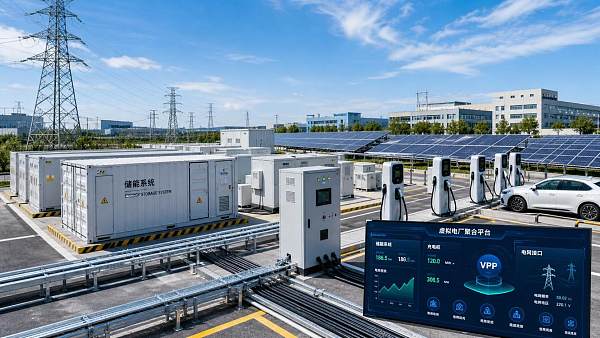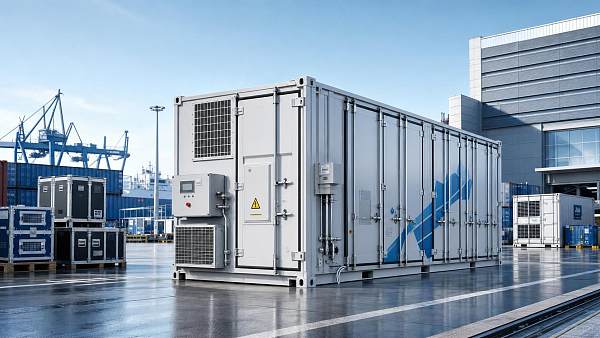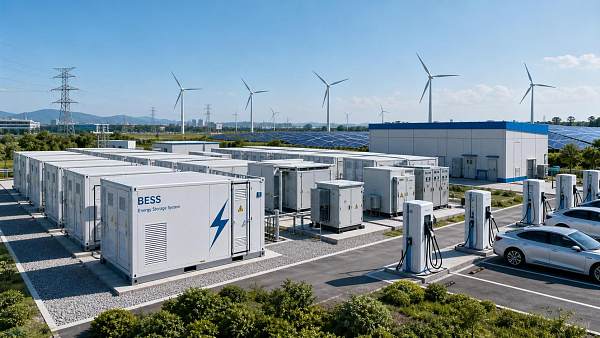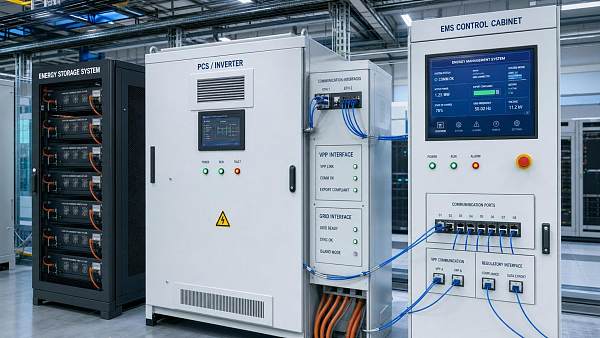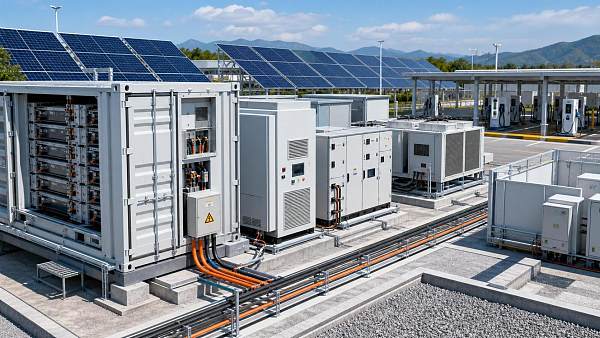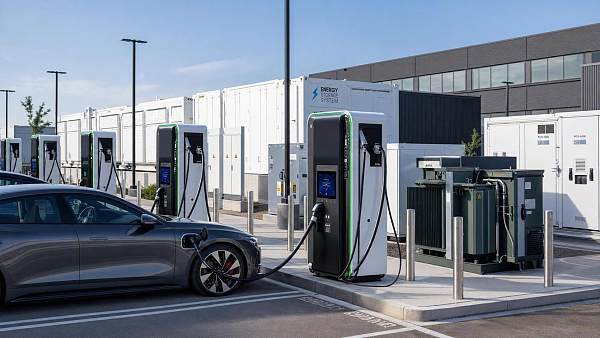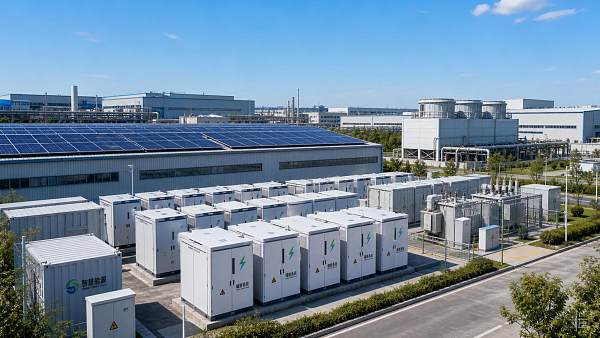
Australia’s Energy Market Operator (AEMO) revised its Energy Storage System Grid Connection Guidelines on 28 May 2026, mandating that public 800V liquid-cooled fast-charging stations with capacity ≥5 MW integrate with AEMO’s Virtual Power Plant (VPP) Aggregator platform. This update directly affects manufacturers, exporters, and system integrators supplying such infrastructure to the Australian market — particularly those in China and other export-oriented supply chains.
Event Overview
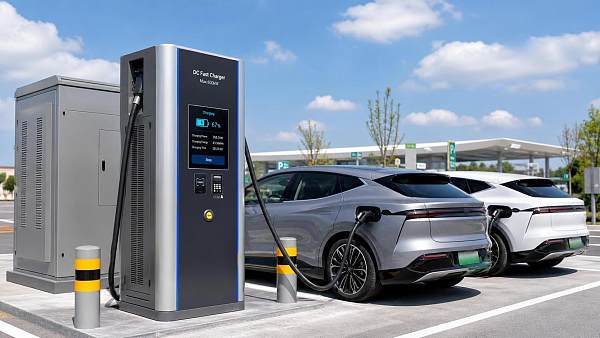
On 28 May 2026, AEMO published Version 3.2 of its Energy Storage System Grid Connection Guidelines. The revision introduces Clause 7.4, which requires all publicly accessible fast-charging facilities operating at a rated voltage of ≥800 V and using liquid cooling — and with a single-site capacity of ≥5 MW — to pre-install the AEMO VPP-Aggregator communication module and support millisecond-level load adjustment commands. The requirement takes effect on 1 August 2026.
Industries Affected
Export-Oriented Charging Equipment Manufacturers
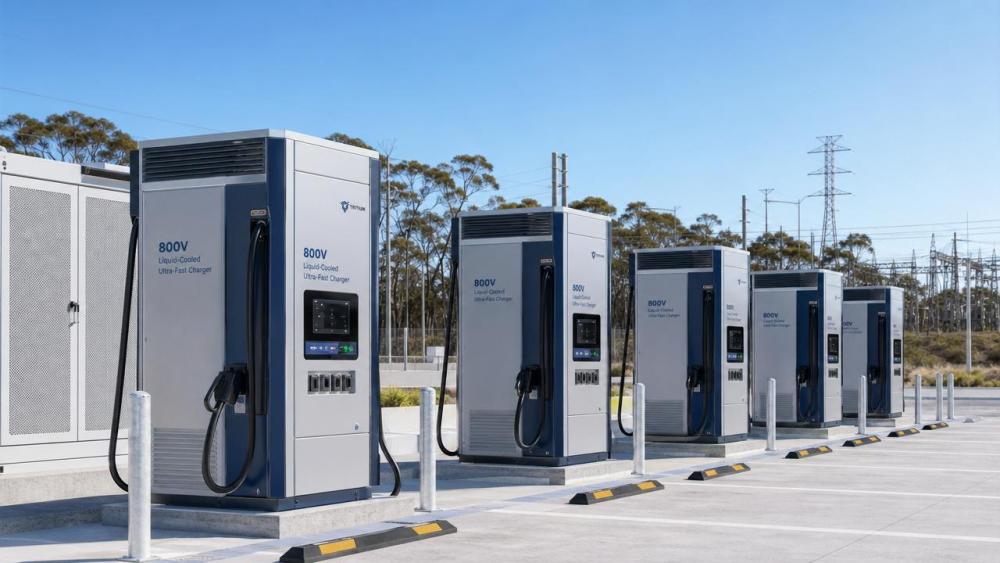
Manufacturers producing 800V liquid-cooled ultra-fast chargers for the Australian market must redesign hardware interfaces and firmware to comply with AEMO’s VPP-Aggregator protocol. Non-compliant units shipped after 1 August 2026 will not be permitted grid connection — affecting delivery timelines, certification pathways, and software architecture decisions.
OEMs and System Integrators
OEMs integrating third-party chargers into turnkey energy hubs or microgrids face new interoperability requirements. Their control systems must now accommodate AEMO’s real-time dispatch instructions, necessitating updates to SCADA logic, cybersecurity configurations, and commissioning workflows.
Supply Chain & Certification Service Providers
Testing laboratories, certification bodies, and local compliance agents in Australia will need to verify both physical interface compatibility and functional responsiveness to VPP signals. This may extend testing cycles and increase pre-market validation costs for affected products.
Key Focus Areas and Recommended Actions
Monitor official AEMO technical specifications and implementation guidance
AEMO has not yet published the full VPP-Aggregator communication specification document. Exporters should track updates via AEMO’s Grid Connection Technical Resources portal and register for upcoming industry briefings scheduled before July 2026.
Verify product-level compliance across voltage, cooling, and capacity thresholds
The rule applies only to installations meeting all three criteria: ≥800 V rating, liquid cooling, and ≥5 MW per site. Firms should audit current and planned product portfolios to identify which SKUs fall under scope — especially multi-unit deployments where aggregated capacity may trigger the requirement.
Distinguish between policy mandate and operational rollout
While the regulation becomes enforceable on 1 August 2026, actual VPP dispatch capability depends on regional network service provider (NSP) readiness and local distribution system upgrades. Observably, full-scale real-time load modulation may be phased in gradually — but hardware and software readiness must be achieved by the deadline.
Prepare for firmware, security, and documentation updates
Compliance requires embedded support for secure TLS-based messaging, time-synchronized command execution, and audit-ready logging. Manufacturers should initiate internal reviews of communication stacks, certificate management processes, and user-facing technical documentation well ahead of the enforcement date.
Editorial Perspective / Industry Observation
This revision is better understood as a regulatory signal than an immediate operational shift. Analysis shows AEMO is aligning distributed energy resource (DER) integration standards with broader grid stability goals — particularly as high-power EV charging loads grow. It reflects a deliberate move toward treating large-scale charging infrastructure as controllable grid assets, not passive loads. From an industry perspective, it signals growing convergence between transport electrification and power system flexibility planning. Continued monitoring is warranted, especially regarding how NSPs interpret ‘millisecond-level’ response in practice and whether future revisions extend similar requirements to lower-capacity or air-cooled systems.
In summary, AEMO’s updated guideline marks a structural inflection point for EV charging exports to Australia: compliance is no longer solely about electrical safety or grid code harmonization — it now includes active participation in system-level balancing mechanisms. For affected stakeholders, this is less about reacting to a one-off rule change and more about adapting to an evolving definition of what constitutes a ‘grid-connected asset’ in modern energy markets.
Source: Australian Energy Market Operator (AEMO), Energy Storage System Grid Connection Guidelines v3.2, published 28 May 2026. Pending clarification: exact timing and scope of VPP-Aggregator protocol release; interpretation of ‘millisecond-level’ response in field deployment.
Related News
 How to Evaluate a Virtual Power Plant Aggregation PlatformProf. Kaelen VossVirtual power plant aggregation platform evaluation starts with real dispatch, integration, optimization, and security checks. Learn how to compare vendors and choose a scalable, bankable solution.
 EU Sets UL 9540A Rule for Imported Liquid-Cooled BESSGrid Storage ArchitectEU sets UL 9540A rule for imported liquid-cooled BESS. Learn how the October 2026 EU requirement impacts compliance, certification timelines, costs, and delivery planning.
 Oil-Immersed Transformer Applications in Reliable Power Distribution ProjectsUHV Engineering FellowAn application guide for oil-immersed transformer buyers reviewing load profile, site conditions, insulation, cooling, testing, documentation, and project integration.
 Grid Resilience Solution Price: Cost Drivers and ROI BenchmarksMr. Orion SterlingGrid resilience solution price explained: compare cost drivers, hidden risks, and ROI benchmarks to choose a safer, higher-value energy resilience investment.
 DOE Adds UL 62271-200 for Imported ElectrolyzersHydrogen Tech ScientistDOE Adds UL 62271-200 for Imported Electrolyzers: learn how the new U.S. rule affects ALK and PEM shipments, certification timing, compliance costs, and market access from Sept. 1, 2026.
 DC Fast Charging Station Kiosk: Key Features to Compare Before You SpecifyEV Infrastructure ExpertDC fast charging station kiosk selection goes beyond power ratings. Compare uptime, thermal design, connectors, payments, and grid readiness before you specify.
 EU Sets New Thermal Runaway Test Rule for Liquid-Cooled BESSGrid Storage ArchitectEU Sets New Thermal Runaway Test Rule for Liquid-Cooled BESS: learn how UL 9540A Tier 3 and EN 50620:2025 requirements may impact EU market access, timelines, and compliance costs.
 PEM Hydrogen Electrolyzer Sizing: Key Factors That Affect Efficiency and CostHydrogen Tech ScientistPEM hydrogen electrolyzer sizing directly affects efficiency, CAPEX, and hydrogen cost. Learn the key factors shaping smarter, scalable system decisions.
 IEC 62933-5-2:2026 Makes VPP Interfaces MandatoryGrid Storage ArchitectIEC 62933-5-2:2026 makes VPP interfaces mandatory for newly certified PCS and EMS products, reshaping compliance in 32 export markets. Learn what manufacturers, integrators, and distributors must do now.
 Energy Storage Systems Integration: Common Failures and FixesGrid Storage ArchitectEnergy storage systems integration often fails at control, thermal, and commissioning interfaces. Discover common faults, practical fixes, and how to improve BESS reliability and project ROI.
 EV Charging Protocol References That Matter for System CompatibilityEV Infrastructure ExpertEV charging protocol references explained for real system compatibility. Learn how CCS, ISO 15118, DIN 70121, OCPP, and grid standards reduce integration risk and support scalable EV charging.
 C&I Storage for Factories: Where It Delivers the Best ROIGrid Storage ArchitectCommercial and industrial storage for factories delivers the best ROI when it cuts demand charges, boosts solar self-consumption, and protects uptime. See where payback is fastest.