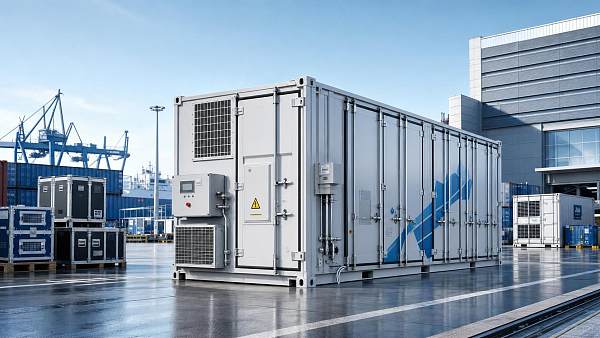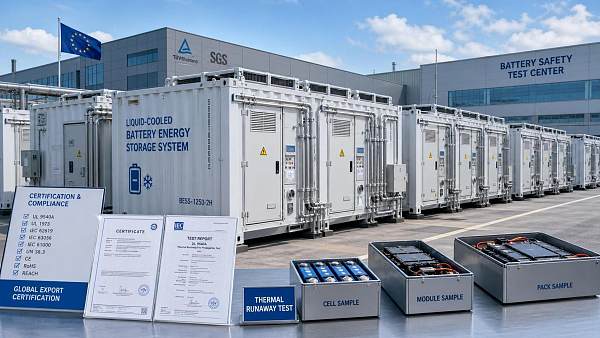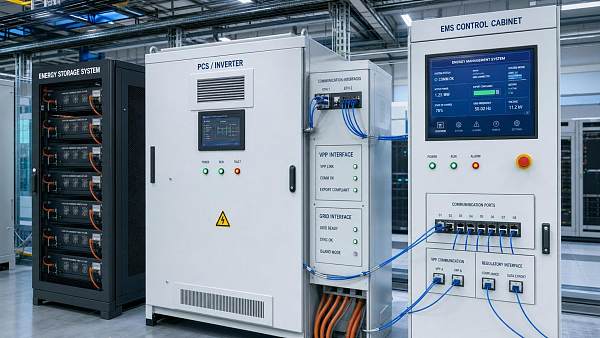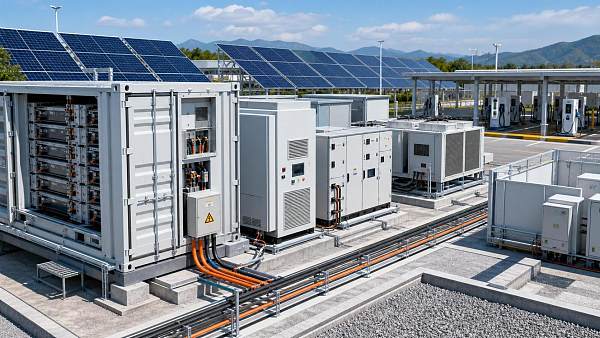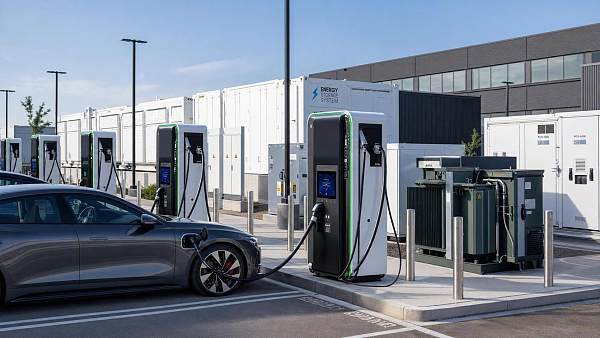
The European Commission implemented Regulation (EU) 2026/1189 on 29 May 2026, introducing mandatory dual certification—UN38.3 and UL 9540A—for liquid-cooled battery energy storage systems (BESS) of ≥1 MWh entering the EU market. This regulatory shift directly impacts manufacturers and exporters of grid-scale energy storage, particularly those based in China, by replacing the previous CE-EMC+LVD conformity route with significantly stricter technical and compliance requirements.
Regulatory Implementation Details
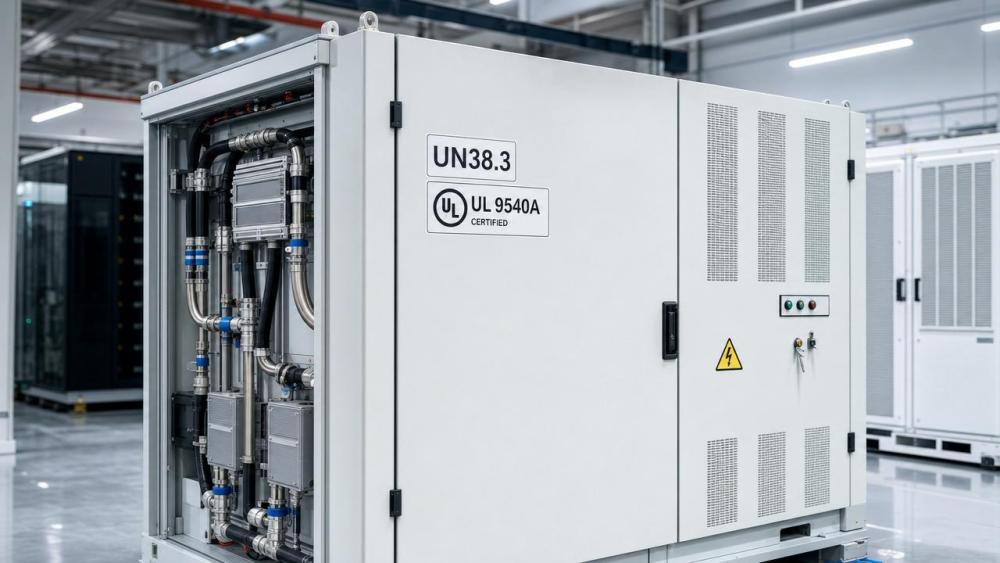
Commission Implementing Regulation (EU) 2026/1189 entered into force on 29 May 2026. It explicitly extends the scope of the EU Battery Regulation to include liquid-cooled grid-scale BESS with capacity of 1 MWh or greater. As of 1 October 2026, all such systems placed on the EU market must demonstrate compliance with both UN38.3 (transport safety testing) and UL 9540A (thermal runaway propagation evaluation). Additionally, importers must submit a Declaration of Conformity issued by an EU-recognized Notified Body (NB), superseding the former CE marking pathway under EMC and LVD directives.
Impact Across Supply Chain Roles
Export-Oriented Trading Companies
These firms face immediate changes in pre-shipment verification workflows. Previously relying on self-declared CE-EMC+LVD documentation, they now require third-party NB-issued conformity statements tied to two distinct test regimes. Customs clearance delays and potential rejections are likely if dual-certification evidence is incomplete or misaligned with NB scope.
Raw Material & Component Suppliers
Suppliers of thermal interface materials, cooling plates, fire-retardant enclosures, and cell-level safety components must ensure their offerings support UL 9540A pass criteria—particularly in module-to-module and rack-to-rack propagation resistance. Technical data sheets and material declarations may now be subject to NB review as part of system-level certification.
System Integrators & Manufacturers
Manufacturers must redesign validation protocols to embed UL 9540A test planning early in the development cycle—not as a final gate. This includes thermal modeling, physical test article preparation, and failure mode documentation aligned with IEC 62933-5-2 and UL’s test matrix. Internal QA processes must now track traceability between certified subassemblies and final system configurations.
Compliance & Certification Service Providers
Third-party labs and NB-accredited consultants will see rising demand for integrated UN38.3 + UL 9540A test coordination, including logistics for hazardous goods transport assessment and full-scale thermal propagation trials. Capacity constraints and extended lead times (currently averaging 12–16 weeks per full cycle) are expected across EU-recognized NBs.
Key Compliance Priorities for Exporters
Transition from CE-EMC+LVD to NB-Mandated Dual Certification
Companies must formally discontinue reliance on legacy CE pathways for liquid-cooled BESS ≥1 MWh. Existing CE declarations no longer satisfy regulatory entry conditions after 1 October 2026. A full conformity reassessment—including updated technical documentation, risk assessments, and NB involvement—is required.
UL 9540A Test Planning and Documentation Readiness
UL 9540A requires detailed test reports covering configuration-specific parameters: cell chemistry, module/rack layout, cooling flow rates, and fault initiation methodology. Exporters must secure NB-approved test plans before initiating trials—and retain full digital archives of thermal imaging, sensor logs, and failure analysis for audit purposes.
Supplier Qualification Under New NB Oversight
Subcomponent suppliers—especially for battery management systems (BMS), thermal management units, and fire suppression modules—must now be vetted for relevance to UL 9540A performance. NBs may request supplier audit reports or evidence of process control (e.g., ISO 9001 + IATF 16949) as part of system-level certification.
Industry Observation: Beyond Certification, a Shift in System Design Philosophy
Analysis shows this regulation marks more than a procedural update—it signals a structural pivot toward intrinsic safety-by-design in grid-scale BESS. Observably, UL 9540A compliance cannot be retrofitted; it demands co-engineering of electrochemical, thermal, and mechanical subsystems from concept stage. From an industry perspective, the 2026–2027 period will likely see accelerated consolidation among Chinese BESS integrators, as only those with vertically integrated thermal R&D and NB engagement capacity can meet timelines and cost thresholds. What deserves closer attention is how national certification bodies outside the EU (e.g., CNAS-accredited labs in China) align their UL 9540A capabilities with EU NB recognition criteria—a bottleneck currently limiting parallel test execution.
Strategic Implications for Global Energy Storage Markets
This regulation establishes a de facto global benchmark for large-scale BESS safety assurance. While targeted at the EU, its technical rigor—particularly the coupling of transport safety (UN38.3) with real-world thermal propagation behavior (UL 9540A)—is already influencing procurement specifications in Australia, South Korea, and parts of Latin America. However, it is more appropriate to understand this as a catalyst for standardization rather than a trade barrier: manufacturers investing in dual-certifiable architectures gain competitive advantage beyond EU borders, provided they maintain transparent, auditable compliance records.
Source Information and Verification Notes
This article was generated exclusively from the user-provided title, event date (29 May 2026), and event summary. Specific official source links were not provided in the input and should be verified continuously. Stakeholders are advised to monitor updates from the European Commission’s Directorate-General for Environment (DG ENV), the EU Publications Office (for consolidated texts of Regulation (EU) 2026/1189), and guidance documents issued by EU Notified Bodies. Further observation is warranted regarding implementation guidance on modular certification, NB interpretation of ‘liquid-cooled’ definitions, and potential transitional arrangements for contracts signed prior to 29 May 2026.
Related News
 How to Evaluate a Virtual Power Plant Aggregation PlatformProf. Kaelen VossVirtual power plant aggregation platform evaluation starts with real dispatch, integration, optimization, and security checks. Learn how to compare vendors and choose a scalable, bankable solution.
 EU Sets UL 9540A Rule for Imported Liquid-Cooled BESSGrid Storage ArchitectEU sets UL 9540A rule for imported liquid-cooled BESS. Learn how the October 2026 EU requirement impacts compliance, certification timelines, costs, and delivery planning.
 Oil-Immersed Transformer Applications in Reliable Power Distribution ProjectsUHV Engineering FellowAn application guide for oil-immersed transformer buyers reviewing load profile, site conditions, insulation, cooling, testing, documentation, and project integration.
 Grid Resilience Solution Price: Cost Drivers and ROI BenchmarksMr. Orion SterlingGrid resilience solution price explained: compare cost drivers, hidden risks, and ROI benchmarks to choose a safer, higher-value energy resilience investment.
 DOE Adds UL 62271-200 for Imported ElectrolyzersHydrogen Tech ScientistDOE Adds UL 62271-200 for Imported Electrolyzers: learn how the new U.S. rule affects ALK and PEM shipments, certification timing, compliance costs, and market access from Sept. 1, 2026.
 DC Fast Charging Station Kiosk: Key Features to Compare Before You SpecifyEV Infrastructure ExpertDC fast charging station kiosk selection goes beyond power ratings. Compare uptime, thermal design, connectors, payments, and grid readiness before you specify.
 EU Sets New Thermal Runaway Test Rule for Liquid-Cooled BESSGrid Storage ArchitectEU Sets New Thermal Runaway Test Rule for Liquid-Cooled BESS: learn how UL 9540A Tier 3 and EN 50620:2025 requirements may impact EU market access, timelines, and compliance costs.
 PEM Hydrogen Electrolyzer Sizing: Key Factors That Affect Efficiency and CostHydrogen Tech ScientistPEM hydrogen electrolyzer sizing directly affects efficiency, CAPEX, and hydrogen cost. Learn the key factors shaping smarter, scalable system decisions.
 IEC 62933-5-2:2026 Makes VPP Interfaces MandatoryGrid Storage ArchitectIEC 62933-5-2:2026 makes VPP interfaces mandatory for newly certified PCS and EMS products, reshaping compliance in 32 export markets. Learn what manufacturers, integrators, and distributors must do now.
 Energy Storage Systems Integration: Common Failures and FixesGrid Storage ArchitectEnergy storage systems integration often fails at control, thermal, and commissioning interfaces. Discover common faults, practical fixes, and how to improve BESS reliability and project ROI.
 EV Charging Protocol References That Matter for System CompatibilityEV Infrastructure ExpertEV charging protocol references explained for real system compatibility. Learn how CCS, ISO 15118, DIN 70121, OCPP, and grid standards reduce integration risk and support scalable EV charging.
 C&I Storage for Factories: Where It Delivers the Best ROIGrid Storage ArchitectCommercial and industrial storage for factories delivers the best ROI when it cuts demand charges, boosts solar self-consumption, and protects uptime. See where payback is fastest.