The European Commission formally initiated an anti-circumvention investigation on 30 May 2026 into ultra-high-voltage (UHV) power transformers originating in China, targeting potential trade diversion strategies affecting EU energy infrastructure procurement and supply chain compliance.
Confirmed Investigation Launch
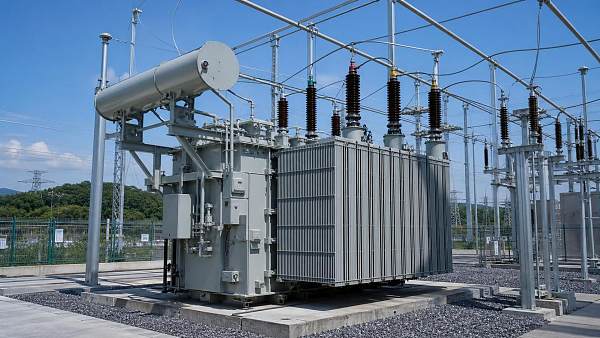
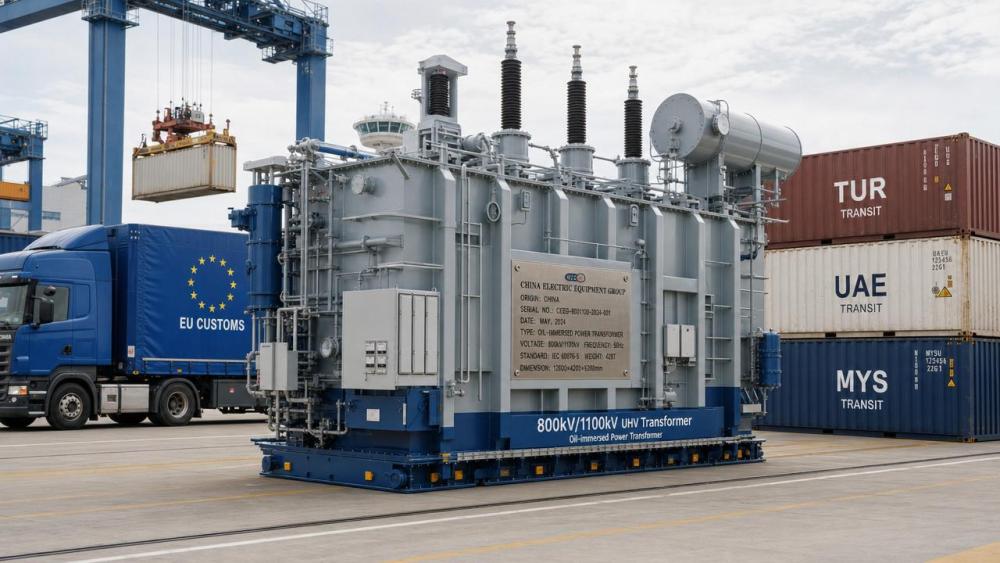
On 30 May 2026, the European Commission opened an anti-circumvention investigation (Case No. CN-2026-047) concerning UHV power transformers of Chinese origin. The probe specifically covers 800 kV and 1100 kV oil-immersed models—including both mineral oil and ester oil transformers—and examines whether such products are being routed through third countries (including Turkey, the United Arab Emirates, and Malaysia) via transshipment, minor assembly, or superficial modification to circumvent existing trade measures. The investigation period spans back to October 2025, and preliminary findings may impact customs clearance and project delivery timelines across Europe starting in Q3 2026.
Impact Across Supply Chain Roles
Exporters and Direct Trading Firms
Companies engaged in direct exports of UHV transformers from China face heightened scrutiny during EU customs declarations. Misclassification—such as labeling products as ‘originating’ in a third country without meeting substantive transformation criteria—may trigger penalties, shipment delays, or retroactive duties.
Raw Material and Component Suppliers
Suppliers providing core materials (e.g., high-grade electrical steel, insulating oils, bushings) must now ensure traceability documentation aligns with origin claims. Increased demand for certified material test reports and batch-level origin verification is anticipated.
Manufacturers and Assembly Facilities
Producers operating in or coordinating with facilities in Turkey, UAE, or Malaysia must assess whether their assembly processes meet the EU’s ‘substantial transformation’ threshold. Simple repackaging or minor modifications will likely be insufficient to alter origin status under this investigation.
Logistics and Trade Compliance Service Providers
Freight forwarders, customs brokers, and compliance consultants will see rising demand for origin certification support, tariff classification reviews, and pre-shipment audit readiness—particularly for shipments involving dual-country documentation or mixed-origin components.
Key Actions for Affected Enterprises
Review Origin Documentation Rigorously
Verify that all bills of lading, certificates of origin, and manufacturing records substantiate declared country-of-origin claims—especially where third-country assembly or finishing occurs. Align internal records with EU Regulation (EU) 2016/1037 on anti-circumvention procedures.
Assess Technical Specifications Against EU Tender Requirements
Confirm compatibility of ester oil and mineral oil transformer designs with EN 60076 series standards, CE marking obligations, and EU Green Public Procurement (GPP) criteria—particularly regarding fire safety, biodegradability, and lifecycle environmental impact disclosures.
Adjust Delivery Timelines and Inventory Planning
Anticipate extended customs processing times and possible pre-clearance audits for UHV shipments destined for EU grid projects. Re-evaluate Q3 2026 delivery commitments and consider buffer stock or alternative sourcing pathways where feasible.
Strengthen Supplier Qualification Protocols
Conduct due diligence on Tier-2 and Tier-3 suppliers involved in final assembly or finishing—focusing on production capacity, process documentation, and ability to provide auditable evidence of value addition beyond minimal operations.
Industry Observation: Beyond Tariff Compliance
Analysis shows this investigation signals a broader shift toward stricter enforcement of origin rules—not only for tariff purposes but also for strategic infrastructure resilience. Observably, the EU is increasingly treating UHV equipment as critical dual-use technology, where compliance extends beyond customs formalities into technical sovereignty, cybersecurity integration, and long-term serviceability assurance. It is more appropriate to understand this as a de facto tightening of market access conditions for high-voltage grid components, requiring manufacturers to demonstrate end-to-end transparency—not just at point of export, but across design, material sourcing, and post-installation support.
Taking Stock: A Strategic Inflection Point
This investigation does not introduce new tariffs—but redefines how origin is verified for complex, high-value energy infrastructure assets. Its significance lies in reinforcing procedural discipline over supply chain opacity, urging stakeholders to treat compliance as an integrated engineering and documentation discipline—not a standalone customs exercise. Rational preparation today supports sustained market access tomorrow.
Source Transparency Notice
This article was generated based solely on the user-provided title, event date (30 May 2026), and factual summary. Specific official source links were not provided in the input and should be verified continuously. Stakeholders are advised to monitor updates from the European Commission’s Directorate-General for Trade, official notices in the Official Journal of the European Union, and evolving guidance from notified bodies accredited under Regulation (EU) 2019/1020 on market surveillance.
Related News
 How to Evaluate a Virtual Power Plant Aggregation PlatformProf. Kaelen VossVirtual power plant aggregation platform evaluation starts with real dispatch, integration, optimization, and security checks. Learn how to compare vendors and choose a scalable, bankable solution.
 EU Sets UL 9540A Rule for Imported Liquid-Cooled BESSGrid Storage ArchitectEU sets UL 9540A rule for imported liquid-cooled BESS. Learn how the October 2026 EU requirement impacts compliance, certification timelines, costs, and delivery planning.
 Oil-Immersed Transformer Applications in Reliable Power Distribution ProjectsUHV Engineering FellowAn application guide for oil-immersed transformer buyers reviewing load profile, site conditions, insulation, cooling, testing, documentation, and project integration.
 Grid Resilience Solution Price: Cost Drivers and ROI BenchmarksMr. Orion SterlingGrid resilience solution price explained: compare cost drivers, hidden risks, and ROI benchmarks to choose a safer, higher-value energy resilience investment.
 DOE Adds UL 62271-200 for Imported ElectrolyzersHydrogen Tech ScientistDOE Adds UL 62271-200 for Imported Electrolyzers: learn how the new U.S. rule affects ALK and PEM shipments, certification timing, compliance costs, and market access from Sept. 1, 2026.
 DC Fast Charging Station Kiosk: Key Features to Compare Before You SpecifyEV Infrastructure ExpertDC fast charging station kiosk selection goes beyond power ratings. Compare uptime, thermal design, connectors, payments, and grid readiness before you specify.
 EU Sets New Thermal Runaway Test Rule for Liquid-Cooled BESSGrid Storage ArchitectEU Sets New Thermal Runaway Test Rule for Liquid-Cooled BESS: learn how UL 9540A Tier 3 and EN 50620:2025 requirements may impact EU market access, timelines, and compliance costs.
 PEM Hydrogen Electrolyzer Sizing: Key Factors That Affect Efficiency and CostHydrogen Tech ScientistPEM hydrogen electrolyzer sizing directly affects efficiency, CAPEX, and hydrogen cost. Learn the key factors shaping smarter, scalable system decisions.
 IEC 62933-5-2:2026 Makes VPP Interfaces MandatoryGrid Storage ArchitectIEC 62933-5-2:2026 makes VPP interfaces mandatory for newly certified PCS and EMS products, reshaping compliance in 32 export markets. Learn what manufacturers, integrators, and distributors must do now.
 Energy Storage Systems Integration: Common Failures and FixesGrid Storage ArchitectEnergy storage systems integration often fails at control, thermal, and commissioning interfaces. Discover common faults, practical fixes, and how to improve BESS reliability and project ROI.
 EV Charging Protocol References That Matter for System CompatibilityEV Infrastructure ExpertEV charging protocol references explained for real system compatibility. Learn how CCS, ISO 15118, DIN 70121, OCPP, and grid standards reduce integration risk and support scalable EV charging.
 C&I Storage for Factories: Where It Delivers the Best ROIGrid Storage ArchitectCommercial and industrial storage for factories delivers the best ROI when it cuts demand charges, boosts solar self-consumption, and protects uptime. See where payback is fastest.