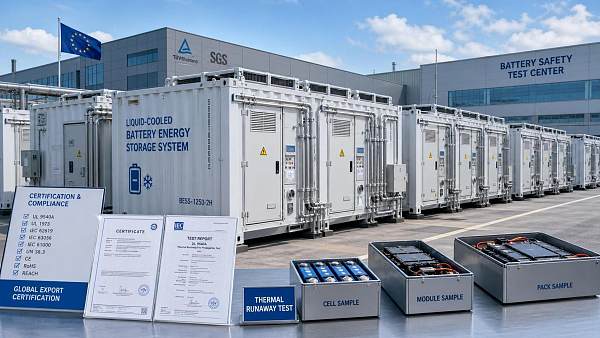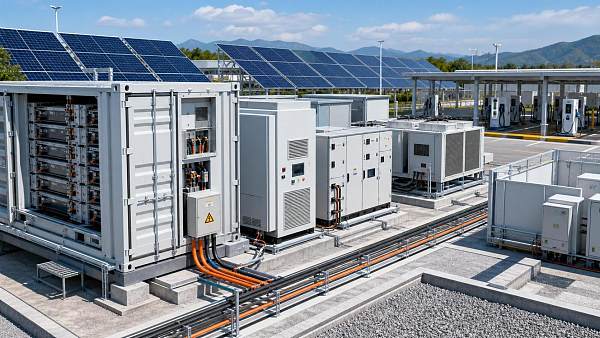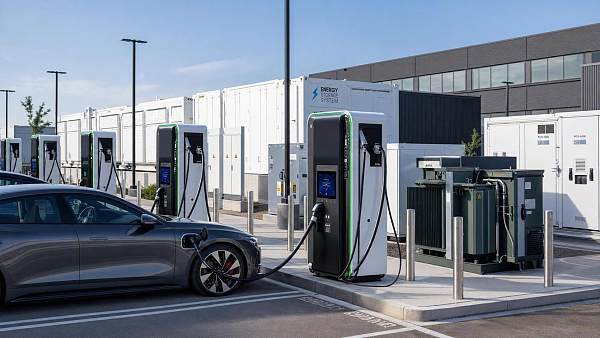
Vietnam’s Ministry of Industry and Trade (MOIT) issued Decision No. 1288/QD-BCT on May 31, 2026, requiring all liquid-cooled grid-scale battery energy storage systems (BESS) — whether imported or domestically deployed — to obtain concurrent certification to UL 9540A (thermal runaway propagation testing) and IEC 62933-5-2 (safety requirements for energy storage systems) effective July 1, 2026. This regulatory update directly impacts exporters, system integrators, and project developers targeting Vietnam’s rapidly scaling energy storage market.
Event Overview
On May 31, 2026, Vietnam’s MOIT published Decision No. 1288/QD-BCT. The regulation stipulates that, starting July 1, 2026, all liquid-cooled BESS units must pass both UL 9540A and IEC 62933-5-2 certification. Certification reports must be issued in full scope by Vietnamese-accredited laboratories — including QUATEST 3 and VINA CERT — and submitted as a mandatory prerequisite for grid interconnection approval.
Industries Affected
Export-Oriented BESS Manufacturers (China-based)
Chinese BESS manufacturers supplying liquid-cooled systems to Vietnam face immediate compliance pressure. Because UL 9540A testing requires cell-level and system-level thermal propagation validation — often involving destructive testing and extended cycle protocols — lead times for certification may extend by 8–12 weeks per configuration. Certification costs are also expected to rise due to the need for dual-standard validation and local lab engagement.
System Integrators & Project Developers
Integrators bundling liquid-cooled BESS into turnkey energy projects must now verify vendor certification status prior to procurement. Non-certified systems will not clear interconnection review, risking project delays or redesign. The requirement also shifts technical due diligence upstream: integration contracts must now explicitly reference valid UL 9540A + IEC 62933-5-2 reports from accredited labs — not just self-declared conformity or third-party test summaries.
Supply Chain & Certification Support Providers
Testing laboratories, certification bodies, and compliance consultants with MOIT-recognized accreditation (e.g., QUATEST 3, VINA CERT) are positioned to see increased demand for localized testing services. However, capacity constraints may emerge, especially for UL 9540A — which demands specialized thermal chambers and trained personnel. Providers without direct MOIT recognition cannot issue valid reports for interconnection purposes, regardless of international accreditation status.
Key Actions for Enterprises and Practitioners
Monitor official implementation guidance
Decision No. 1288/QD-BCT is effective July 1, 2026, but MOIT has not yet published detailed enforcement procedures, transition provisions for pre-July orders, or accepted equivalency pathways (e.g., CB Scheme reports under IEC 62933-5-2). Enterprises should track MOIT circulars and updates from QUATEST 3 and VINA CERT over Q2 2026.
Verify lab accreditation status before commissioning tests
Only reports issued by Vietnamese-accredited labs — such as QUATEST 3 or VINA CERT — satisfy the regulation. International test reports (e.g., from UL Solutions or TÜV SÜD labs outside Vietnam) do not substitute unless formally endorsed by a recognized Vietnamese body. Confirm lab scope includes both UL 9540A and IEC 62933-5-2 before initiating testing.
Assess product portfolio coverage early
A single UL 9540A report applies only to the specific cell chemistry, module layout, and cooling architecture tested. Variants (e.g., different rack heights, coolant flow rates, or BMS firmware versions) may require separate evaluations. Exporters should map certified configurations against their Vietnam-bound SKUs and prioritize high-volume models for testing.
Update contractual terms and delivery timelines
Sales agreements signed before July 2026 should clarify responsibility for certification, cost allocation, and schedule buffers. Delivery commitments must now account for certification lead time — particularly where testing must occur in Vietnam or under Vietnamese supervision. Delay clauses tied to certification failure or lab backlog should be included where feasible.
Editorial Perspective / Industry Observation
Observably, this policy signals Vietnam’s shift from voluntary safety alignment toward enforceable, system-level technical gatekeeping for grid-connected storage. It is not merely a documentation update but a functional barrier — one that elevates local compliance infrastructure and narrows the pool of technically qualified suppliers. Analysis shows the dual-certification requirement reflects growing concern over thermal risk management in high-density liquid-cooled deployments, especially amid rising ambient temperatures and grid stress. From an industry perspective, it is better understood as an operational signal than a final outcome: actual enforcement rigor, lab capacity ramp-up, and interpretation of ‘liquid-cooled’ scope (e.g., hybrid air/liquid systems) remain subject to clarification. Continuous monitoring is warranted through mid-2026.
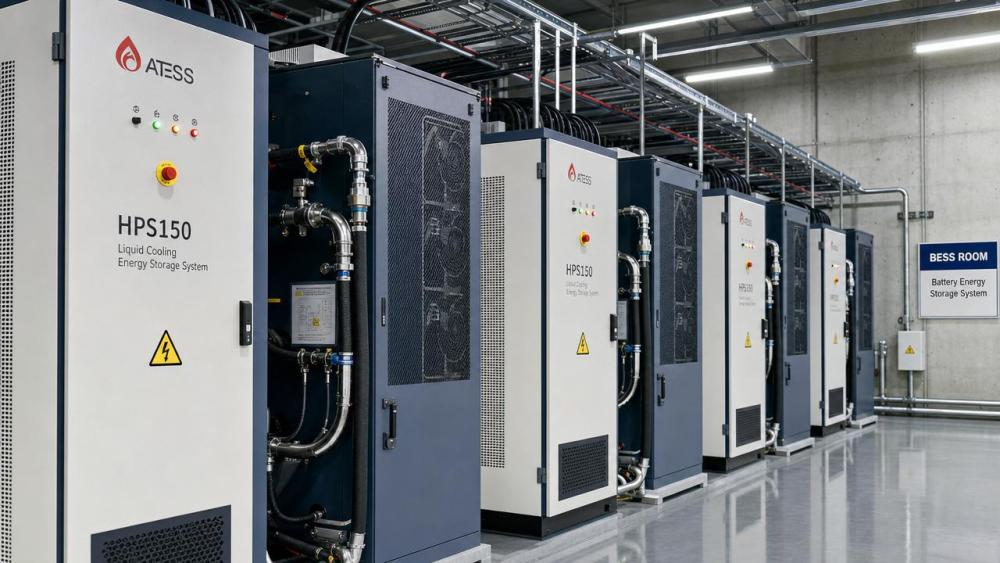
This measure underscores how national grid safety policies are increasingly shaping cross-border BESS trade — not just through tariffs or quotas, but via technical interoperability mandates. For stakeholders, it reinforces that regulatory readiness must now be embedded in product development, supply chain planning, and commercial negotiation — not treated as a post-sale administrative step. Currently, it is more accurate to view this as a binding compliance threshold entering force, rather than a tentative guideline or consultative framework.
Source: Vietnam Ministry of Industry and Trade (MOIT), Decision No. 1288/QD-BCT, dated May 31, 2026. Official implementation date: July 1, 2026. Accredited laboratories cited: QUATEST 3, VINA CERT. Note: Enforcement procedures, transitional arrangements, and scope clarifications remain pending and are subject to ongoing observation.
Related News
 How to Evaluate a Virtual Power Plant Aggregation PlatformProf. Kaelen VossVirtual power plant aggregation platform evaluation starts with real dispatch, integration, optimization, and security checks. Learn how to compare vendors and choose a scalable, bankable solution.
 EU Sets UL 9540A Rule for Imported Liquid-Cooled BESSGrid Storage ArchitectEU sets UL 9540A rule for imported liquid-cooled BESS. Learn how the October 2026 EU requirement impacts compliance, certification timelines, costs, and delivery planning.
 Oil-Immersed Transformer Applications in Reliable Power Distribution ProjectsUHV Engineering FellowAn application guide for oil-immersed transformer buyers reviewing load profile, site conditions, insulation, cooling, testing, documentation, and project integration.
 Grid Resilience Solution Price: Cost Drivers and ROI BenchmarksMr. Orion SterlingGrid resilience solution price explained: compare cost drivers, hidden risks, and ROI benchmarks to choose a safer, higher-value energy resilience investment.
 DOE Adds UL 62271-200 for Imported ElectrolyzersHydrogen Tech ScientistDOE Adds UL 62271-200 for Imported Electrolyzers: learn how the new U.S. rule affects ALK and PEM shipments, certification timing, compliance costs, and market access from Sept. 1, 2026.
 DC Fast Charging Station Kiosk: Key Features to Compare Before You SpecifyEV Infrastructure ExpertDC fast charging station kiosk selection goes beyond power ratings. Compare uptime, thermal design, connectors, payments, and grid readiness before you specify.
 EU Sets New Thermal Runaway Test Rule for Liquid-Cooled BESSGrid Storage ArchitectEU Sets New Thermal Runaway Test Rule for Liquid-Cooled BESS: learn how UL 9540A Tier 3 and EN 50620:2025 requirements may impact EU market access, timelines, and compliance costs.
 PEM Hydrogen Electrolyzer Sizing: Key Factors That Affect Efficiency and CostHydrogen Tech ScientistPEM hydrogen electrolyzer sizing directly affects efficiency, CAPEX, and hydrogen cost. Learn the key factors shaping smarter, scalable system decisions.
 IEC 62933-5-2:2026 Makes VPP Interfaces MandatoryGrid Storage ArchitectIEC 62933-5-2:2026 makes VPP interfaces mandatory for newly certified PCS and EMS products, reshaping compliance in 32 export markets. Learn what manufacturers, integrators, and distributors must do now.
 Energy Storage Systems Integration: Common Failures and FixesGrid Storage ArchitectEnergy storage systems integration often fails at control, thermal, and commissioning interfaces. Discover common faults, practical fixes, and how to improve BESS reliability and project ROI.
 EV Charging Protocol References That Matter for System CompatibilityEV Infrastructure ExpertEV charging protocol references explained for real system compatibility. Learn how CCS, ISO 15118, DIN 70121, OCPP, and grid standards reduce integration risk and support scalable EV charging.
 C&I Storage for Factories: Where It Delivers the Best ROIGrid Storage ArchitectCommercial and industrial storage for factories delivers the best ROI when it cuts demand charges, boosts solar self-consumption, and protects uptime. See where payback is fastest.