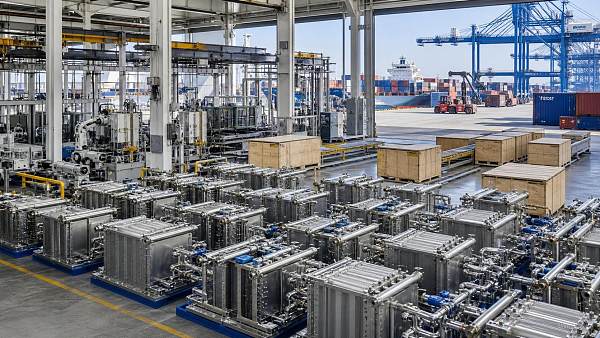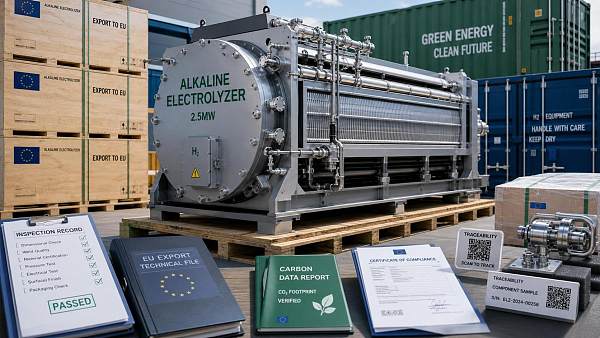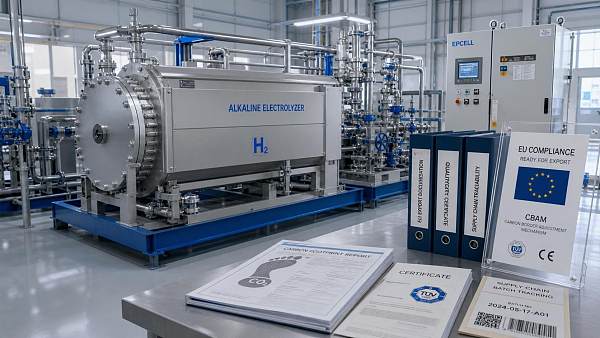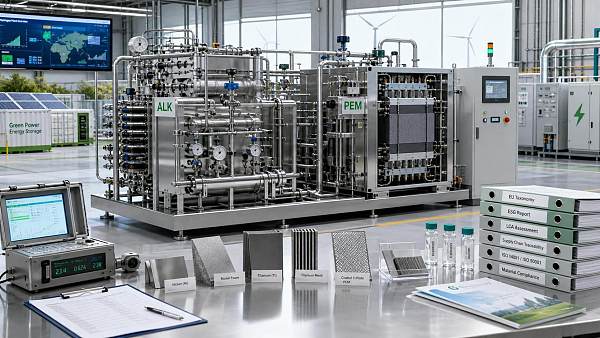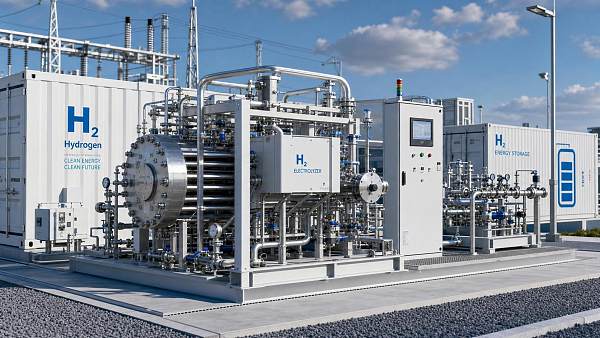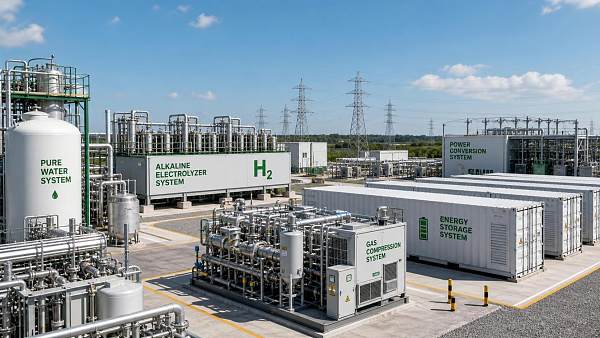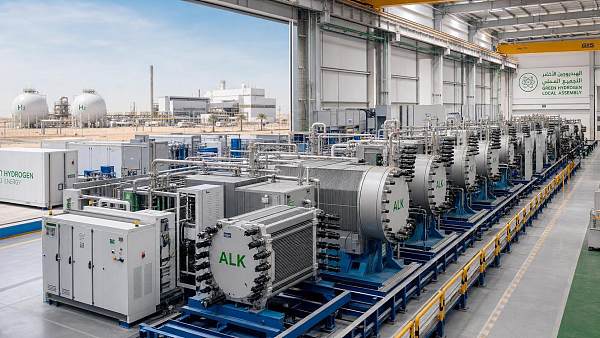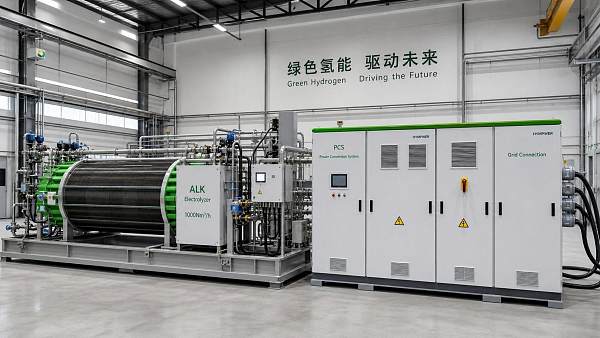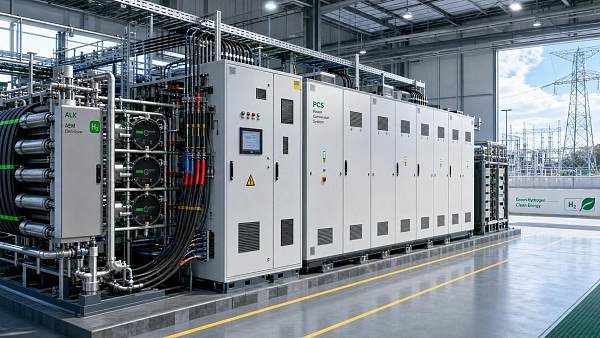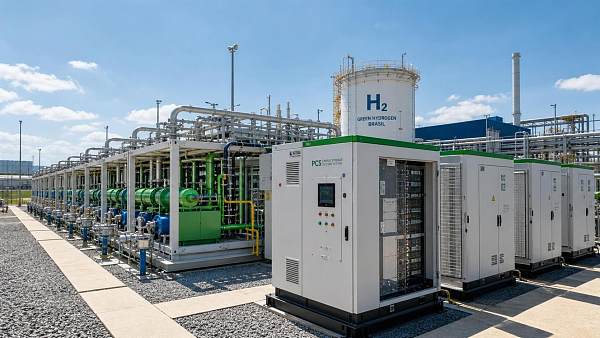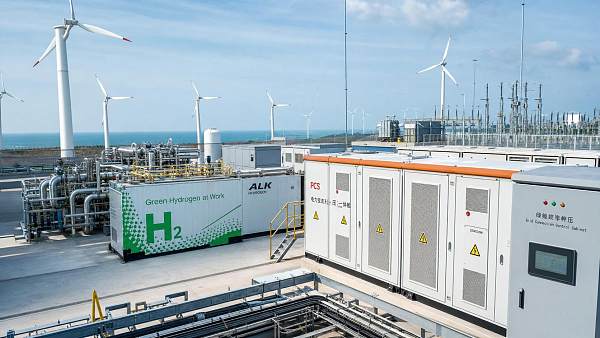
On July 2, 2026, the latest movement in China’s ALK electrolyzer market showed a combination of lower spot prices, faster delivery, and firmer export controls. For manufacturers, overseas buyers, procurement teams, and supply chain service providers, the development is worth watching because it links production expansion and ISO 15118-20 compliance with a real change in delivery conditions, while mandatory export licensing for dual-use hydrogen equipment continues to shape transactions to the Middle East and Southeast Asia.
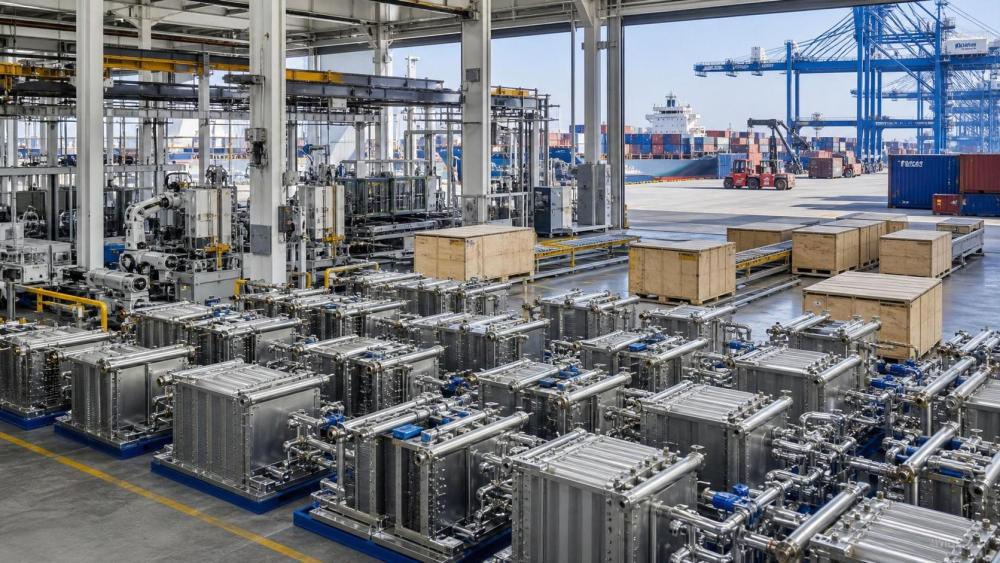
What changed in the latest market signal
Benchmark spot prices for ALK electrolyzer modules, based on a 1 MW stack and quoted ex-works China, reached $285/kW on an FOB Shanghai basis on July 2, 2026. The level was 12% lower than the previous month.
The price move was linked to new 3 GW per year production lines in Jiangsu and Shandong. These lines were reported to have achieved ISO 15118-20 compliance.
Buyers also reported shorter lead times, moving to 14 to 16 weeks from more than 22 weeks in the first quarter.
At the same time, export licensing for dual-use hydrogen equipment remains mandatory for shipments to the Middle East and Southeast Asia.
Where the pressure points are shifting
Procurement teams are seeing a different buying window
From an industry perspective, purchasers may be affected first because price and lead-time changes alter bid timing, budget assumptions, and delivery planning. What deserves closer attention is that lower module pricing does not remove the need to confirm whether export licensing requirements could delay outbound shipments for relevant destinations.
In practice, buyers should pay attention to contract timing, shipment terms, and whether supplier documentation clearly reflects the product scope, compliance status, and export handling path for Middle East and Southeast Asia orders.
Export-facing manufacturers must balance capacity with licensing discipline
Manufacturers and exporters may benefit from increased output and improved delivery capability, but the mandatory licensing requirement means commercial readiness and export readiness are not the same thing. The main impact is likely to appear in order acceptance, shipment scheduling, document preparation, and customer communication for overseas deliveries involving controlled equipment categories.
Companies in this position should watch the consistency between technical descriptions, product classification, certification references, and export documents, especially when orders are moving across jurisdictions with added scrutiny.
Supply chain and delivery service providers face a documentation risk
Logistics coordinators, trade service providers, and after-sales support teams may also be affected because faster factory lead times can shift pressure downstream to customs preparation, licensing coordination, and handover planning. Analysis shows that a shorter production cycle can expose gaps in export paperwork more quickly if licensing review remains a prerequisite.
For these participants, the practical focus is less about price itself and more about document completeness, shipment sequencing, and traceability across the delivery chain.
What companies should monitor now
Check whether compliance claims are usable in transactions
ISO 15118-20 compliance is part of the reported driver behind the new capacity ramp-up. Observably, companies should not treat a compliance reference as a simple marketing point. It is more practical to verify how that compliance is presented in technical files, tender materials, and transaction documents where buyers or counterparties may rely on it.
Align export paperwork with destination-specific control expectations
The mandatory licensing requirement for dual-use hydrogen equipment is the clearest current rule signal in this development. Companies involved in exports to the Middle East and Southeast Asia should closely review whether product descriptions, shipment documents, and internal approval processes are aligned before delivery commitments are finalized.
Update delivery assumptions in purchase and bid planning
Reported lead times of 14 to 16 weeks, compared with more than 22 weeks in the first quarter, may affect procurement calendars and tender execution. Analysis shows this is relevant for buyers and project teams that have been working with older scheduling assumptions. However, shorter lead times should be treated as a current market signal rather than a guaranteed delivery outcome in every export case.
Recheck supplier qualification and traceability records
Where price declines are linked to rapid capacity expansion, companies may need to pay closer attention to supplier qualification files, quality traceability records, and after-sales support arrangements. This is not evidence of a problem; rather, it is a practical control point when procurement conditions change quickly.
Why this looks like both a market move and a compliance signal
Analysis shows this update should not be read only as a pricing story. It also reflects how production expansion, standards-related compliance, and export control requirements are now interacting in the electrolyzer trade flow. The immediate change appears to be real in pricing and lead times, but the licensing requirement means execution risk remains tied to destination markets and document handling.
It is more appropriate to understand this as a partially landed change with continuing regulatory sensitivity. The market signal is visible now, while the operational effect for exporters and buyers still depends on how licensing and compliance expectations are applied in actual transactions.
How the market is likely to read this for now
At this stage, the development points to a more competitive supply environment for ALK electrolyzer modules from China, alongside a trade compliance requirement that remains active rather than easing with increased capacity. For industry participants, the practical conclusion is not that lower prices automatically simplify procurement, but that commercial opportunities and export controls are moving at the same time.
Current conditions are better understood as an execution signal: pricing and lead times have shifted, while licensing, documentation, and compliance review still require close attention before companies treat the change as fully frictionless.
Basis of this article and points still to verify
This article is based on the user-provided news title, event date, and event summary. For developments of this type, relevant source categories commonly include official notices, regulator publications, customs or trade authority information, industry association releases, standards organization documents, and reporting from authoritative trade media.
No specific official source link was provided in the input, so the precise official basis for the export licensing requirement and the implementation detail behind the compliance reference remain subject to further verification. What still needs continued observation includes rule interpretation, certification application in commercial documents, tender specification changes, market feedback, and how companies are executing export and delivery processes in practice.
Related News
 ALK Electrolyzer Prices Fall as Export Rules TightenHydrogen Tech ScientistALK electrolyzer prices fall 12% as China boosts capacity, cuts lead times, and tightens export rules. Explore buyer risks, delivery shifts, and compliance impacts now.
 China Tightens ALK Export Checks for EU ShipmentsHydrogen Tech ScientistChina Tightens ALK Export Checks for EU Shipments: learn how new carbon data and Tier-2 traceability rules may disrupt EU-bound deliveries, impact compliance, and reshape export planning.
 EU Issues Final CBAM Transition Rules for ALK ElectrolyzersHydrogen Tech ScientistEU Issues Final CBAM Transition Rules for ALK Electrolyzers: learn how quarterly emissions reporting, traceability, and Q4 2026 verification will impact EU exports and compliance readiness.
 EU Moves to Bring Electrolyzers Into CBAMHydrogen Tech ScientistEU Moves to Bring Electrolyzers Into CBAM: learn how the 2027 proposal affects ALK and PEM electrolyzer suppliers, carbon reporting, ISO 14067 EPDs, and EU hydrogen project compliance.
 Hydrogen Electrolyzers ISO Certification ChecklistHydrogen Tech ScientistHydrogen electrolyzers ISO certification checklist: learn key standards, audit gaps, and practical steps to speed approval, reduce risk, and strengthen project credibility.
 Alkaline Electrolyzer Efficiency vs CAPEX: What Matters Most in Project PlanningHydrogen Tech ScientistAlkaline electrolyzer project planning starts with more than efficiency alone. Discover how CAPEX, power cost, utilization, and bankability shape smarter hydrogen investment decisions.
 NEOM Starts ALK Assembly Program, Grants First China LicensesHydrogen Tech ScientistNEOM starts its ALK assembly program with first China licenses, setting a $2.1/kg LCOH cap and ISO 22734-2:2025 interface rule. Learn what it means for suppliers, bids, compliance, and project delivery.
 Brazil ANP Sets PCS Integration Rule for ALK ExportsHydrogen Tech ScientistBrazil ANP sets PCS integration rule for ALK exports, requiring shared-cabinet control and on-site validation. Learn how electrolyzer makers and buyers can prepare for Brazil compliance.
 Brazil Mandates PCS-Integrated ALK ElectrolyzersHydrogen Tech ScientistBrazil mandates PCS-integrated ALK electrolyzers for new orders, requiring IEEE 1547-2018 Rev.2 support and joint certification. Learn what exporters, buyers, and project teams must do now.
 Brazil Sets Integrated PCS Rule for ALK Hydrogen BidsHydrogen Tech ScientistBrazil Sets Integrated PCS Rule for ALK Hydrogen Bids: discover how ANP’s new co-architecture and IEC 61850-7-42 requirements could reshape bidding, compliance, and market access.
 Brazil ANP Tender Sets New Entry Rules for ALK BidsHydrogen Tech ScientistBrazil ANP tender sets new entry rules for ALK bids, requiring PCS integration, IEC 62443-3-3 interfaces, and extra compliance files. See what suppliers must prepare before December.
 Brazil ANP Opens First 1.2GW ALK TenderHydrogen Tech ScientistBrazil ANP opens its first 1.2GW ALK tender, spotlighting PCS co-architecture and IEC 62864-2 grid interface rules. See what suppliers and integrators must prepare now.