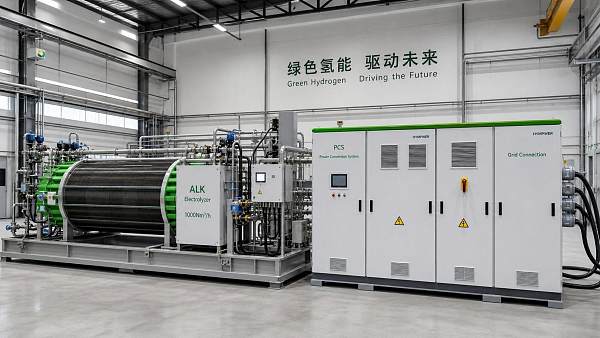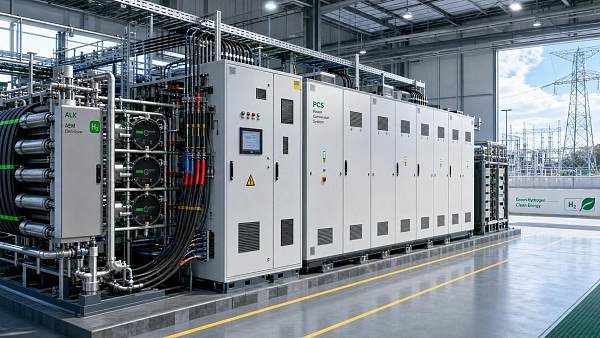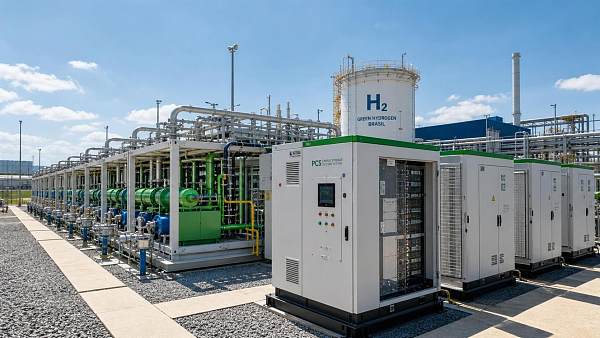
On July 6, the U.S. Department of Energy introduced a $420 million loan guarantee program aimed at ALK electrolyzer exporters, with priority for manufacturers that keep at least 65% U.S. domestic content in final assembly. The announcement matters not only to U.S.-based manufacturers, but also to foreign OEMs, contract manufacturing partners, QA operators, and export-facing supply chain teams, because the program explicitly leaves room for overseas companies to qualify if they place final integration and quality assurance capacity in the United States.
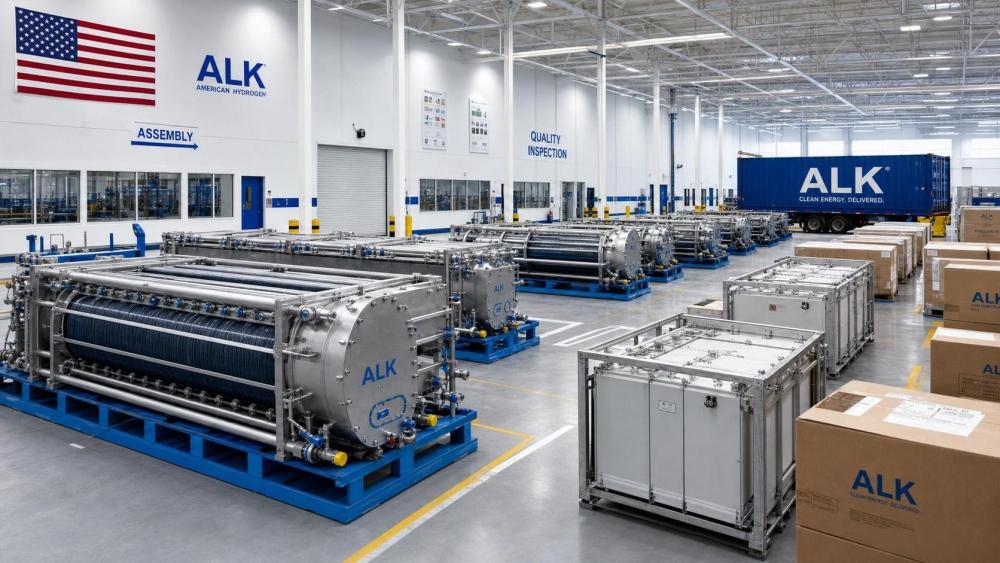
What the DOE has formally announced
The confirmed information is limited but commercially meaningful. According to the announcement dated July 6, the DOE launched a new loan guarantee program valued at $420 million. It gives priority to ALK electrolyzer manufacturers that commit to at least 65% domestic U.S. content in final assembly. At the same time, the program does not exclude foreign OEMs outright: it explicitly allows them to qualify if they co-locate U.S.-based final integration and quality assurance facilities. The stated target is to expand export-ready capacity serving global green hydrogen supply chains.
Why different parts of the value chain are paying attention
Manufacturing strategy is now tied to assembly location
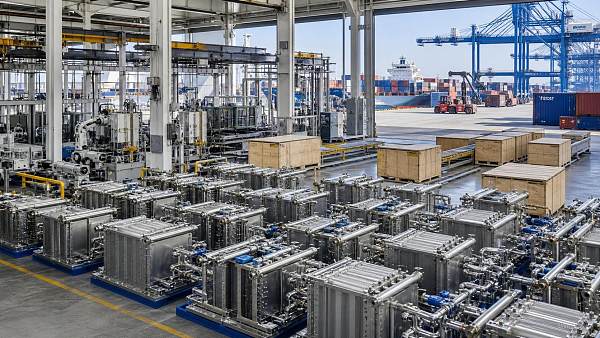
From an industry perspective, ALK electrolyzer manufacturers are the most directly affected because eligibility is linked to how final assembly is structured. For companies already producing in the U.S., the practical issue is whether their current assembly model aligns with the domestic content threshold. For companies producing elsewhere, the announcement raises the importance of U.S.-based final integration and QA as possible gateways to participation.
Foreign OEMs are not shut out, but the path is conditional
Analysis shows that the explicit inclusion of foreign OEMs changes the competitive reading of the program. The signal is not simple protectionism; it is a conditional market access framework. For overseas suppliers, the relevant business questions shift toward facility location, operational setup for final integration, and how QA activities are organized inside the U.S. rather than only where core manufacturing originates.
Export and supply chain teams may face new documentation pressure
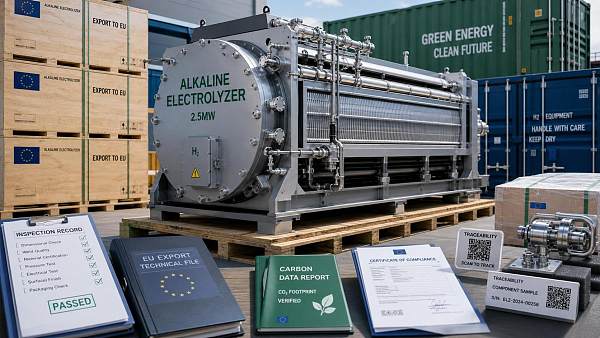
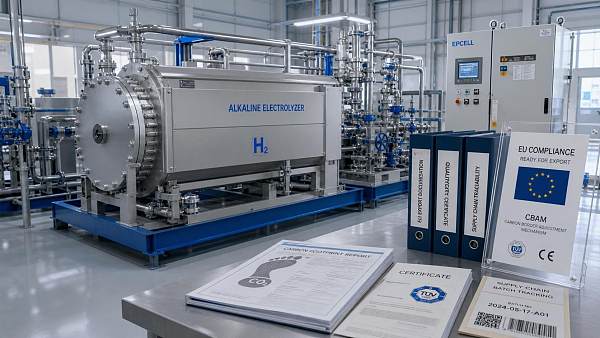
What deserves closer attention is the operational side of export-ready capacity. Companies involved in sourcing, final assembly, logistics coordination, and customer delivery may need to track how domestic content commitments are demonstrated in practice. Even without further rules provided in the input, the announcement alone suggests that documentation, traceability, and role clarity between manufacturing and final integration functions could become more material in deal execution.
What companies should monitor now
Watch for any clarification on program application details
Analysis shows that the headline conditions are clear, but the business impact will depend on how the DOE defines and applies terms such as domestic content, final assembly, final integration, and QA in practice. Companies should watch for any later official language that affects qualification thresholds or implementation standards.
Review whether current factory footprints match the policy signal
Manufacturers and OEMs should compare their existing production footprints with the program's stated priorities. For U.S.-based operators, that means checking whether the current final assembly structure can support the domestic content commitment. For foreign OEMs, the immediate issue is whether U.S.-based integration and QA capacity is only theoretically possible or commercially executable within customer timelines.
Separate policy eligibility from commercial readiness
Observably, policy access and export readiness are not the same thing. A company may fit the broad direction of the program yet still face operational gaps in supplier coordination, QA handoff, or delivery planning. Procurement and commercial teams should therefore avoid treating the announcement itself as proof of near-term bankability or immediate customer advantage.
Prepare for customer and partner due diligence
What deserves closer attention is partner communication. Export customers, channel partners, and supply chain service providers may start asking where final integration occurs, how QA is handled, and whether domestic content commitments can be substantiated. Companies active in ALK electrolyzer exports should be ready with consistent internal records and external explanations.
How this announcement is best understood at this stage
As an editorial observation, this looks less like a completed market outcome and more like a directional policy signal with practical implications. The clearest message is that the DOE is linking export-oriented ALK electrolyzer capacity to domestic assembly value, while still preserving an entry route for foreign manufacturers willing to localize the final stages of integration and quality control in the U.S. That combination is likely to shape how companies think about footprint design, but it does not yet settle how widely the program will alter competitive positions.
The near-term meaning for the hydrogen equipment trade
At this point, it is more appropriate to understand the news as a structured policy cue rather than a finished industry result. The announcement matters because it identifies which part of the manufacturing chain the U.S. wants to anchor domestically for export-facing ALK electrolyzer capacity. The most rational conclusion for now is that companies across manufacturing, sourcing, QA, and export operations should treat this as a development that warrants close monitoring and concrete internal review, while avoiding assumptions that all downstream effects are already determined.
Basis of this article and what still needs verification
This article is based on the user-provided news title, event date, and event summary. For developments of this kind, the relevant source types usually include official government announcements, company statements, industry association releases, authoritative media reports, and formal policy or standards documents. A specific official source link was not provided in the input, so the exact source document and any later implementation details still require ongoing verification. The main follow-up areas to monitor are any official clarification on qualification rules, definitions tied to domestic content and final assembly, and whether further guidance affects foreign OEM participation.
Related News
![]() DOE Opens $420M ALK Export Loan TrackHydrogen Tech ScientistDOE Opens $420M ALK Export Loan Track: learn how the new DOE loan guarantee could reshape ALK electrolyzer exports, U.S. assembly strategy, foreign OEM access, and supply chain readiness.
DOE Opens $420M ALK Export Loan TrackHydrogen Tech ScientistDOE Opens $420M ALK Export Loan Track: learn how the new DOE loan guarantee could reshape ALK electrolyzer exports, U.S. assembly strategy, foreign OEM access, and supply chain readiness. ALK Electrolyzer Prices Fall as Export Rules TightenHydrogen Tech ScientistALK electrolyzer prices fall 12% as China boosts capacity, cuts lead times, and tightens export rules. Explore buyer risks, delivery shifts, and compliance impacts now.
 China Tightens ALK Export Checks for EU ShipmentsHydrogen Tech ScientistChina Tightens ALK Export Checks for EU Shipments: learn how new carbon data and Tier-2 traceability rules may disrupt EU-bound deliveries, impact compliance, and reshape export planning.
 EU Issues Final CBAM Transition Rules for ALK ElectrolyzersHydrogen Tech ScientistEU Issues Final CBAM Transition Rules for ALK Electrolyzers: learn how quarterly emissions reporting, traceability, and Q4 2026 verification will impact EU exports and compliance readiness.
 EU Moves to Bring Electrolyzers Into CBAMHydrogen Tech ScientistEU Moves to Bring Electrolyzers Into CBAM: learn how the 2027 proposal affects ALK and PEM electrolyzer suppliers, carbon reporting, ISO 14067 EPDs, and EU hydrogen project compliance.
 Hydrogen Electrolyzers ISO Certification ChecklistHydrogen Tech ScientistHydrogen electrolyzers ISO certification checklist: learn key standards, audit gaps, and practical steps to speed approval, reduce risk, and strengthen project credibility.
 Alkaline Electrolyzer Efficiency vs CAPEX: What Matters Most in Project PlanningHydrogen Tech ScientistAlkaline electrolyzer project planning starts with more than efficiency alone. Discover how CAPEX, power cost, utilization, and bankability shape smarter hydrogen investment decisions.
 NEOM Starts ALK Assembly Program, Grants First China LicensesHydrogen Tech ScientistNEOM starts its ALK assembly program with first China licenses, setting a $2.1/kg LCOH cap and ISO 22734-2:2025 interface rule. Learn what it means for suppliers, bids, compliance, and project delivery.
 Brazil ANP Sets PCS Integration Rule for ALK ExportsHydrogen Tech ScientistBrazil ANP sets PCS integration rule for ALK exports, requiring shared-cabinet control and on-site validation. Learn how electrolyzer makers and buyers can prepare for Brazil compliance.
 Brazil Mandates PCS-Integrated ALK ElectrolyzersHydrogen Tech ScientistBrazil mandates PCS-integrated ALK electrolyzers for new orders, requiring IEEE 1547-2018 Rev.2 support and joint certification. Learn what exporters, buyers, and project teams must do now.
 Brazil Sets Integrated PCS Rule for ALK Hydrogen BidsHydrogen Tech ScientistBrazil Sets Integrated PCS Rule for ALK Hydrogen Bids: discover how ANP’s new co-architecture and IEC 61850-7-42 requirements could reshape bidding, compliance, and market access.
 Brazil ANP Tender Sets New Entry Rules for ALK BidsHydrogen Tech ScientistBrazil ANP tender sets new entry rules for ALK bids, requiring PCS integration, IEC 62443-3-3 interfaces, and extra compliance files. See what suppliers must prepare before December.