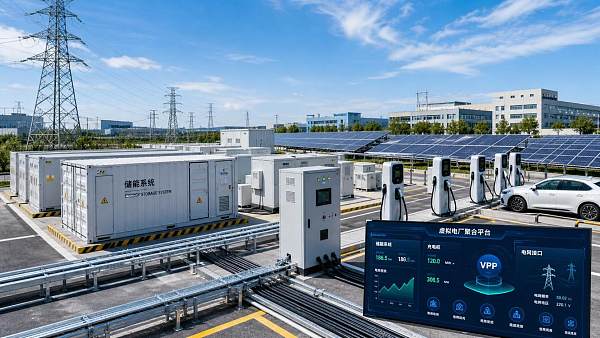
The International Energy Agency (IEA) released its World Energy Investment 2026 report on 29 May, projecting global electricity grid investment to reach nearly USD 55 billion in 2026 — a ~20% year-on-year increase. The exact event date for the investment surge itself was not specified. This development signals accelerating procurement demand for overseas power infrastructure projects, with direct implications for suppliers of intelligent transmission and distribution equipment.
Confirmed Investment Forecast and Key Growth Drivers
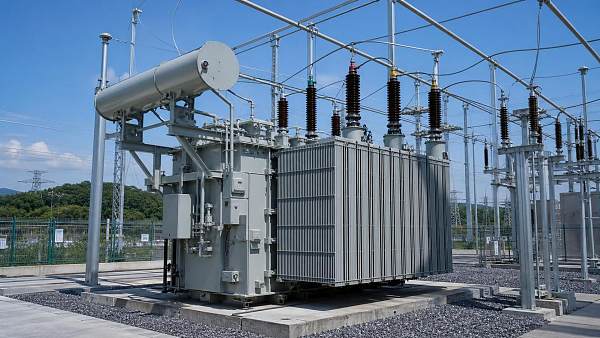
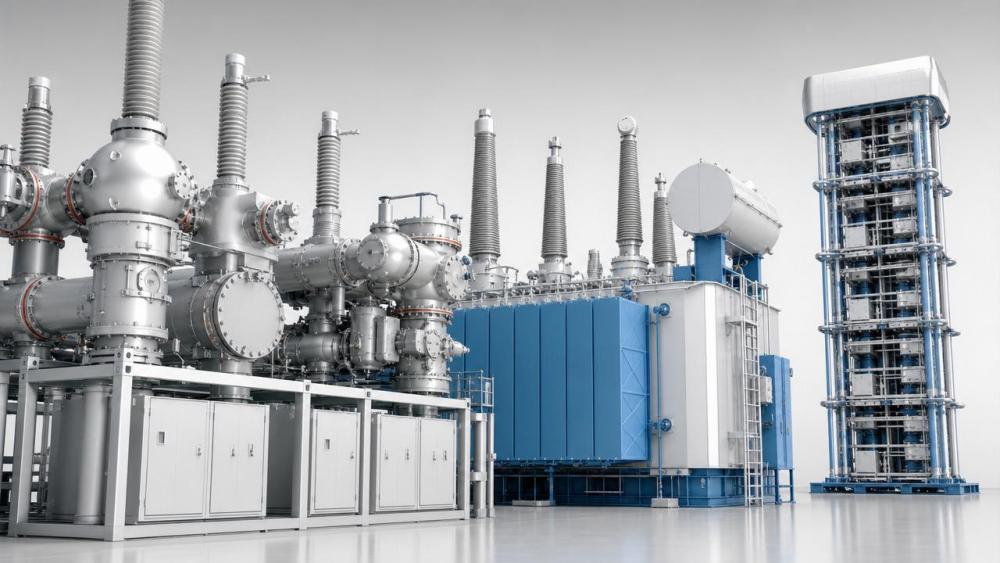
According to the IEA’s 29 May 2026 report, global grid investment is expected to approach USD 55 billion in 2026, representing a near-20% increase compared to 2025. Digital substations, gas-insulated switchgear (GIS), HVDC valves, and ultra-high-voltage (UHV) transformers are identified as the primary drivers of this growth.
Impact Across Supply Chain Roles
Export-oriented equipment manufacturers
These enterprises face rising order volumes from international utilities and EPC contractors. The surge directly affects tender participation timelines, production planning, and capacity allocation — particularly for products requiring IEC 61850 compliance and TÜV SÜD type testing.
Raw material and component suppliers
Increased demand for high-grade electrical steel, semiconductor-grade silicon for HVDC valves, and SF₆-free insulation materials may tighten supply chains. Procurement lead times and material certification traceability (e.g., EN 10204 3.2 reports) warrant closer monitoring.
Contract manufacturing and assembly firms
Firms engaged in final assembly of GIS bays or UHV transformer tank systems must align with updated IEC 61850 communication architecture requirements and third-party witnessed testing protocols — impacting both workflow sequencing and quality gate reviews.
Logistics and certification support providers
Service providers handling conformity assessment documentation, export customs classification (e.g., HS code 8535/8536), and technical file preparation will see higher demand for expedited IEC/TÜV SÜD coordination — especially where national grid operators mandate pre-shipment verification.
Strategic Priorities for Export Suppliers
Validate and maintain IEC 61850 conformance across product families
Grid operators increasingly require full interoperability testing under IEC 61850-10. Suppliers should audit existing device configuration files, GOOSE/SV mapping, and cyber-resilience features (e.g., IEC 62443 alignment) ahead of tender submissions.
Secure TÜV SÜD type test reports with extended validity scopes
Reports covering multiple voltage classes, ambient operating conditions, and seismic categories reduce retesting frequency. Prioritize test plans that include lifetime validation per IEC 60076-14 (for UHV transformers) or IEC 62271-203 (for GIS).
Optimize delivery scheduling using regional procurement cycle intelligence
Given accelerated project timelines, suppliers should cross-reference IEA’s regional investment breakdowns (where available) with national grid master plans to anticipate tender windows — enabling buffer time for documentation review and factory acceptance tests (FAT).
Pre-qualify subcontractors for certified sub-assemblies
For HVDC valve stacks or digital relay modules, ensure tier-2 suppliers hold valid ISO 9001-certified processes and provide traceable component test records — avoiding delays during final system integration audits.
Industry Observation: Beyond the Headline Growth
Analysis shows that the 20% investment jump reflects not just volume expansion but a structural shift toward digitally enabled, interoperable, and grid-stabilizing infrastructure. From an industry perspective, what deserves closer attention is the tightening linkage between certification readiness and commercial competitiveness: vendors lacking up-to-date IEC 61850-10 test evidence or TÜV SÜD reports covering emerging requirements (e.g., cybersecurity hardening, climate-resilient design per IEC 60068-2-60) risk exclusion from shortlists — even when technically qualified. Observably, lead times for third-party testing are extending, suggesting earlier engagement with notified bodies is becoming a de facto prerequisite for bid eligibility.
Key Takeaway for Market Participants
This investment milestone underscores a maturing global transition toward resilient, intelligent grid infrastructure — where regulatory compliance, standardized interoperability, and verified performance are no longer differentiators but baseline entry requirements. Success hinges less on scale alone and more on demonstrable, auditable alignment with evolving technical and procedural expectations across target markets.
Source Attribution and Monitoring Guidance
This article synthesizes information provided in the user-specified title, event timing, and summary. Specific official source links were not provided in the input and should be verified continuously. Stakeholders are advised to monitor subsequent updates to national grid codes (e.g., EN 50160 revisions), IEA’s regional implementation dashboards, tender document annexes specifying IEC 61850 versioning, and TÜV SÜD’s published interpretation notes on type test scope extensions.
Related News
 How to Evaluate a Virtual Power Plant Aggregation PlatformProf. Kaelen VossVirtual power plant aggregation platform evaluation starts with real dispatch, integration, optimization, and security checks. Learn how to compare vendors and choose a scalable, bankable solution.
 EU Sets UL 9540A Rule for Imported Liquid-Cooled BESSGrid Storage ArchitectEU sets UL 9540A rule for imported liquid-cooled BESS. Learn how the October 2026 EU requirement impacts compliance, certification timelines, costs, and delivery planning.
 Oil-Immersed Transformer Applications in Reliable Power Distribution ProjectsUHV Engineering FellowAn application guide for oil-immersed transformer buyers reviewing load profile, site conditions, insulation, cooling, testing, documentation, and project integration.
 Grid Resilience Solution Price: Cost Drivers and ROI BenchmarksMr. Orion SterlingGrid resilience solution price explained: compare cost drivers, hidden risks, and ROI benchmarks to choose a safer, higher-value energy resilience investment.
 DOE Adds UL 62271-200 for Imported ElectrolyzersHydrogen Tech ScientistDOE Adds UL 62271-200 for Imported Electrolyzers: learn how the new U.S. rule affects ALK and PEM shipments, certification timing, compliance costs, and market access from Sept. 1, 2026.
 DC Fast Charging Station Kiosk: Key Features to Compare Before You SpecifyEV Infrastructure ExpertDC fast charging station kiosk selection goes beyond power ratings. Compare uptime, thermal design, connectors, payments, and grid readiness before you specify.
 EU Sets New Thermal Runaway Test Rule for Liquid-Cooled BESSGrid Storage ArchitectEU Sets New Thermal Runaway Test Rule for Liquid-Cooled BESS: learn how UL 9540A Tier 3 and EN 50620:2025 requirements may impact EU market access, timelines, and compliance costs.
 PEM Hydrogen Electrolyzer Sizing: Key Factors That Affect Efficiency and CostHydrogen Tech ScientistPEM hydrogen electrolyzer sizing directly affects efficiency, CAPEX, and hydrogen cost. Learn the key factors shaping smarter, scalable system decisions.
 IEC 62933-5-2:2026 Makes VPP Interfaces MandatoryGrid Storage ArchitectIEC 62933-5-2:2026 makes VPP interfaces mandatory for newly certified PCS and EMS products, reshaping compliance in 32 export markets. Learn what manufacturers, integrators, and distributors must do now.
 Energy Storage Systems Integration: Common Failures and FixesGrid Storage ArchitectEnergy storage systems integration often fails at control, thermal, and commissioning interfaces. Discover common faults, practical fixes, and how to improve BESS reliability and project ROI.
 EV Charging Protocol References That Matter for System CompatibilityEV Infrastructure ExpertEV charging protocol references explained for real system compatibility. Learn how CCS, ISO 15118, DIN 70121, OCPP, and grid standards reduce integration risk and support scalable EV charging.
 C&I Storage for Factories: Where It Delivers the Best ROIGrid Storage ArchitectCommercial and industrial storage for factories delivers the best ROI when it cuts demand charges, boosts solar self-consumption, and protects uptime. See where payback is fastest.