Why grid interconnection delays hit some projects harder than others
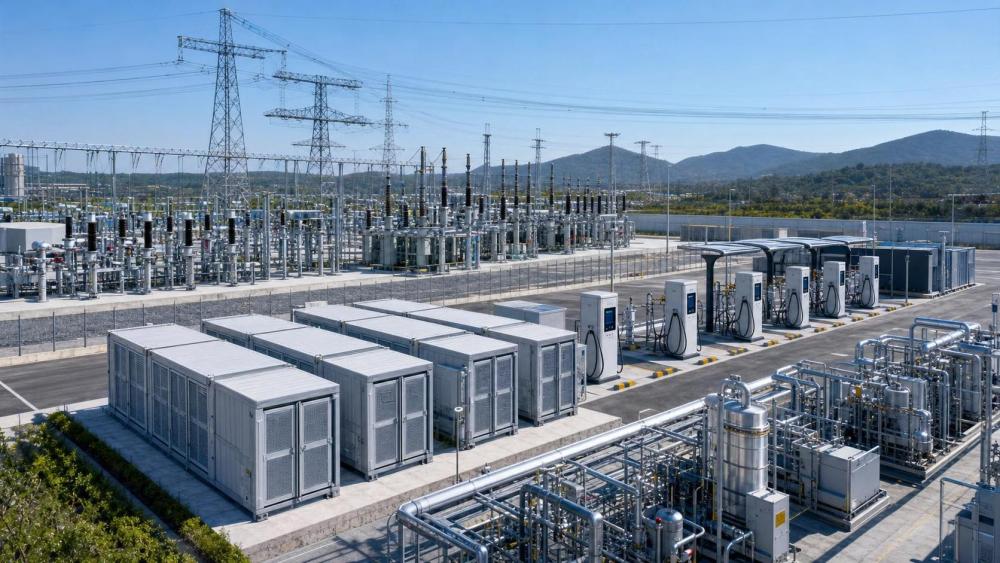
Grid interconnection has become a defining risk across modern energy infrastructure.
A delayed connection no longer means only a slower energization date.
It can also trigger redesign, idle equipment, missed revenue windows, and contract strain.
In practice, grid interconnection delays are shaped by where the asset sits, how it behaves, and what the network already carries.
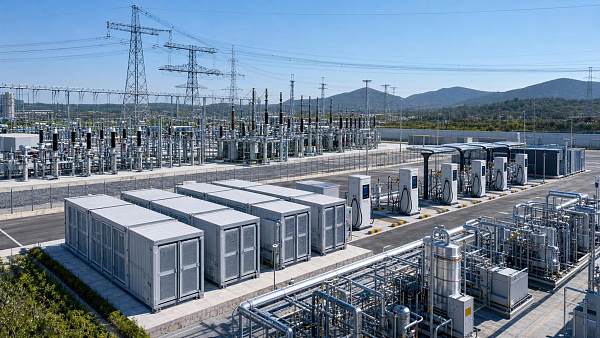
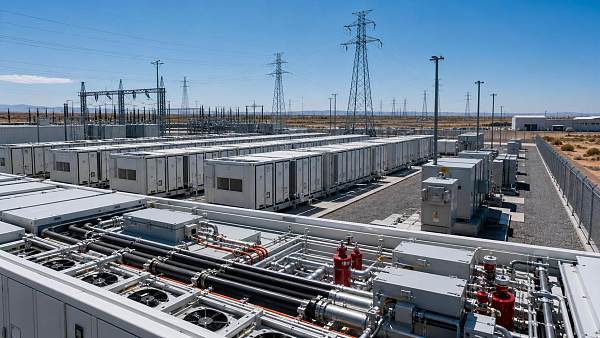
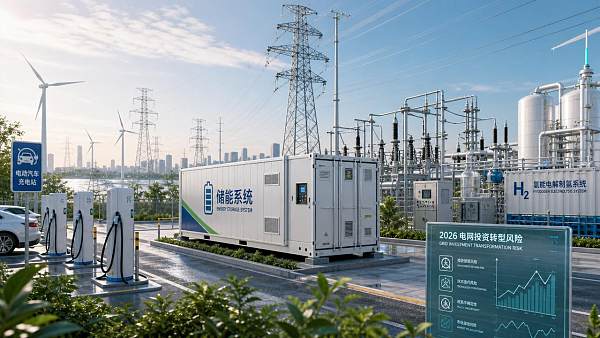
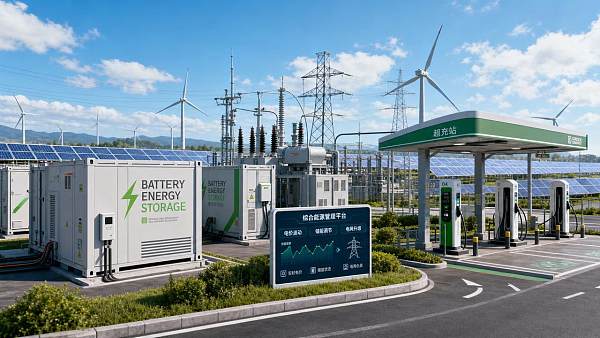
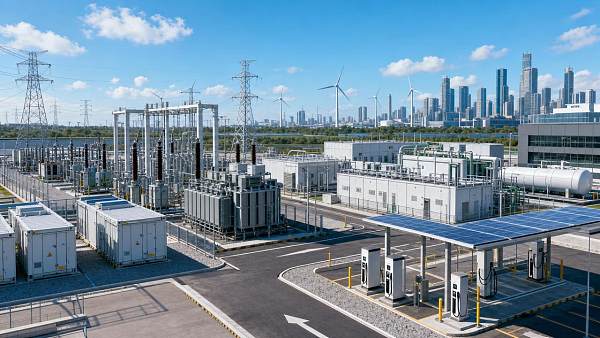
That is why a utility-scale BESS container, a hydrogen electrolyzer, and a mega EV charging hub face very different connection pathways.
The issue is not only queue length.
It is the interaction between power flow volatility, protection settings, local hosting capacity, and regulator expectations.
Across the ESGS landscape, the projects most exposed are often those linking flexible assets to constrained grids.
When millisecond-level dispatch meets aging substations or overloaded feeders, grid interconnection risk quickly becomes financial risk.
The real background: same keyword, very different operating conditions
Two projects can share the same interconnection voltage and still face opposite outcomes.
One may clear studies smoothly, while another absorbs months of rework.
The difference usually comes from operating profile rather than nameplate size alone.
A solar-plus-storage site may export in bursts and switch modes rapidly.
An electrolyzer may present a large, controllable load with ramping implications.
An ultra-fast charging plaza can create sharp coincident demand in an already stressed urban feeder.
ESGS often tracks these assets as parts of one wider system.
BESS, smart T&D equipment, UHV transformers, charging networks, and hydrogen conversion all influence how grid interconnection should be judged.
Looking only at the equipment package misses the network reality around it.
Where renewable-plus-storage projects usually run into hidden cost
For BESS and hybrid renewable plants, interconnection studies often appear manageable at first glance.
The hidden cost arrives later, when short-circuit duty, reactive power obligations, or protection coordination need revision.
This is common where battery dispatch assumptions change after the commercial model evolves.
A storage asset planned for peak shaving may later be asked to provide frequency response, reserve, or capacity support.
That changes the grid interconnection profile materially.
In these cases, the key question is not whether the battery can connect.
It is whether the PCS behavior, control logic, and thermal operating envelope still align with the approved study case.
Where advanced liquid cooling keeps internal cell temperatures tightly managed, operational confidence improves.
Yet that does not remove the need to validate export limits, curtailment assumptions, and fault ride-through requirements early.
A common misread in storage-led grid interconnection planning
Many teams lock the financial model before the interconnection use case is fully frozen.
That creates expensive friction when the final grid code demands different inverter settings or plant controller behavior.
More resilient planning starts with several dispatch scenarios, not one preferred scenario.
Why EV charging hubs and swapping sites face a different interconnection bottleneck
Mega charging infrastructure is often treated as a pure demand connection.
In reality, its grid interconnection risk depends on temporal clustering.
An 800V high-power charging site can look acceptable on annual energy forecasts.
It may still fail local network screening during evening peaks or holiday traffic spikes.
The judgment point here is load simultaneity, not just charger count.
Swapping infrastructure adds another layer because robotic systems, standby loads, and onsite storage can alter demand shape.
Where V2G is planned, the site also starts behaving like a flexible grid resource.
That can improve economics, but it complicates grid interconnection review, telemetry, and control compliance.
The better approach is to define whether the site is a passive load, a managed load, or a bidirectional node before utility studies begin.
Electrolyzers and industrial loads change the interconnection conversation
Hydrogen projects often enter queue discussions as large new loads.
That framing is too narrow.
A PEM or ALK electrolyzer may be adjustable, but its value depends on electricity timing, curtailment access, and system flexibility.
If the business case assumes low-cost renewable oversupply, the grid interconnection strategy must reflect that operating rhythm.
In constrained areas, the network may welcome flexible demand in principle.
It may still require expensive studies, telemetry, and staged energization in practice.
The critical judgment point is whether flexibility is contractually usable or only technically possible.
If an electrolyzer cannot reduce load when the system operator requests it, the expected grid interconnection advantage may disappear.
Transmission-linked assets bring another layer of timing risk
Projects near UHV corridors or major transmission upgrades often assume that bigger infrastructure means easier access.
The opposite can happen.
Where HVDC links, GIS substations, or large transformers are part of the connection chain, schedule dependency becomes sharper.
A single delay in commissioning sequence can push the entire grid interconnection date.
This matters especially when generation, storage, and transmission are developed by different parties.
One package may be technically ready while another still waits on factory tests, civil completion, or compliance signoff.
In these situations, the cost risk comes less from local feeder weakness and more from interface coordination.
That includes energization procedures, protection handoff, and data exchange between plant controls and network controls.
What often gets overlooked at this stage
- Assuming upstream transmission readiness guarantees downstream grid interconnection readiness.
- Treating control system integration as a late commissioning detail.
- Ignoring how standards and export requirements differ across markets.
- Budgeting for equipment only, while underestimating study and compliance iterations.
How to judge cost and risk before the queue becomes a problem
Useful grid interconnection planning starts before formal application.
The strongest early signal is usually the mismatch between commercial ambition and network behavior.
If revenue assumes unrestricted dispatch, but the local grid likely needs curtailment, risk is already visible.
If project value depends on fast ramping, but the interconnection study uses static load assumptions, revisions are likely.
A practical screening framework should test several layers together.
- Map the asset as load, generator, or bidirectional node under real operating hours.
- Check whether local substations and feeders match the dynamic behavior, not only the rated capacity.
- Confirm which protection, telemetry, and remote dispatch functions are mandatory.
- Stress-test the business model against curtailment, restudy, and upgrade scenarios.
This is where ESGS-style intelligence becomes especially useful.
Thermal safety, dispatch algorithms, LCOS discipline, and grid hardware realities need to be read together.
Grid interconnection is rarely delayed by one isolated issue.
It is usually delayed by an unmanaged interaction between technical assumptions and system constraints.
A more reliable next step than simply asking for faster approval
The most effective response to grid interconnection delays is sharper project definition.
Start by separating connection assumptions from commercial hopes.
Then compare how the asset will actually behave across peak, off-peak, contingency, and expansion conditions.
For storage, charging, hydrogen, and transmission-linked infrastructure, the winning approach is rarely generic.
It comes from matching the grid interconnection path to the site’s operating truth.
That means clarifying dispatch modes, checking upgrade dependency, quantifying curtailment exposure, and reviewing compliance scope before equipment locks in.
When those steps are handled early, cost risk becomes more visible, and delay risk becomes easier to manage.
Related News
 Grid Interconnection Delays: What Drives Cost and Risk?Mr. Orion SterlingGrid interconnection delays can drive redesign, upgrade costs, and revenue loss. Learn what raises risk for BESS, EV charging, and hydrogen projects—and how to plan ahead.
 Frequency Regulation Revenue: How to Evaluate Payback and Market RiskMr. Orion SterlingFrequency regulation revenue explained: learn how to evaluate payback, battery wear, pricing volatility, and market risk to make smarter storage investment decisions.
 How Energy Transition Consulting Shapes Bankable Grid ProjectsMr. Orion SterlingEnergy transition consulting helps turn complex grid assets into bankable projects by reducing risk, improving revenue visibility, and strengthening investor confidence.
 Zero-Carbon Grids: Key Cost Drivers and ROI in 2026Mr. Orion SterlingZero-carbon grids in 2026: uncover the real cost drivers, ROI levers, and hidden risks across BESS, UHV, hydrogen, and EV charging to make smarter, higher-return grid investments.
 LCOS Analysis for Grid-Scale Storage: Which Cost Inputs Matter Most?Mr. Orion SterlingLCOS analysis reveals which cost inputs truly shape grid-scale storage returns. Explore capex, degradation, efficiency, augmentation, and financing to make smarter BESS procurement decisions.
 Distributed Storage vs Centralized Systems: What Changes Grid Resilience?Mr. Orion SterlingDistributed storage vs centralized systems: discover how distributed storage improves grid resilience, speeds outage recovery, reduces local congestion, and supports smarter energy strategy.
 How Renewable Integration Impacts Curtailment, Stability, and ROIMr. Orion SterlingRenewable integration shapes curtailment, grid stability, and ROI. Discover how storage, transmission, hydrogen, and smart controls can reduce losses and improve project returns.
 Renewable Energy Reservoirs: Benefits, Limits, and Grid ValueMr. Orion SterlingRenewable energy reservoirs explained: discover their benefits, limits, and real grid value across batteries, hydrogen, EV fleets, and pumped hydro for smarter energy planning.
 Energy Hubs for Smart Cities: What Makes Projects BankableMr. Orion SterlingEnergy hubs for smart cities become bankable when grid integration, safe storage, realistic revenue, and compliance align. Learn what investors and buyers value most.
 Energy Transition Risks Reshaping Grid Investment in 2026Mr. Orion SterlingEnergy transition risks are reshaping grid investment in 2026. Explore how storage, transmission, charging, and hydrogen risks impact returns, resilience, and bankable assets.
 Energy Market Insights: 5 Price Signals to Watch in 2026Mr. Orion SterlingEnergy market insights for 2026: discover 5 critical price signals shaping storage, grids, EV charging, and hydrogen—and make smarter investment decisions before volatility hits.
 When Energy Transition Consulting Delivers Measurable ROIMr. Orion SterlingEnergy transition consulting delivers measurable ROI by reducing risk, optimizing asset choices, and improving long-term returns across storage, grid, EV charging, and hydrogen projects.