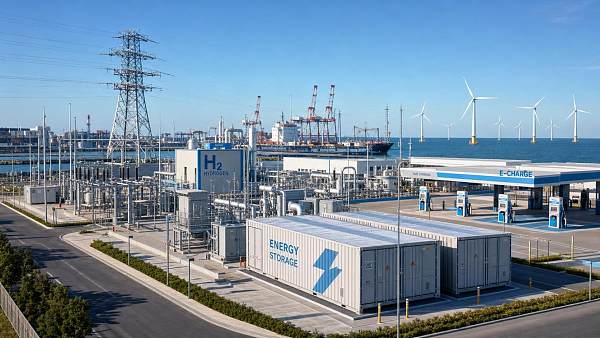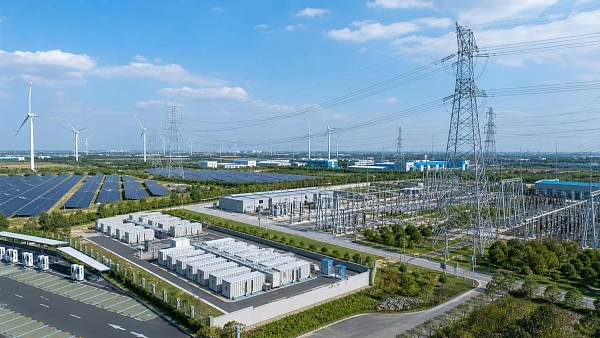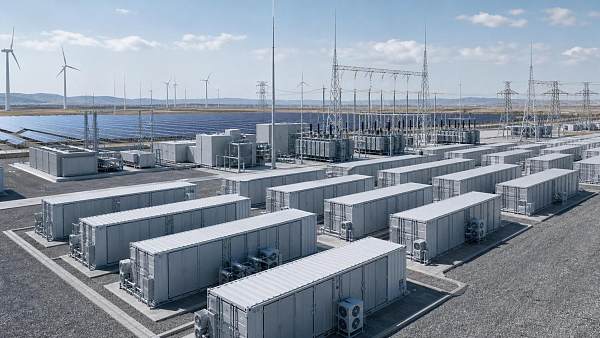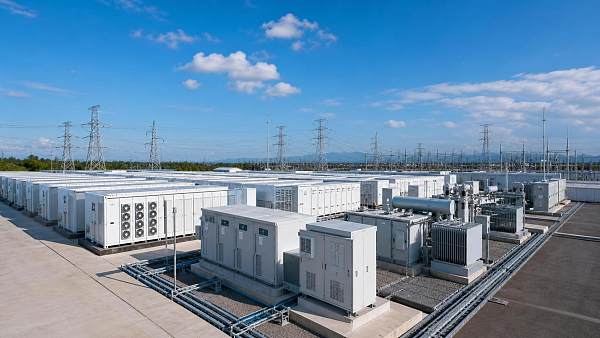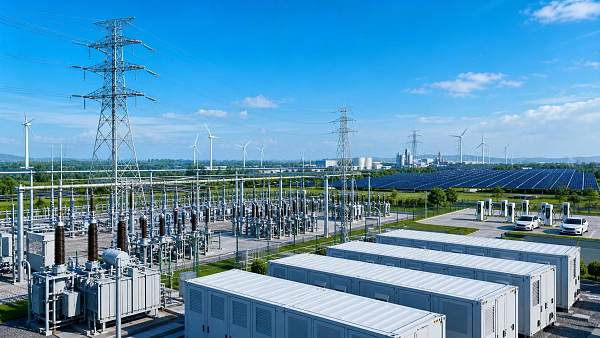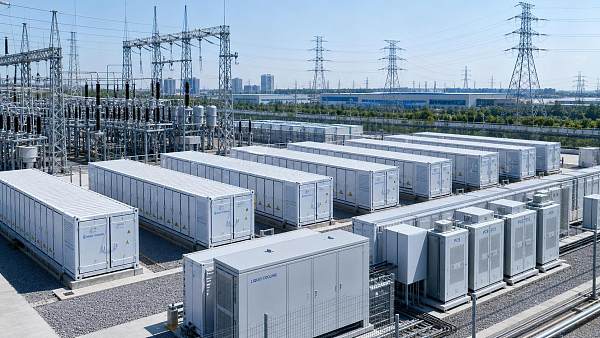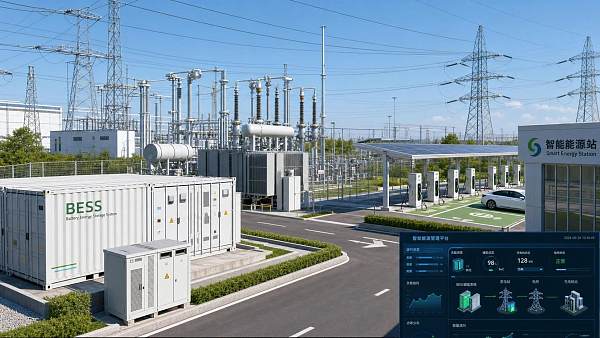
Zero-carbon grids are central to the 2030 energy transition, yet the roadmap is far less linear than public targets suggest. Behind every clean electricity claim sits a difficult engineering reality: variable renewables, stressed transmission corridors, battery safety constraints, volatile project economics, and a dispatch environment that must react in milliseconds. For any organization tracking zero-carbon grids, the real question is not whether the vision is attractive, but whether the system can absorb complexity without losing stability, safety, or returns.
A checklist approach helps separate symbolic progress from operational readiness. It forces decision-makers to test assumptions across BESS containers, UHV transmission, EV charging, hydrogen coupling, and digital control layers before capital is locked in. In zero-carbon grids, weak links rarely stay isolated. A thermal event, delayed transformer delivery, or poor charging load orchestration can ripple across the whole network.
Why Zero-Carbon Grids Need a Structured Risk Checklist
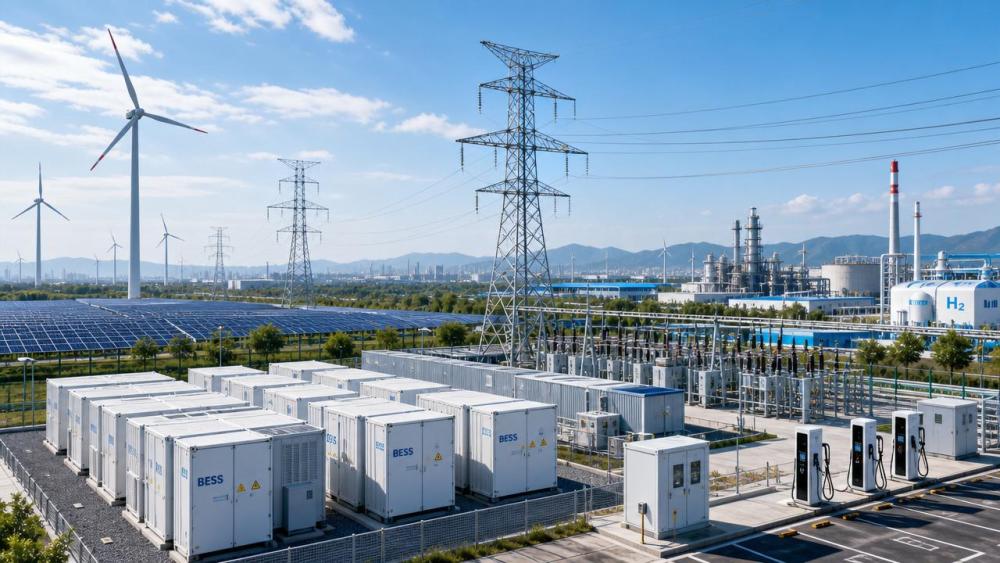
The 2030 timetable compresses technologies with very different maturity levels into one delivery window. Solar and wind deployment may scale quickly, but grid readiness depends on assets with longer development cycles, stricter permitting, and more complex compliance pathways.
That is why zero-carbon grids should be judged as integrated systems, not separate clean-energy projects. Transmission capacity, storage duration, fault isolation, cybersecurity, and revenue design must all align. If one layer lags, the roadmap loses credibility and cost discipline.
Core Checklist: Key Risks Behind the 2030 Roadmap
- Verify transmission availability early, because zero-carbon grids fail when renewable generation grows faster than UHV lines, substations, and interconnection capacity.
- Stress-test BESS safety design through cell selection, liquid cooling redundancy, fire suppression, and UL 9540A propagation evidence before procurement closes.
- Model dispatch at sub-second intervals, since zero-carbon grids depend on PCS response, frequency regulation quality, and accurate state-of-charge management.
- Quantify charging load clustering, especially where 800V fast charging or swapping stations can create localized peaks beyond feeder limits.
- Check transformer and switchgear lead times, because GIS, HVDC valves, and UHV transformers often become silent schedule bottlenecks.
- Price revenue realism carefully, using LCOS, curtailment risk, ancillary service saturation, and merchant volatility instead of headline arbitrage assumptions.
- Plan hydrogen integration selectively, ensuring electrolyzers absorb surplus power without destabilizing local voltage profiles or worsening water constraints.
- Audit digital interoperability across EMS, SCADA, VPP, charger networks, and market platforms to prevent fragmented control in zero-carbon grids.
- Build cyber-resilience into dispatch architecture, because more connected grid assets increase attack surfaces and operational exposure.
- Review permitting and compliance pathways early, since land use, fire codes, grid codes, and environmental reviews can delay energization more than equipment delivery.
How These Risks Play Out Across Different Scenarios
Utility-Scale Solar and Wind Corridors
In large renewable corridors, the main risk is spatial mismatch. Generation appears where wind and solar are strongest, while demand centers sit far away. Zero-carbon grids therefore rely heavily on UHV transmission, reactive power control, and fast curtailment management.
When transmission arrives late, storage is often asked to solve structural congestion it was never sized for. That inflates cycling intensity, accelerates degradation, and weakens project returns. The lesson is simple: storage complements transmission, but it does not replace it.
Urban EV Charging and Swapping Networks
In cities, zero-carbon grids face a different challenge: synchronized charging behavior. High-power chargers can produce steep evening peaks, while swapping depots may concentrate battery inventory and cooling loads in small geographic zones.
Without V2G logic, dynamic tariffs, and feeder-level forecasting, transport electrification can worsen local grid stress even as it lowers tailpipe emissions. Urban zero-carbon grids must therefore combine mobility infrastructure with storage, software dispatch, and transformer upgrade plans.
Industrial Parks and Microgrids
Industrial sites often pursue zero-carbon grids through on-site solar, C&I storage, backup generation, and demand response. Here, reliability matters as much as carbon reduction because voltage dips or outages can interrupt high-value operations.
The overlooked risk is control fragmentation. If microgrid controllers, storage EMS, and facility energy systems cannot exchange clean data, response quality degrades. A technically green system may still fail commercially if resilience targets are not met.
Hydrogen-Linked Power Systems
Hydrogen is often framed as a universal absorber of excess renewable power. In practice, electrolyzers help zero-carbon grids only when operating windows, water access, grid tariffs, and offtake demand are synchronized.
If hydrogen facilities run on poorly timed power imports, they can amplify network strain instead of reducing curtailment. Their value rises when dispatch software uses them as flexible loads, not as static industrial demand.
Commonly Ignored Risk Signals
Battery safety is still underestimated. A project may pass financial screens while lacking robust thermal propagation evidence, emergency spacing design, or local fire authority alignment. In zero-carbon grids, safety gaps quickly become investment risks.
Control latency is another hidden issue. Fast assets are valuable only when telemetry, communications, and control logic work at matching speed. A delayed signal can turn frequency support promises into compliance failures.
Another neglected signal is component concentration. Transformers, power electronics, and advanced switchgear often depend on narrow supply chains. Zero-carbon grids become vulnerable when one vendor delay stalls an otherwise complete project cluster.
Revenue stacking is also frequently over-modeled. Capacity payments, ancillary services, and arbitrage may look attractive together, but market saturation can compress value fast. Realistic downside cases are essential before expansion decisions.
Practical Execution Moves for 2024-2030
- Map every project against transmission readiness, not just renewable resource quality or land availability.
- Require full BESS safety documentation, including thermal testing, cooling strategy, and shutdown logic.
- Run digital twin simulations for charging hubs, storage fleets, and mixed-load substations before commissioning.
- Secure long-lead equipment contracts early for UHV transformers, GIS assets, and critical PCS components.
- Design market participation with conservative LCOS assumptions and explicit degradation costs.
- Integrate VPP logic so chargers, storage, and flexible industrial loads respond as one controllable portfolio.
- Align cyber, compliance, and grid code reviews with engineering milestones instead of treating them as final-stage tasks.
Conclusion: Build Zero-Carbon Grids Around System Truth, Not Slogans
The promise of zero-carbon grids remains powerful, but the 2030 roadmap will be decided by execution discipline. Transmission must keep pace with renewable buildout. BESS assets must prove safety and dispatch quality. EV charging must behave like a managed grid resource. Hydrogen must serve as flexible coupling, not decorative ambition.
The next practical step is to audit current projects using a system-level checklist: transmission, storage, charging, hydrogen, digital control, compliance, and revenue resilience. Zero-carbon grids succeed when each layer is stitched together with operational realism. That is where stable decarbonization, credible returns, and long-term grid trust are actually built.
Related News
 Energy Arbitrage Calculator: What Inputs Change ROI the Most?Mr. Orion SterlingEnergy arbitrage calculator insights: discover which inputs most affect ROI, from price spreads and efficiency to degradation, demand charges, and dispatch risk.
 Grid-Scale Storage Systems: Cost Drivers, Revenue Paths, and Payback RisksMr. Orion SterlingGrid-scale storage systems explained: uncover key cost drivers, revenue streams, and payback risks to evaluate projects smarter and invest with greater confidence.
 Energy Intelligence Platforms for Sourcing: What to Compare Before You BuyMr. Orion SterlingEnergy intelligence platforms for sourcing: compare supplier depth, technical compliance, market signals, and lifecycle cost tools before you buy to reduce risk and choose with confidence.
 LCOS Benchmarking Methods That Expose Hidden Storage CostsMr. Orion SterlingLCOS benchmarking methods that reveal hidden storage costs, from augmentation and thermal losses to downtime and compliance, helping buyers compare BESS projects with confidence.
 Zero-Carbon Infrastructure in Europe: What Will Shape Projects in 2026Mr. Orion SterlingZero-carbon infrastructure Europe enters a tougher 2026 phase shaped by storage, grids, hydrogen, and EV charging. Discover what makes projects bankable, compliant, and investment-ready.
 Dynamic Power Flow Control: When It Pays Off in Congested GridsMr. Orion SterlingDynamic power flow control can unlock hidden grid capacity, cut curtailment, and defer costly upgrades. Learn where it delivers the fastest ROI in congested grids.
 Grid-Scale Energy Storage Cost Drivers in 2026Mr. Orion SterlingGrid-scale energy storage cost drivers in 2026 go far beyond battery prices. Explore how thermal control, PCS efficiency, safety, software, and financing reshape project returns.
 Utility Scale Battery Storage Solutions: Key Cost Drivers Beyond Battery CellsMr. Orion SterlingUtility scale battery storage solutions cost far more than battery cells alone. Explore hidden drivers like thermal design, PCS, safety, EPC, and interconnection to compare suppliers smarter.
 Energy Storage Innovations Reshaping Grid Flexibility in 2026Mr. Orion SterlingEnergy storage innovations are redefining grid flexibility in 2026, from BESS and VPPs to hydrogen and EV charging. Discover what drives resilience, safety, and smarter returns.
 Industrial Equipment Sourcing Information: How to Vet Suppliers and Hidden CostsMr. Orion SterlingIndustrial equipment sourcing information helps you vet suppliers, uncover hidden costs, and avoid risky low-price offers. Learn how to protect uptime, compliance, and project ROI.
 IEA Flags Power Grid and Storage as 2026 Investment PriorityMr. Orion SterlingIEA flags power grid and storage as the 2026 investment priority, highlighting rising demand for UHV equipment, liquid-cooled BESS, and PCS/EMS systems. Explore supply chain risks and market opportunities.
 Energy Intelligence: 5 Signals That Improve Grid Asset DecisionsMr. Orion SterlingEnergy intelligence reveals 5 high-impact signals for smarter grid asset decisions, helping teams improve safety, flexibility, and returns across storage, charging, transmission, and hydrogen systems.