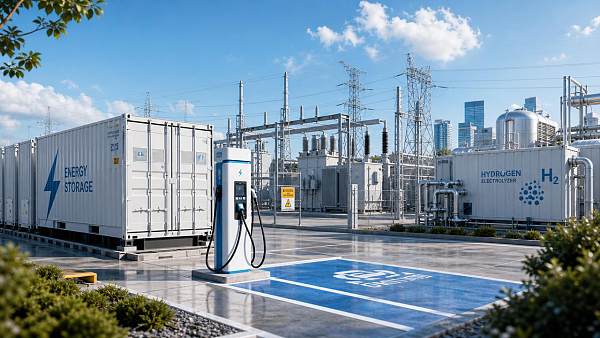
In 2026, the ROI of VPP technology will depend less on hype and more on dispatch accuracy, asset mix, market access, and revenue stacking. For enterprise decision-makers, understanding what truly drives payback is essential to turning distributed energy, EV charging, and storage assets into flexible, bankable grid resources with measurable financial returns.
Why does VPP technology pay back faster in some portfolios than others?
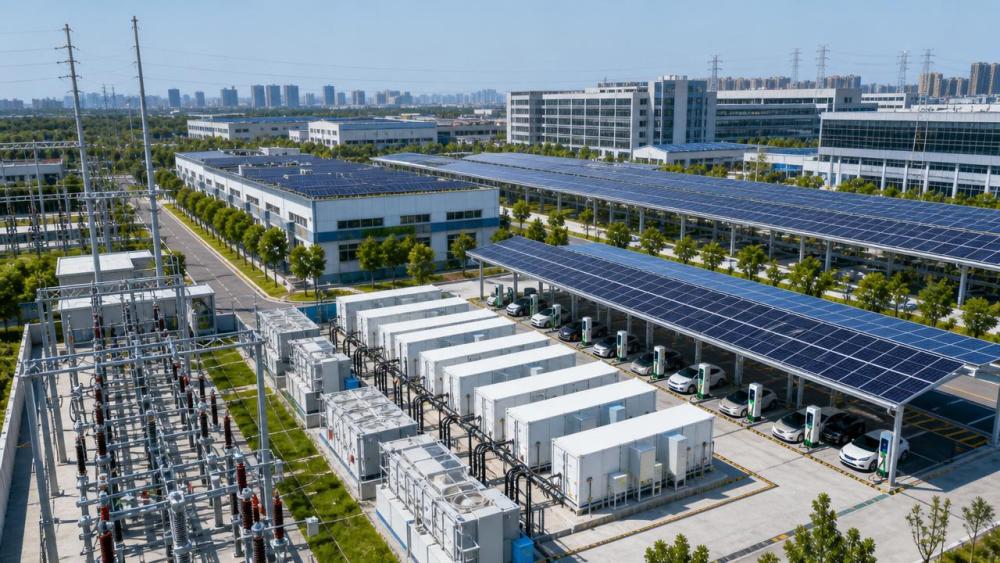
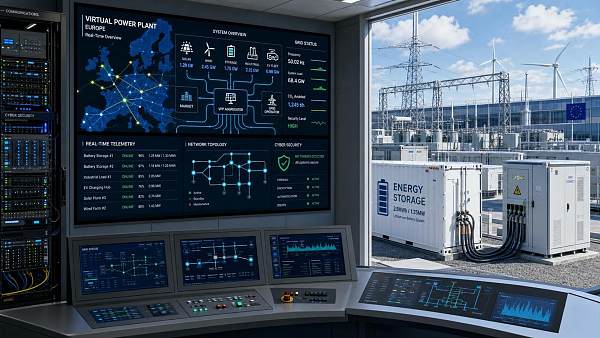
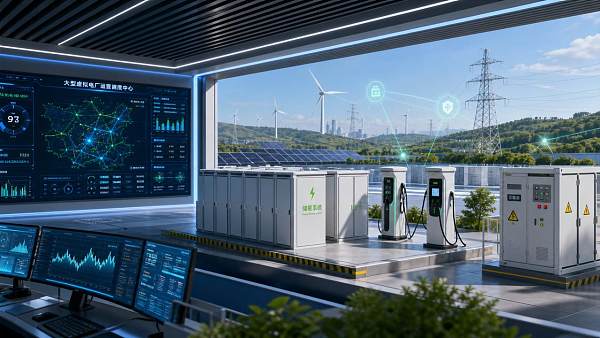
VPP technology is no longer just a digital control layer. In practical grid and energy infrastructure projects, it is a monetization engine that connects batteries, chargers, controllable loads, transformers, and market signals into one dispatchable asset base.
That means payback in 2026 will not be driven by software cost alone. It will be shaped by whether the VPP can convert physical flexibility into contracted and recurring revenue under real operating constraints.
For enterprise decision-makers, the central question is simple: can VPP technology reduce energy cost, create new grid-service income, and protect asset life at the same time? If one of those three fails, ROI weakens quickly.
The four ROI drivers that matter most
- Dispatch quality: suboptimal forecasting and control reduce response performance, increase battery stress, and weaken settlement outcomes in ancillary service markets.
- Asset mix: a VPP built around only one asset type is usually less resilient than a portfolio combining BESS, EV charging, flexible industrial loads, and onsite generation.
- Market access: the same technical platform may produce very different returns depending on local rules for demand response, capacity, frequency regulation, and V2G participation.
- Revenue stacking discipline: projects overestimate upside when they assume all value streams can be captured simultaneously without operational conflicts.
ESGS tracks this intersection closely because VPP economics do not sit in software alone. They depend on battery thermal behavior, PCS response, transformer loading, charging utilization, and grid-side compliance.
What assets make VPP technology financially stronger in 2026?
The strongest VPP technology business cases typically come from mixed portfolios. Different assets respond at different speeds, have different cycling costs, and fit different revenue windows. That diversity improves both controllability and bankability.
The table below shows how common distributed energy assets contribute to VPP technology ROI from an enterprise perspective.
The key lesson is that VPP technology works best when each asset plays a defined role. BESS handles precision and speed, chargers provide scalable flexibility, and industrial loads create low-capex response volume.
Why ESGS sees asset physics as an ROI issue
A VPP that ignores hardware realities will overpromise returns. Battery containers need stable thermal gradients. Charging hubs need power electronics that can handle frequent dispatch signals. Grid equipment must tolerate dynamic loading without introducing reliability risk.
This is where ESGS brings value. Intelligence across BESS containers, smart grid T&D equipment, UHV transmission, mega charging infrastructure, and hydrogen systems helps enterprises evaluate VPP technology beyond the dashboard layer.
Which revenue streams actually drive VPP technology ROI?
Many projects fail financially because they model only one benefit or count the same flexibility twice. In 2026, the winning VPP technology strategy is disciplined revenue stacking with clear operating priority rules.
Typical value streams for enterprise portfolios
- Peak demand charge reduction for factories, logistics hubs, campuses, and charging depots.
- Energy arbitrage based on time-of-use or intraday price differences.
- Ancillary services such as frequency regulation, fast reserve, or voltage support where market rules allow aggregation.
- Capacity payments or availability contracts tied to dispatch readiness.
- Curtailment reduction and renewable self-consumption improvement for sites with solar or wind integration.
The table below compares common VPP technology revenue streams by predictability and operational burden.
For most enterprises, peak shaving and contracted flexibility tend to be the foundation. Merchant arbitrage can improve returns, but it should not carry the whole investment case unless price volatility is well understood.
What technical factors shorten or delay VPP technology payback?
The difference between a three-year and six-year payback often comes from technical execution. Enterprise buyers should look beyond platform features and focus on operational performance under grid conditions.
High-impact technical checkpoints
- Telemetry interval and control latency. Slow data and delayed actuation can disqualify participation in high-value grid services.
- Forecast quality. Renewable output, charger occupancy, and load variation must be modeled with enough accuracy to avoid missed dispatch commitments.
- Battery operating strategy. Aggressive dispatch may increase short-term revenue while damaging long-term LCOS through excess cycling or thermal stress.
- Interoperability. Mixed fleets require stable communication among EMS, chargers, PCS, BMS, meters, and utility interfaces.
- Cybersecurity and fail-safe logic. If communications fail, assets must fall back to safe operating modes without creating site or grid risk.
For BESS-heavy portfolios, thermal management is not a side topic. Poor temperature uniformity increases performance drift and can undermine the dispatch precision that VPP technology depends on.
For EV charging portfolios, utilization modeling is equally important. A charging hub may look large on paper, but if dwell time, customer behavior, and connection limits are poorly understood, available flexibility shrinks fast.
How should enterprise buyers evaluate VPP technology suppliers?
Procurement mistakes usually happen when buyers compare interfaces instead of outcomes. VPP technology should be evaluated as an operational and commercial system, not only as software licensing.
Use the following procurement table to structure supplier assessment and reduce decision risk.
Enterprise buyers should also request a clear revenue hierarchy. If the supplier cannot explain how the platform resolves conflicts between arbitrage, peak shaving, and ancillary services, the financial model may be too optimistic.
A practical shortlist for decision-makers
- Prioritize suppliers that can model both market revenue and equipment operating boundaries.
- Check whether their controls can coordinate BESS, EV charging, and site demand under one optimization layer.
- Review how they support compliance documentation, telemetry records, and settlement traceability.
- Ask for implementation timelines tied to interconnection, controls integration, and market enrollment.
What compliance and grid-readiness issues are often missed?
A VPP project can look profitable in a spreadsheet and still stall during implementation. Grid interconnection rules, metering quality, communications security, and storage safety requirements often create the biggest delays.
For storage-linked VPP technology, buyers should review applicable fire safety, battery testing, and site protection expectations. In many markets, UL 9540A-related understanding, grid code compliance, and utility approval processes affect both timing and insurability.
For EV charging portfolios, interoperability standards and bidirectional charging readiness matter. A theoretical V2G opportunity has limited value if the chargers, vehicles, or local regulations do not support operational participation.
ESGS is especially useful here because VPP performance must be read together with equipment compliance. Dispatch strategy, thermal safety, and power-flow control should not be treated as separate procurement streams.
Common misconceptions about VPP technology ROI
“More assets automatically mean better returns”
Not always. A larger portfolio with weak interoperability or poor utilization can underperform a smaller but better-structured asset fleet. Quality of flexibility is more important than raw connected capacity.
“Merchant market revenue is enough”
Usually not for enterprise-grade investment approval. Decision-makers often need a base case supported by contracted savings or capacity value, with merchant upside treated separately.
“The software can fix weak hardware”
It cannot. If a charger network lacks stable communications, if a battery container has thermal inconsistency, or if substation equipment is not ready for dynamic dispatch, VPP technology cannot deliver full value.
“Payback is mainly about capex”
Capex matters, but realized revenue, availability, degradation management, and market downtime often influence the actual payback period more than the initial software line item.
FAQ: what enterprise buyers ask before investing in VPP technology
How do we know whether our site is suitable for VPP technology?
Start with four checks: controllable load profile, asset connectivity, local market access, and operational tolerance for dispatch events. Sites with BESS, high electricity demand charges, charging fleets, or renewable curtailment exposure are often strong candidates.
Which projects usually see the fastest payback?
Projects with existing flexible assets and clear value streams generally move fastest. Examples include C&I sites using batteries for peak shaving, charging depots with managed load, and mixed portfolios already connected to an aggregator or utility flexibility program.
What should be included in the financial model?
Model integration cost, market enrollment time, telemetry and control upgrades, battery degradation, maintenance impacts, curtailment reduction, and any penalties for non-performance. Conservative assumptions usually produce better board-level decisions.
How long does implementation usually take?
It depends on asset readiness and local approvals. Software deployment can be fast, but full implementation may take longer due to metering upgrades, interconnection review, communications integration, safety checks, and market qualification procedures.
Why work with ESGS when evaluating VPP technology in 2026?
Enterprise decisions on VPP technology are no longer only digital transformation decisions. They are infrastructure decisions involving BESS containers, grid equipment, charging systems, dispatch algorithms, compliance pathways, and capital return expectations.
ESGS helps decision-makers connect those layers. Through intelligence spanning storage thermodynamics, millisecond-level power-flow control, EV charging flexibility, and LCOS-oriented investment logic, ESGS supports more disciplined VPP evaluation and rollout planning.
If you are assessing VPP technology for a battery portfolio, charging hub, industrial site, or multi-asset distributed energy strategy, you can consult ESGS on practical questions such as:
- how to confirm dispatch-relevant parameters for BESS, chargers, PCS, and site loads,
- how to compare product and platform options for specific revenue streams,
- how to estimate delivery timelines for integration and market readiness,
- how to review safety and certification requirements linked to storage and grid equipment,
- and how to structure quotation discussions around both technical scope and return expectations.
For enterprise buyers, the most valuable VPP technology partner is the one that can translate hardware behavior, grid rules, and revenue logic into one bankable roadmap. That is where informed consultation creates real payback advantage.
Related News
 Hydrogen Energy Infrastructure Storage Systems: Key Design Risks and Trade-OffsProf. Kaelen VossHydrogen energy infrastructure storage systems face critical trade-offs in safety, efficiency, cost, and compliance. Explore key design risks and smarter evaluation strategies.
 EU Issues EN 50641-3 for VPP Grid AccessProf. Kaelen VossEN 50641-3 reshapes EU VPP grid access with new rules on telemetry, cybersecurity, and interoperability. See what VPP operators, EMS vendors, and storage integrators must prepare now.
 Carbon-Neutral Transport: What Is Changing in Fleet Planning in 2026Prof. Kaelen VossCarbon-neutral transport in 2026 is reshaping fleet planning around grid capacity, charging, storage, and risk. Discover the key shifts driving smarter, scalable fleet decisions.
 Hydrogen Energy Infrastructure Risks in Early-Stage ProjectsProf. Kaelen VossHydrogen energy infrastructure risks can derail early-stage projects fast. Learn how grid, electrolyzer, safety, storage, and transport factors shape bankability, compliance, and returns.
 Hydrogen Fuel Production Cost Breakdown for 2026 PlanningProf. Kaelen VossHydrogen fuel production cost breakdown for 2026 planning: compare electricity, electrolyzer CAPEX, storage, transport, and financing to make smarter, bankable project decisions.
 Power-to-X Hydrogen Production: When Does the Business Case Work?Prof. Kaelen VossPower-to-X hydrogen production works when cheap clean power, high electrolyzer utilization, reliable offtake, and smart logistics align. Explore what makes projects bankable.
 VPP Technology Trends Reshaping Distributed Energy in 2026Prof. Kaelen VossVPP technology is reshaping distributed energy in 2026, linking BESS, EV charging, grids, and hydrogen loads to unlock flexible, bankable revenue and smarter power control.
 Hydrogen Electrolyzers in VPPs: Flexibility Value and LimitsProf. Kaelen VossHydrogen electrolyzers in VPPs can unlock renewable flexibility, grid balancing, and Power-to-X revenue—if dispatch limits, storage, pricing, and offtake risks are managed.
 VPP Technology Risks: What to Check Before Scaling AggregationProf. Kaelen VossVPP technology risks can derail aggregation at scale. Learn what to check on interoperability, dispatch accuracy, cybersecurity, and asset health before expanding.
 Green Hydrogen Production Costs in 2026: What Changes Most?Prof. Kaelen VossGreen hydrogen production costs in 2026 will shift most through power profiles, utilization, and financing. Explore the four scenarios changing project economics fastest.
 Hydrogen Energy Infrastructure Risks and Readiness in 2026Prof. Kaelen VossHydrogen energy infrastructure in 2026 faces critical tests in safety, grid integration, supply chains, and ROI. Explore key risks, readiness signals, and smart investment choices.
 Hydrogen Fuel Production: Key Cost Drivers in 2026 ProjectsProf. Kaelen VossHydrogen fuel production in 2026 depends on power cost, CAPEX, utilization, water, and logistics. Explore the key cost drivers shaping bankable, competitive projects.