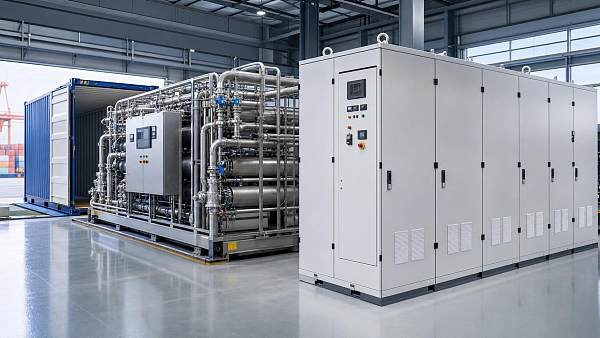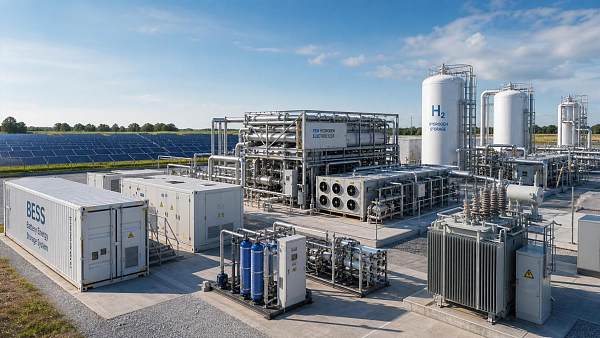
On May 28, 2026, NEOM — Saudi Arabia’s flagship giga-project — issued a global tender (Ref: NEOM-H2-2026-05) for alkaline (ALK) water electrolysis systems totaling 12 GWh of annual production capacity. The tender explicitly requires ≥40% local assembly content in Saudi Arabia and full compliance with IEC 62282-10:2025 for dynamic power response (≤3 seconds for ±30% step changes). Notably, it introduces ‘direct renewable electricity compatibility’ as a mandatory technical criterion — marking a pivotal shift for international ALK suppliers, especially those from China, regarding supply chain localization and system-level grid integration capability. Stakeholders in electrolyzer manufacturing, green hydrogen project development, and energy equipment export should closely monitor this tender’s implications for technology qualification, localization planning, and power-system interface design.
Event Overview
On May 28, 2026, NEOM published tender reference NEOM-H2-2026-05, inviting global suppliers to submit proposals for alkaline water electrolyzer systems supporting a total capacity of 12 GWh per year. The tender mandates a minimum local assembly rate of 40% within Saudi Arabia and requires full compliance with IEC 62282-10:2025 for dynamic load response. It also specifies that the electrolyzer system must be certified for direct coupling with variable renewable power sources — including acceptance of rapid ±30% power fluctuations with response time ≤3 seconds.
Industries Affected
Electrolyzer Original Equipment Manufacturers (OEMs)
OEMs face new technical and operational thresholds: certification under IEC 62282-10:2025 is not yet widely adopted in commercial ALK deployments, and few existing systems have undergone formal validation for such aggressive power cycling. The 40% local assembly requirement further implies need for regional engineering, testing, and after-sales infrastructure — beyond simple final assembly.
Green Hydrogen Project Developers & EPC Contractors
Developers bidding on NEOM-integrated hydrogen projects must now align procurement strategies with this tender’s specifications. Systems pre-qualified under legacy standards (e.g., IEC 62282-2 or generic safety norms) may require re-engineering or third-party validation to meet the dynamic response clause — potentially affecting schedule and cost assumptions for front-end engineering design (FEED) and balance-of-plant integration.
Power Electronics & Control System Suppliers
The dynamic response mandate directly impacts subsystem suppliers, particularly those providing rectifiers, DC bus management, and real-time control logic. Compatibility with fast-ramping renewables implies tighter coordination between electrolyzer stack control and upstream inverters or grid-forming converters — elevating the importance of interoperability testing and joint certification pathways.
Localization & Industrial Partnership Service Providers
Entities supporting foreign OEMs in establishing local manufacturing or assembly operations — including industrial zone operators, customs brokers, and certification consultants — will see increased demand for services tied to Saudi-specific regulatory alignment (e.g., SASO, SABIC collaboration frameworks) and localized testing capacity aligned with IEC 62282-10:2025.
What Companies and Practitioners Should Focus On Now
Track official clarifications and addenda to NEOM-H2-2026-05
The tender document may be updated with technical appendices or interpretation notes — particularly regarding acceptable evidence for local content calculation (e.g., whether software development or testing labor qualifies) and scope of ‘green electricity compatibility’ verification (e.g., required test profiles or third-party labs).
Assess readiness for IEC 62282-10:2025 compliance — not just theoretical capability
Many ALK suppliers claim ‘grid-friendly’ operation; however, formal certification requires documented test reports under standardized conditions. Companies should verify whether their current control architecture, sensor suite, and protection logic meet the exact timing and stability criteria defined in Clause 7.3 of IEC 62282-10:2025 — not just internal lab results.
Distinguish between policy signaling and near-term procurement impact
This tender reflects NEOM’s long-term system integration philosophy rather than an immediate volume-driven procurement. While the 12 GWh figure signals scale ambition, actual award timing, phase-in schedule, and first delivery milestones remain unconfirmed. Firms should avoid overcommitting capital before tender evaluation outcomes and contractual terms are public.
Prepare localized supply chain documentation ahead of bid submission
Suppliers intending to respond must compile verifiable evidence for ≥40% local assembly — including bills of material with origin tagging, local partner agreements, and facility audit readiness. Early engagement with Saudi-based certification bodies (e.g., SASO-accredited labs) is advisable to avoid timeline bottlenecks during technical review.
Editorial Perspective / Industry Observation
Observably, this tender does not represent a standalone procurement but serves as a de facto technical benchmark for NEOM’s broader hydrogen ecosystem. Its inclusion of IEC 62282-10:2025 — a recently published standard — suggests NEOM is proactively shaping global best practices for electrolyzer-grid interaction, rather than merely adopting existing norms. Analysis shows the 40% local content rule is less about protectionism and more about building domestic system integration competence — requiring foreign suppliers to co-develop solutions with Saudi partners, not just deliver hardware. From an industry perspective, this tender is better understood as a signal of evolving technical expectations across Gulf green hydrogen projects, rather than an isolated contract opportunity. Continuous monitoring is warranted because subsequent tenders (e.g., for PEM or SOEC systems) may adopt similar dynamic-response and localization frameworks.
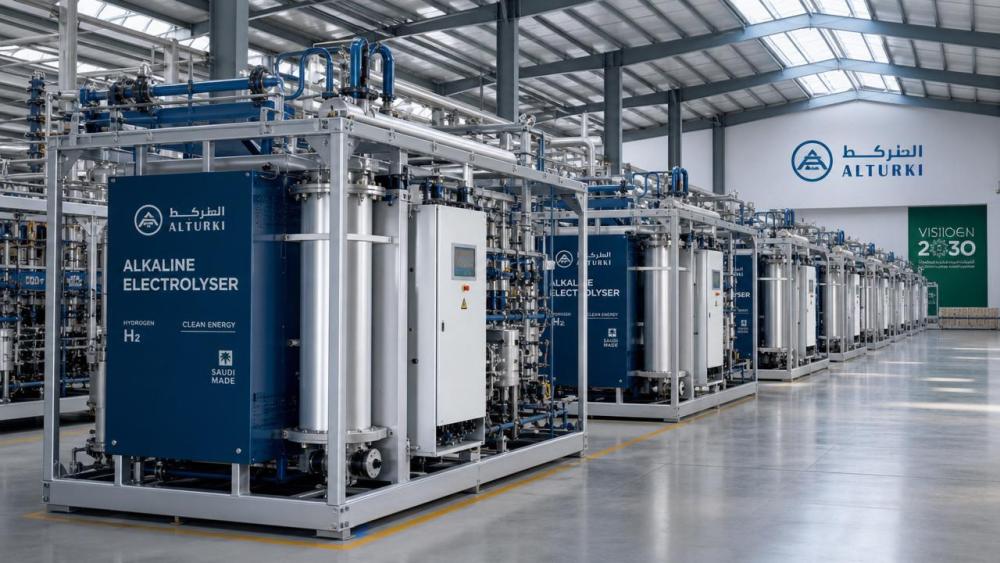
In summary, NEOM’s ALK electrolyzer tender marks a structural inflection point: it shifts evaluation criteria from nominal capacity and CAPEX alone toward verified system-level flexibility and embedded local value creation. For stakeholders, the most rational interpretation is not urgency to win this single bid — but recognition that dynamic power compatibility and localized integration capability are becoming non-negotiable entry requirements for major Middle Eastern green hydrogen infrastructure programs.
Source: NEOM official tender notice NEOM-H2-2026-05, published May 28, 2026. Note: Evaluation timeline, award date, and detailed technical annexes remain pending and subject to official updates.
Related News
 How to Evaluate a Virtual Power Plant Aggregation PlatformProf. Kaelen VossVirtual power plant aggregation platform evaluation starts with real dispatch, integration, optimization, and security checks. Learn how to compare vendors and choose a scalable, bankable solution.
 EU Sets UL 9540A Rule for Imported Liquid-Cooled BESSGrid Storage ArchitectEU sets UL 9540A rule for imported liquid-cooled BESS. Learn how the October 2026 EU requirement impacts compliance, certification timelines, costs, and delivery planning.
 Oil-Immersed Transformer Applications in Reliable Power Distribution ProjectsUHV Engineering FellowAn application guide for oil-immersed transformer buyers reviewing load profile, site conditions, insulation, cooling, testing, documentation, and project integration.
 Grid Resilience Solution Price: Cost Drivers and ROI BenchmarksMr. Orion SterlingGrid resilience solution price explained: compare cost drivers, hidden risks, and ROI benchmarks to choose a safer, higher-value energy resilience investment.
 DOE Adds UL 62271-200 for Imported ElectrolyzersHydrogen Tech ScientistDOE Adds UL 62271-200 for Imported Electrolyzers: learn how the new U.S. rule affects ALK and PEM shipments, certification timing, compliance costs, and market access from Sept. 1, 2026.
 DC Fast Charging Station Kiosk: Key Features to Compare Before You SpecifyEV Infrastructure ExpertDC fast charging station kiosk selection goes beyond power ratings. Compare uptime, thermal design, connectors, payments, and grid readiness before you specify.
 EU Sets New Thermal Runaway Test Rule for Liquid-Cooled BESSGrid Storage ArchitectEU Sets New Thermal Runaway Test Rule for Liquid-Cooled BESS: learn how UL 9540A Tier 3 and EN 50620:2025 requirements may impact EU market access, timelines, and compliance costs.
 PEM Hydrogen Electrolyzer Sizing: Key Factors That Affect Efficiency and CostHydrogen Tech ScientistPEM hydrogen electrolyzer sizing directly affects efficiency, CAPEX, and hydrogen cost. Learn the key factors shaping smarter, scalable system decisions.
 IEC 62933-5-2:2026 Makes VPP Interfaces MandatoryGrid Storage ArchitectIEC 62933-5-2:2026 makes VPP interfaces mandatory for newly certified PCS and EMS products, reshaping compliance in 32 export markets. Learn what manufacturers, integrators, and distributors must do now.
 Energy Storage Systems Integration: Common Failures and FixesGrid Storage ArchitectEnergy storage systems integration often fails at control, thermal, and commissioning interfaces. Discover common faults, practical fixes, and how to improve BESS reliability and project ROI.
 EV Charging Protocol References That Matter for System CompatibilityEV Infrastructure ExpertEV charging protocol references explained for real system compatibility. Learn how CCS, ISO 15118, DIN 70121, OCPP, and grid standards reduce integration risk and support scalable EV charging.
 C&I Storage for Factories: Where It Delivers the Best ROIGrid Storage ArchitectCommercial and industrial storage for factories delivers the best ROI when it cuts demand charges, boosts solar self-consumption, and protects uptime. See where payback is fastest.