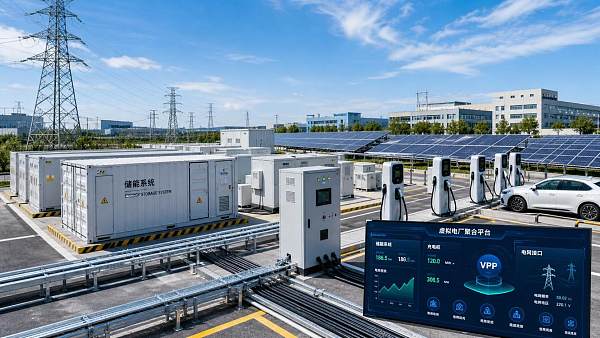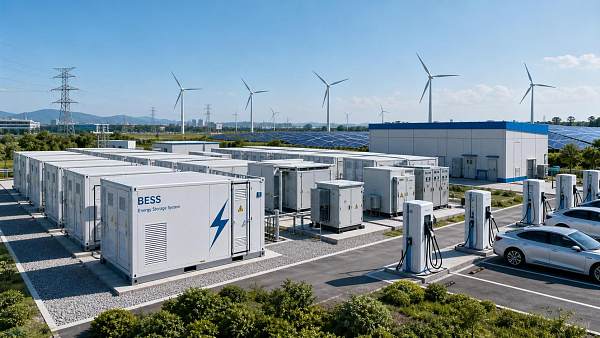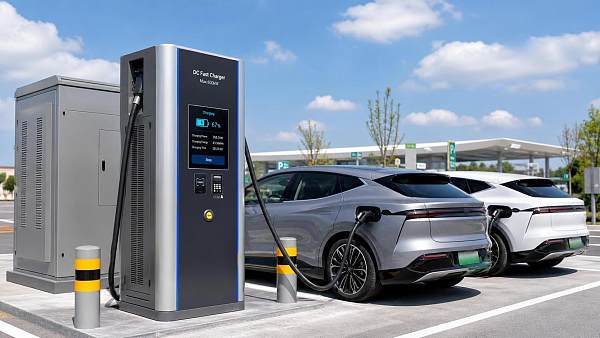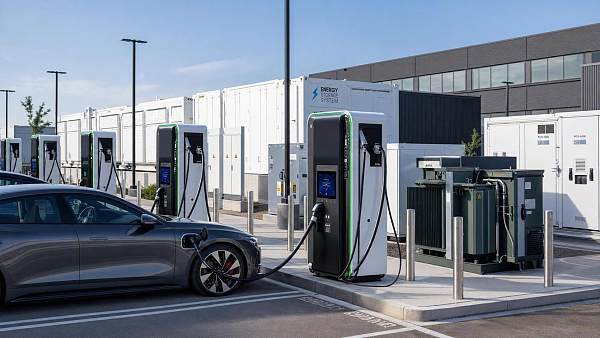
On May 29, 2026, the Philippines Department of Energy (DOE) issued DOE Memorandum Circular No. 2026-007, titled Guidelines on Smart Interconnection of EV Charging Infrastructure. The regulation requires all newly commissioned 800V liquid-cooled DC fast chargers to embed the IEEE 2030.5 communication protocol stack effective October 1, 2026 — enabling interoperability with the national Virtual Power Plant (VPP) platform for load aggregation and frequency response. Non-compliant units will be ineligible for operational licensing. This development directly impacts EV charging equipment manufacturers, system integrators, grid service providers, and infrastructure developers operating in or exporting to the Philippine market.
Event Overview
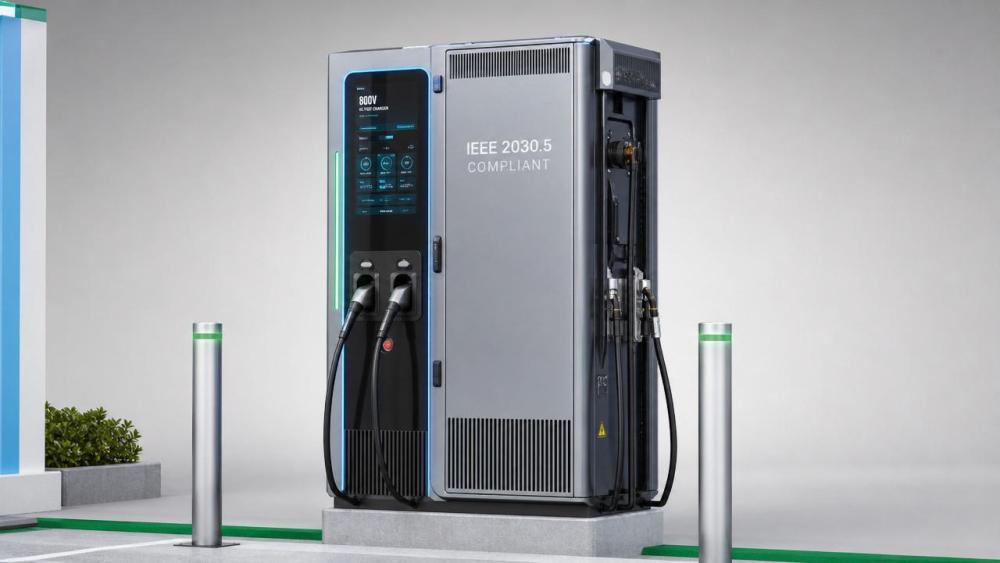
The Philippines Department of Energy (DOE) published DOE MC No. 2026-007 on May 29, 2026. The directive stipulates that, starting October 1, 2026, all new 800V liquid-cooled EV charging stations deployed in the Philippines must include a built-in IEEE 2030.5 communication protocol stack. This requirement is intended to ensure seamless integration with the national Virtual Power Plant (VPP) platform, supporting grid services such as demand-side response and frequency regulation. Units lacking this capability will not receive an operational license from the DOE.
Industries Affected
EV Charging Equipment Manufacturers
Manufacturers supplying 800V liquid-cooled chargers to the Philippine market will face mandatory hardware and firmware redesigns to embed IEEE 2030.5 support. Impact includes extended time-to-market for new models, increased R&D and certification costs, and potential revalidation of existing Type Approval submissions with the DOE.
System Integrators & Turnkey Providers
Integrators deploying end-to-end charging solutions must verify IEEE 2030.5 conformance across all vendor-supplied components — including power modules, cooling systems, and back-end management software. Non-conforming subsystems may delay project commissioning or invalidate full-system compliance certification.
Grid Service & VPP Platform Operators
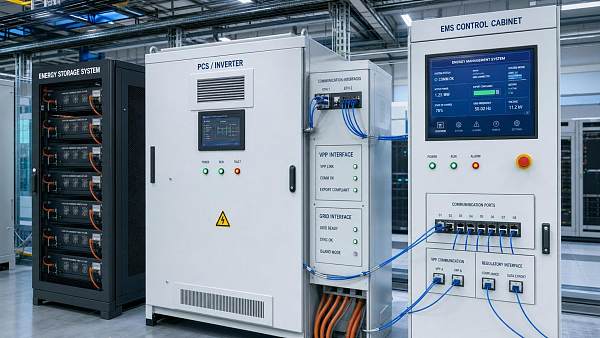
Entities developing or operating VPP platforms in the Philippines must align their interface specifications, authentication mechanisms, and data models with IEEE 2030.5. The regulation accelerates standardization but also increases pressure to demonstrate real-time interoperability during DOE audits and licensing reviews.
Importers & Distributors of Charging Infrastructure
Importers and distributors must now validate protocol compliance prior to customs clearance or local installation. Stockpiling non-compliant units risks inventory obsolescence after October 1, 2026, and may trigger regulatory liability if deployed without proper certification.
What Stakeholders Should Monitor and Do Now
Track official DOE implementation guidance and testing procedures
The DOE has not yet released technical annexes detailing conformance test methods, certification pathways, or recognized third-party laboratories. Stakeholders should monitor DOE public notices and participate in upcoming stakeholder consultations scheduled for Q3 2026.
Verify IEEE 2030.5 version alignment and security profile requirements
IEEE 2030.5 has multiple editions (e.g., 2018, 2022) and optional security extensions (e.g., TLS 1.2+, OAuth 2.0). Analysis shows the DOE’s reference likely follows the 2022 edition with mandatory TLS-based mutual authentication — but formal confirmation is pending. Suppliers should confirm version and security scope before finalizing firmware builds.
Distinguish between policy mandate and field deployment readiness
While the regulation takes effect October 1, 2026, the national VPP platform’s operational launch date remains unannounced. Observably, early adopters may face limited grid-service revenue opportunities until VPP dispatch protocols and tariff frameworks are finalized — meaning compliance is necessary but not immediately monetizable.
Initiate cross-supplier coordination and firmware validation cycles
Manufacturers and integrators should begin joint testing with component vendors (e.g., metering IC suppliers, connectivity module makers) by Q3 2026. Early validation helps identify interoperability gaps — particularly around DR event signaling, resource modeling (DER-0, DER-1), and secure certificate provisioning — ahead of pre-license verification deadlines.
Editorial Observation / Industry Perspective
This regulation is best understood as a foundational signal — not yet an operational reality. It reflects the DOE’s strategic pivot toward active grid participation by distributed energy resources, rather than passive infrastructure rollout. From an industry perspective, it signals growing regulatory convergence with international smart-grid standards (e.g., North America’s NAESB, EU’s ISO 15118-20 + OCPI 2.2.1), but implementation lags behind policy intent. Current emphasis remains on technical readiness and certification capacity — not commercial dispatch or compensation mechanisms. Continued observation is warranted on how the DOE coordinates with the Energy Regulatory Commission (ERC) on ancillary service rules and tariff structures for VPP-enabled assets.
Conclusion
The DOE’s IEEE 2030.5 mandate marks a formal step toward integrating high-power EV charging into the Philippine power system as a controllable grid asset. Its immediate significance lies in compliance gatekeeping — not revenue generation or system-wide flexibility. For stakeholders, it is more accurately interpreted as a technical readiness benchmark than a near-term business opportunity. A measured, standards-aligned, and supplier-coordinated approach remains the most pragmatic path forward.
Source Attribution
Main source: Philippines Department of Energy (DOE), Memorandum Circular No. 2026-007, issued May 29, 2026.
Points requiring ongoing observation: DOE-issued technical annexes, VPP platform go-live timeline, ERC ancillary service rulemaking, and recognized conformity assessment bodies.
Related News
 How to Evaluate a Virtual Power Plant Aggregation PlatformProf. Kaelen VossVirtual power plant aggregation platform evaluation starts with real dispatch, integration, optimization, and security checks. Learn how to compare vendors and choose a scalable, bankable solution.
 EU Sets UL 9540A Rule for Imported Liquid-Cooled BESSGrid Storage ArchitectEU sets UL 9540A rule for imported liquid-cooled BESS. Learn how the October 2026 EU requirement impacts compliance, certification timelines, costs, and delivery planning.
 Oil-Immersed Transformer Applications in Reliable Power Distribution ProjectsUHV Engineering FellowAn application guide for oil-immersed transformer buyers reviewing load profile, site conditions, insulation, cooling, testing, documentation, and project integration.
 Grid Resilience Solution Price: Cost Drivers and ROI BenchmarksMr. Orion SterlingGrid resilience solution price explained: compare cost drivers, hidden risks, and ROI benchmarks to choose a safer, higher-value energy resilience investment.
 DOE Adds UL 62271-200 for Imported ElectrolyzersHydrogen Tech ScientistDOE Adds UL 62271-200 for Imported Electrolyzers: learn how the new U.S. rule affects ALK and PEM shipments, certification timing, compliance costs, and market access from Sept. 1, 2026.
 DC Fast Charging Station Kiosk: Key Features to Compare Before You SpecifyEV Infrastructure ExpertDC fast charging station kiosk selection goes beyond power ratings. Compare uptime, thermal design, connectors, payments, and grid readiness before you specify.
 EU Sets New Thermal Runaway Test Rule for Liquid-Cooled BESSGrid Storage ArchitectEU Sets New Thermal Runaway Test Rule for Liquid-Cooled BESS: learn how UL 9540A Tier 3 and EN 50620:2025 requirements may impact EU market access, timelines, and compliance costs.
 PEM Hydrogen Electrolyzer Sizing: Key Factors That Affect Efficiency and CostHydrogen Tech ScientistPEM hydrogen electrolyzer sizing directly affects efficiency, CAPEX, and hydrogen cost. Learn the key factors shaping smarter, scalable system decisions.
 IEC 62933-5-2:2026 Makes VPP Interfaces MandatoryGrid Storage ArchitectIEC 62933-5-2:2026 makes VPP interfaces mandatory for newly certified PCS and EMS products, reshaping compliance in 32 export markets. Learn what manufacturers, integrators, and distributors must do now.
 Energy Storage Systems Integration: Common Failures and FixesGrid Storage ArchitectEnergy storage systems integration often fails at control, thermal, and commissioning interfaces. Discover common faults, practical fixes, and how to improve BESS reliability and project ROI.
 EV Charging Protocol References That Matter for System CompatibilityEV Infrastructure ExpertEV charging protocol references explained for real system compatibility. Learn how CCS, ISO 15118, DIN 70121, OCPP, and grid standards reduce integration risk and support scalable EV charging.
 C&I Storage for Factories: Where It Delivers the Best ROIGrid Storage ArchitectCommercial and industrial storage for factories delivers the best ROI when it cuts demand charges, boosts solar self-consumption, and protects uptime. See where payback is fastest.