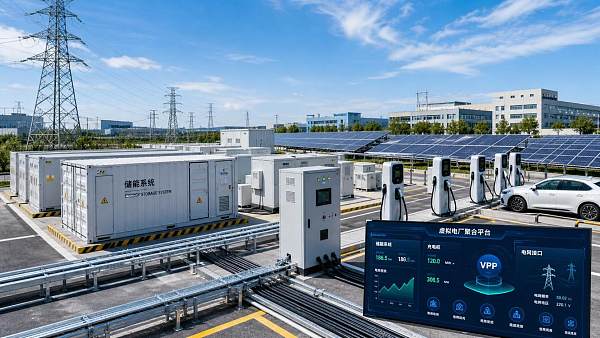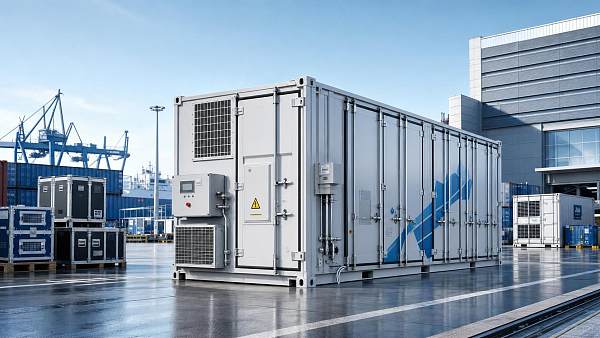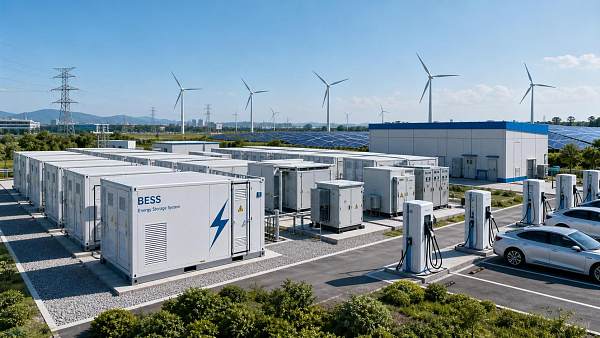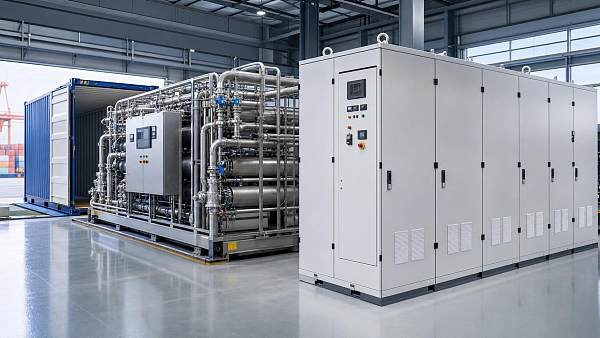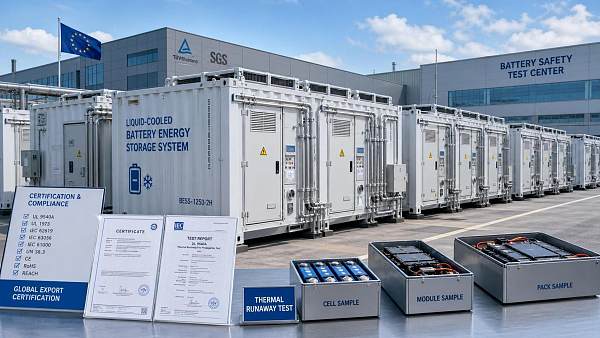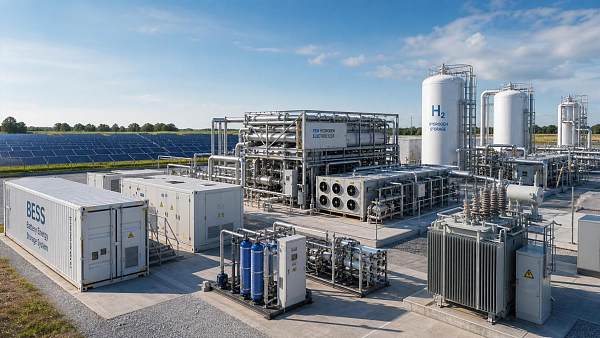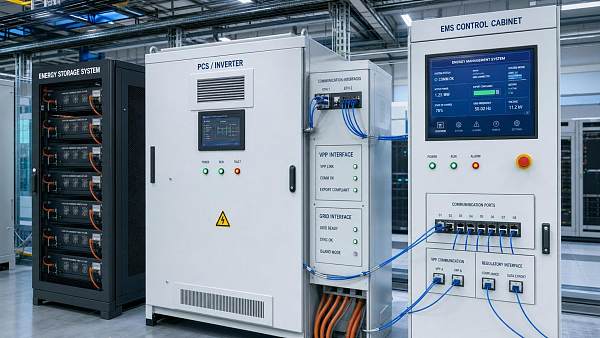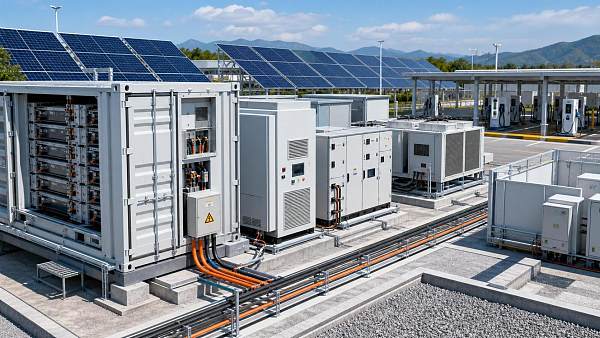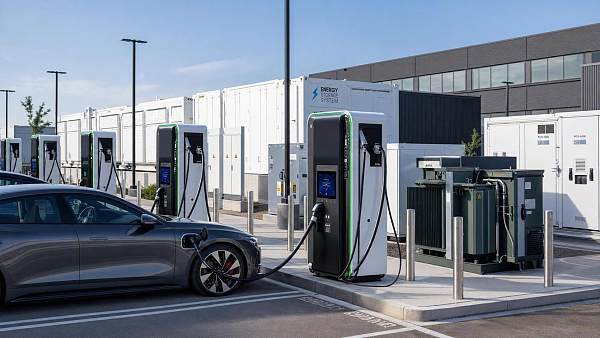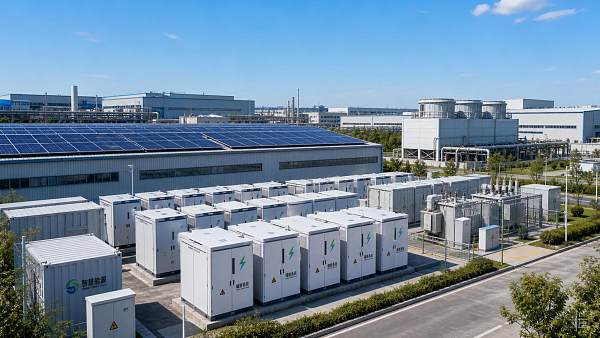
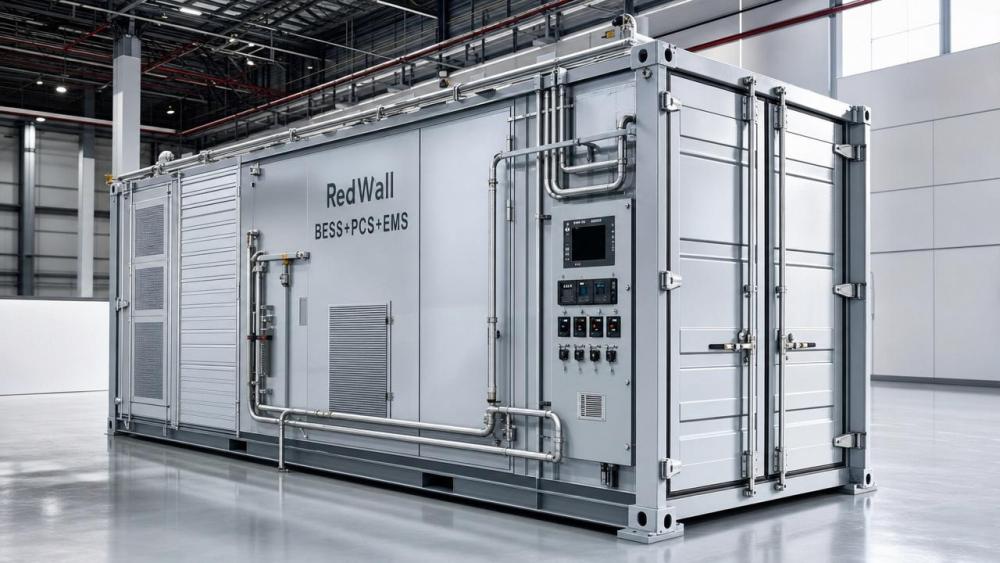
On May 27–28, 2026, RedWall Co., Ltd. — a leading Chinese C&I energy storage provider — showcased its liquid-cooled battery energy storage system (BESS) container integrated with intelligent power conversion system (PCS) and EMS at the Vietnam International Cement & Concrete Exhibition in Ho Chi Minh City. The event signals growing demand for grid-interactive storage solutions in Southeast Asian industrial infrastructure, particularly among cement producers, steelmakers, and modular power system integrators.
Event Overview
From May 27 to 28, 2026, RedWall Co., Ltd. participated in the Vietnam International Cement & Concrete Exhibition in Ho Chi Minh City. The company presented its liquid-cooled BESS container combined with an integrated PCS and EMS solution. During the exhibition, RedWall signed six technical cooperation memoranda of understanding (MoUs) with Vietnamese infrastructure groups including VinGroup and Hoa Phat Group. The focus of collaboration is on two application scenarios: peak-valley electricity arbitrage and backup power supply for cement plants. Multiple customers explicitly requested full UL 9540A certification plus Vietnam-specific local certification compliance by Q3 2026.
Impact on Specific Industry Segments
Direct Exporters of Energy Storage Systems
These companies face intensified pressure to align product certification timelines with Vietnamese regulatory requirements. The explicit Q3 2026 deadline for UL 9540A plus local certification indicates tightening market entry windows — especially for containerized BESS targeting industrial users. Impact manifests in accelerated pre-compliance testing cycles and increased reliance on third-party certification partners with Vietnam-recognized accreditation.
Cement and Heavy Industrial Facility Operators
Operators in Vietnam’s cement sector are actively evaluating storage-as-a-service models tied to energy cost optimization. The MoUs signal a shift from theoretical feasibility studies toward vendor-qualified technical integration. Impact includes rising internal demand for cross-functional teams (operations, procurement, EHS) to jointly assess grid interconnection, thermal management compatibility, and lifecycle O&M support structures.
Modular Power System Integrators (e.g., Mobile/Containerized Power Providers)
As end customers seek ‘ready-to-deploy’ power resilience solutions, integrators must reassess their standard offerings. The emphasis on ‘integrated BESS+PCS+EMS’ — not just component sourcing — implies higher technical due diligence during vendor selection. Impact centers on revised RFP criteria, extended evaluation periods for firmware interoperability, and deeper scrutiny of thermal safety validation reports.
What Relevant Enterprises or Practitioners Should Focus On Now
Monitor official certification pathway updates from Vietnam’s Ministry of Industry and Trade (MOIT) and National Standardization Agency (TCVN)
The request for ‘Vietnam local certification’ remains undefined in public documentation. Enterprises should track pending TCVN draft standards related to BESS safety (e.g., TCVN 12775 series) and MOIT guidance on grid-code compliance for distributed storage.
Prioritize UL 9540A test readiness for liquid-cooled systems — especially thermal runaway propagation protocols
UL 9540A testing for liquid-cooled enclosures involves distinct cell-level and module-level propagation assessment criteria compared to air-cooled designs. Exporters and integrators should confirm lab capacity and lead times with accredited test houses now — given the Q3 2026 target window.
Distinguish between MoU commitments and commercial procurement intent
The six signed MoUs reflect technical alignment, not binding purchase orders. Stakeholders should avoid conflating early-stage collaboration signals with near-term revenue visibility. Instead, treat them as indicators of evolving technical specification expectations within Vietnam’s industrial energy buyers.
Initiate joint working sessions with local engineering partners on site-specific EMS integration requirements
Vietnamese cement plants vary significantly in existing SCADA architecture, communication protocols (e.g., Modbus TCP vs. IEC 61850), and cybersecurity policies. Early engagement with local system integrators can clarify EMS interface scope before formal tendering begins.
Editorial Perspective / Industry Observation
Observably, this exhibition activity reflects a broader regional inflection point: industrial energy consumers in ASEAN are transitioning from passive electricity buyers to active, storage-enabled grid participants. The specificity of the requests — UL 9540A + local certification by Q3 2026 — suggests institutional buyers are moving beyond pilot evaluations into structured deployment planning. Analysis shows this is less about immediate project awards and more about vendors demonstrating credible, certifiable pathways to compliance. From an industry perspective, it signals that certification agility — not just technical capability — is becoming a decisive competitive factor for energy storage exporters targeting Vietnam’s industrial segment.
It is more accurately understood as a procedural signal than a commercial milestone. While no contracts were announced, the convergence of technical MoUs, defined certification timelines, and named infrastructure clients indicates coordinated preparation across multiple stakeholder layers — suggesting follow-on procurement activity may materialize in late 2026 or early 2027, contingent on certification progress.
Conclusion
This development underscores how certification readiness — particularly for thermal safety and local regulatory alignment — is now a prerequisite for meaningful engagement with Vietnam’s industrial energy buyers. It does not indicate imminent large-scale deployments, but rather confirms that technical qualification processes are accelerating. For stakeholders, the current value lies in using this signal to calibrate internal timelines for testing, documentation, and partner coordination — not in forecasting near-term order volume.
Information Sources
Main source: Official exhibition participation announcement and MoU signing summary released by RedWall Co., Ltd. on May 28, 2026.
Note: Certification requirements referenced (UL 9540A + Vietnam local certification) remain subject to formal confirmation by Vietnamese authorities; ongoing monitoring of TCVN and MOIT publications is advised.
Related News
 How to Evaluate a Virtual Power Plant Aggregation PlatformProf. Kaelen VossVirtual power plant aggregation platform evaluation starts with real dispatch, integration, optimization, and security checks. Learn how to compare vendors and choose a scalable, bankable solution.
 EU Sets UL 9540A Rule for Imported Liquid-Cooled BESSGrid Storage ArchitectEU sets UL 9540A rule for imported liquid-cooled BESS. Learn how the October 2026 EU requirement impacts compliance, certification timelines, costs, and delivery planning.
 Oil-Immersed Transformer Applications in Reliable Power Distribution ProjectsUHV Engineering FellowAn application guide for oil-immersed transformer buyers reviewing load profile, site conditions, insulation, cooling, testing, documentation, and project integration.
 Grid Resilience Solution Price: Cost Drivers and ROI BenchmarksMr. Orion SterlingGrid resilience solution price explained: compare cost drivers, hidden risks, and ROI benchmarks to choose a safer, higher-value energy resilience investment.
 DOE Adds UL 62271-200 for Imported ElectrolyzersHydrogen Tech ScientistDOE Adds UL 62271-200 for Imported Electrolyzers: learn how the new U.S. rule affects ALK and PEM shipments, certification timing, compliance costs, and market access from Sept. 1, 2026.
 DC Fast Charging Station Kiosk: Key Features to Compare Before You SpecifyEV Infrastructure ExpertDC fast charging station kiosk selection goes beyond power ratings. Compare uptime, thermal design, connectors, payments, and grid readiness before you specify.
 EU Sets New Thermal Runaway Test Rule for Liquid-Cooled BESSGrid Storage ArchitectEU Sets New Thermal Runaway Test Rule for Liquid-Cooled BESS: learn how UL 9540A Tier 3 and EN 50620:2025 requirements may impact EU market access, timelines, and compliance costs.
 PEM Hydrogen Electrolyzer Sizing: Key Factors That Affect Efficiency and CostHydrogen Tech ScientistPEM hydrogen electrolyzer sizing directly affects efficiency, CAPEX, and hydrogen cost. Learn the key factors shaping smarter, scalable system decisions.
 IEC 62933-5-2:2026 Makes VPP Interfaces MandatoryGrid Storage ArchitectIEC 62933-5-2:2026 makes VPP interfaces mandatory for newly certified PCS and EMS products, reshaping compliance in 32 export markets. Learn what manufacturers, integrators, and distributors must do now.
 Energy Storage Systems Integration: Common Failures and FixesGrid Storage ArchitectEnergy storage systems integration often fails at control, thermal, and commissioning interfaces. Discover common faults, practical fixes, and how to improve BESS reliability and project ROI.
 EV Charging Protocol References That Matter for System CompatibilityEV Infrastructure ExpertEV charging protocol references explained for real system compatibility. Learn how CCS, ISO 15118, DIN 70121, OCPP, and grid standards reduce integration risk and support scalable EV charging.
 C&I Storage for Factories: Where It Delivers the Best ROIGrid Storage ArchitectCommercial and industrial storage for factories delivers the best ROI when it cuts demand charges, boosts solar self-consumption, and protects uptime. See where payback is fastest.