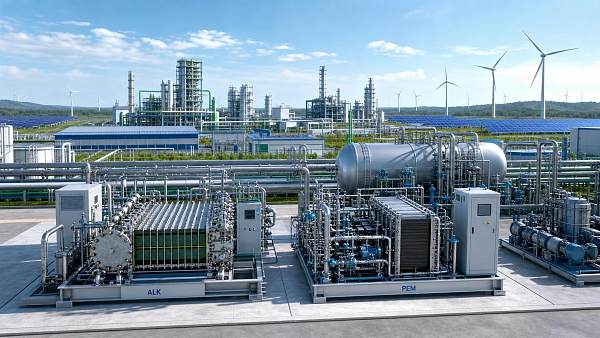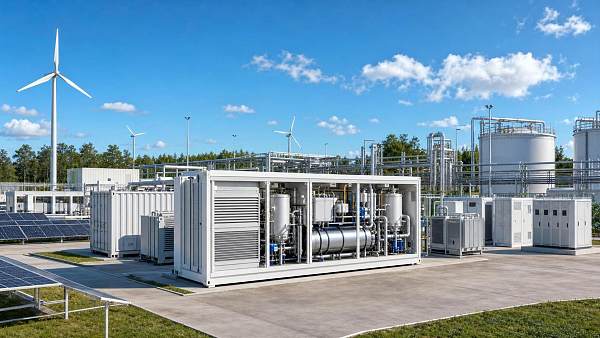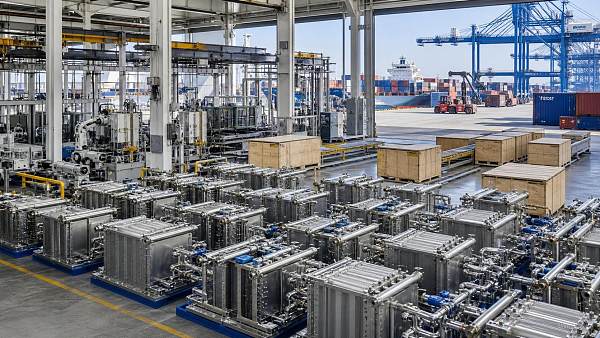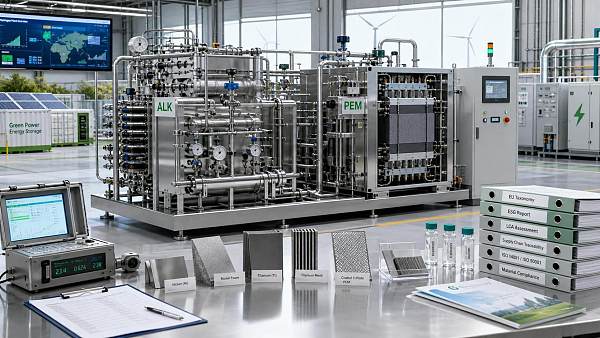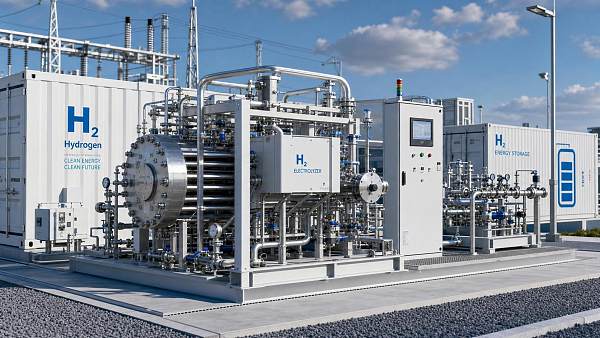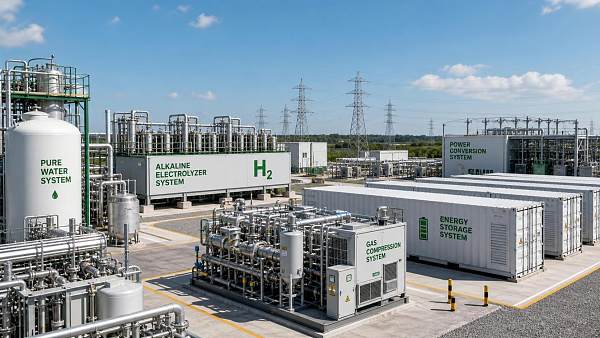
Selecting ALK electrolyzers is rarely a simple comparison of rated efficiency. For technical evaluators, the real risks often emerge under fluctuating renewable input, partial-load operation, gas purity constraints, thermal management limits, and long-term stack degradation. Before committing to a system, teams must look beyond nameplate hydrogen output and examine how alkaline technology behaves across grid-connected, hybrid renewable, and Power-to-X scenarios. This article highlights the key efficiency risks that can affect project economics, reliability, and integration performance before an ALK electrolyzer is selected.
For infrastructure teams working across grid-scale storage, UHV transmission corridors, EV charging hubs, and green hydrogen assets, efficiency is not a single laboratory value. It is a system outcome shaped by power quality, operating profile, balance-of-plant design, water treatment, compression strategy, safety control, and dispatch logic.
Why Rated Efficiency Can Mislead ALK Electrolyzer Selection
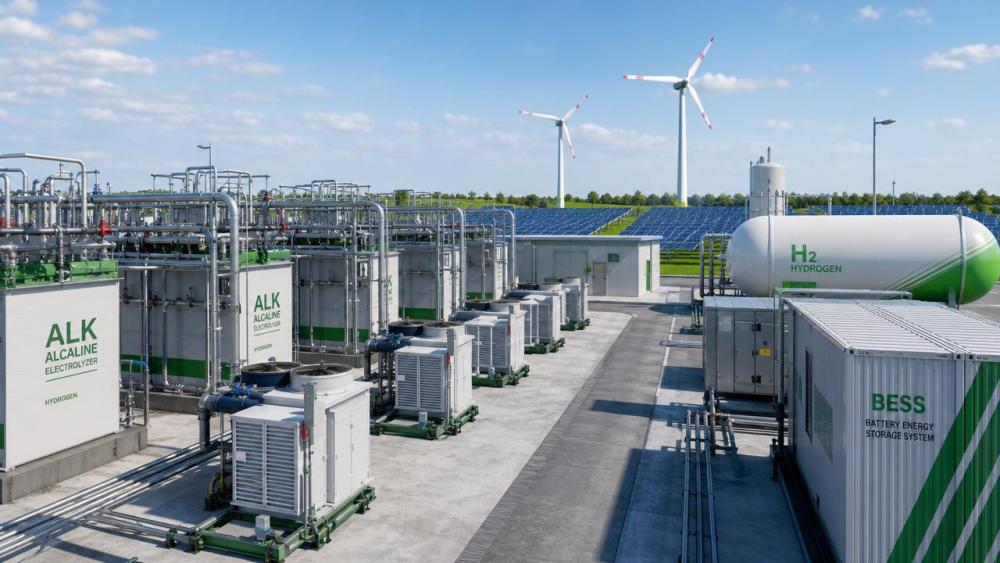
ALK electrolyzers are widely considered mature, scalable, and cost-effective for large hydrogen projects. However, rated efficiency is usually measured under defined current density, temperature, pressure, and steady-load conditions that may not match field operation.
A project connected to a wind farm, solar plant, BESS container, or hybrid microgrid may experience 20%–100% load swings within minutes. These transitions change voltage behavior, gas crossover risk, auxiliary consumption, and stack thermal balance.
The Difference Between Stack Efficiency and Plant Efficiency
Stack efficiency only reflects electrochemical conversion inside the cells. Plant efficiency includes rectifiers, pumps, electrolyte circulation, cooling systems, gas-liquid separation, purification, drying, nitrogen purging, and hydrogen compression.
In technical evaluation, a 3%–8% gap between stack-level and system-level performance is common, depending on operating pressure, cooling method, control architecture, and required hydrogen purity level.
Key Efficiency Boundaries to Verify
- Nominal operating window, such as 40%–100% load for stable alkaline operation.
- Specific energy consumption, often evaluated in kWh per kilogram of hydrogen.
- Ramp-rate capability under renewable fluctuation, including safe start-stop frequency.
- Auxiliary load percentage under minimum, average, and peak production modes.
- Hydrogen purity target, typically linked to downstream storage, ammonia, methanol, or fuel-cell use.
The procurement question should not be “Which unit has the best rated efficiency?” A stronger question is “Which ALK electrolyzers maintain acceptable efficiency across the project’s real 8,000-hour annual dispatch profile?”
Efficiency Risks Under Renewable and Grid-Connected Operation
Alkaline systems can perform well in large-scale Power-to-X projects, but they are less tolerant of aggressive dynamic operation than some PEM systems. This does not disqualify them; it means controls and buffering must be engineered carefully.
When ALK electrolyzers are paired with solar PV, offshore wind, or curtailed hydropower, the DC power supply may fluctuate. Without adequate grid forming, BESS smoothing, or rectifier control, efficiency losses accumulate quietly.
Partial-Load Operation and Minimum Stable Load
Many alkaline electrolyzer systems prefer operation above a minimum stable load, commonly around 20%–40% of rated capacity. Below that range, gas purity, separator performance, and current distribution may become less favorable.
For a 20 MW hydrogen plant, operating 6 hours per day at low load may look acceptable in dispatch software, but real plant efficiency can decline if auxiliary systems remain energized while hydrogen output is limited.
The following table outlines common operating risks technical evaluators should compare during vendor review, especially when ALK electrolyzers are linked with variable renewable generation or grid services.
The table shows why a vendor’s rated hydrogen production is only one input. For renewable-rich projects, the decisive factor is how the alkaline system behaves across at least 4 operating points, not only at full load.
The Role of BESS and Dispatch Control
Battery energy storage can reduce efficiency risk by smoothing renewable input before it reaches the electrolyzer. A BESS container does not create hydrogen, but it can protect operating stability and reduce unnecessary cycling.
For projects using ALK electrolyzers near weak grids, a 5-minute to 30-minute energy buffer may improve continuity. The exact duration depends on curtailment patterns, electrolyzer turndown ratio, and hydrogen offtake requirements.
Thermal, Electrolyte, and Gas Purity Constraints
Efficiency risk is also physical. ALK electrolyzers depend on electrolyte circulation, separator condition, stable temperature, and controlled pressure differential between hydrogen and oxygen sides.
If thermal management is weak, cell voltage may increase and system efficiency may decline. If gas purity control is insufficient, downstream purification or safety shutdowns may reduce availability.
Temperature Control and Cooling Design
Alkaline stacks typically operate within elevated temperature ranges to reduce voltage losses, yet excessive temperature can accelerate component aging. Evaluators should confirm operating limits under summer ambient conditions.
For desert solar projects, offshore wind hubs, and industrial parks, ambient temperature may vary from below 0°C to above 40°C. Cooling redundancy and heat rejection capacity should be evaluated at site conditions.
Thermal Evaluation Checklist
- Request heat balance calculations for 50%, 75%, and 100% operation.
- Confirm cooling system performance at the highest 1% local ambient temperature.
- Review electrolyte circulation pump redundancy, usually N+1 for critical plants.
- Check alarm thresholds for stack temperature, outlet gas temperature, and coolant flow.
- Verify whether thermal derating affects guaranteed hydrogen output during peak summer periods.
A system that looks efficient at 25°C ambient may deliver weaker economics at 42°C if cooling parasitic load rises or stack derating occurs during high-price power windows.
Gas Crossover and Purity Risk
Hydrogen purity is not only a product specification. It affects safety, purification load, compressor performance, and downstream process reliability. Low-load operation can increase crossover sensitivity in alkaline systems.
Technical teams should ask for purity behavior across the entire operating envelope. If hydrogen is intended for fuel cells, ammonia synthesis, e-methanol, or pipeline blending, purification design must match that application.
Long-Term Degradation and Lifecycle Cost Exposure
The efficiency of ALK electrolyzers changes over time. Stack voltage degradation, diaphragm condition, electrode activity, electrolyte contamination, and mechanical sealing all influence lifecycle cost.
A system with attractive first-year efficiency may lose economic strength if degradation is poorly characterized. For investment-grade evaluation, performance guarantees should cover multi-year operation, not only factory acceptance.
Degradation Is a Financial Variable
Even a modest efficiency decline can influence power cost significantly. If electricity represents 60%–80% of green hydrogen production cost, a small increase in kWh/kg can materially affect project returns.
Evaluators should model at least 3 scenarios: expected degradation, accelerated degradation, and conservative replacement. Each scenario should include stack refurbishment timing, downtime, labor, and spare parts availability.
The following procurement matrix helps compare supplier claims for ALK electrolyzers in a disciplined way before technical and commercial scoring begins.
This matrix forces comparable evidence. If one supplier reports stack efficiency and another reports complete plant consumption, the numbers should not be treated as equivalent during bid evaluation.
Maintenance Frequency and Operational Discipline
Alkaline electrolyzer maintenance is not only about avoiding failures. It preserves efficiency by keeping electrolyte concentration, filtration, seals, cooling circuits, and instrumentation within specification.
A practical maintenance plan may include daily remote monitoring, weekly inspection, monthly electrolyte-related checks, quarterly calibration, and annual shutdown review. The exact schedule depends on duty cycle and supplier guidance.
Selection Framework for Technical Evaluators
Selecting ALK electrolyzers should follow a structured engineering process. The goal is to convert supplier data into project-specific performance risk, then align that risk with financing, permitting, and offtake requirements.
For ESGS readers evaluating grid-integrated energy infrastructure, hydrogen should be assessed like any other critical asset: connected to dispatch, safety, lifecycle economics, and digital monitoring.
A 6-Step Pre-Selection Review
- Define the real operating profile using hourly renewable, grid, and hydrogen demand data.
- Request plant-level efficiency curves from minimum load to full-rated output.
- Validate power electronics, transformer interface, harmonic control, and grid code assumptions.
- Review thermal limits, water quality requirements, electrolyte management, and gas purity guarantees.
- Model lifecycle cost with degradation, downtime, stack replacement, and electricity price sensitivity.
- Run a technical clarification round before commercial negotiation, not after contract award.
This 6-step process reduces the chance of choosing a system that performs well on paper but struggles in dispatch-driven operation. It also improves communication between engineering, procurement, finance, and operations teams.
Common Mistakes Before Awarding a Contract
One common mistake is comparing hydrogen output without normalizing pressure and purity. Producing hydrogen at different pressures can shift downstream compression energy and make apparent efficiency misleading.
Another mistake is ignoring water quality and treatment load. Deionized water consumption, wastewater handling, and electrolyte management should be included in plant integration review from the first design stage.
A third mistake is treating the electrolyzer as an isolated machine. In real assets, ALK electrolyzers interact with transformers, rectifiers, cooling systems, compressors, storage tanks, safety venting, and control platforms.
Questions Worth Asking Suppliers
- What is the guaranteed plant-level kWh/kg at 4 defined load points?
- How many start-stop cycles are acceptable per day or per year?
- What is the expected stack refurbishment interval under the proposed duty cycle?
- How is hydrogen purity maintained during rapid load changes?
- What alarms, interlocks, and remote diagnostics are available for efficiency loss detection?
Clear answers to these questions reveal whether the supplier understands the full energy system. They also help evaluators separate engineering evidence from optimistic sales estimates.
Where ALK Electrolyzers Fit Best
ALK electrolyzers are often suitable for large, steady, cost-sensitive hydrogen production where footprint is acceptable and dynamic response is not the only priority. Their maturity can be valuable in multi-megawatt projects.
They may be especially relevant for industrial hydrogen supply, green ammonia, e-fuels, refinery decarbonization, long-duration energy storage, and Power-to-X hubs connected to large renewable bases.
Best-Fit Project Conditions
- High annual utilization, preferably supported by stable grid access or hybrid renewable supply.
- Sufficient land and balance-of-plant space for cooling, gas treatment, and safety systems.
- Hydrogen demand that can tolerate planned maintenance windows and controlled ramping.
- Project economics driven by low-cost electricity, not only maximum response speed.
Where power supply is extremely intermittent, evaluators should examine whether BESS buffering, grid import, or hybrid operation is more economical than oversizing the electrolyzer plant.
Integration With ESGS Infrastructure Thinking
Hydrogen assets should be evaluated alongside storage, transmission, and charging infrastructure. A zero-carbon grid requires not only efficient conversion, but also coordinated flow of electrons and molecules.
For technical evaluators, the strongest ALK electrolyzers are not merely low-cost stacks. They are systems that can be dispatched, monitored, cooled, protected, and maintained within a wider clean-energy network.
Final Guidance Before Selection
Efficiency risk in ALK electrolyzers is manageable when it is identified early. The most important step is to replace single-point efficiency comparisons with operating-profile-based assessment.
Before selection, technical teams should verify plant-level kWh/kg, low-load stability, gas purity behavior, thermal limits, auxiliary consumption, degradation assumptions, and maintenance commitments.
A disciplined evaluation protects project economics and grid integration performance. It also improves confidence when hydrogen production is linked with BESS containers, UHV transmission, smart substations, and Power-to-X offtake.
ESGS supports decision-makers with structured intelligence across green power infrastructure, from grid-scale storage to hydrogen conversion. To compare ALK electrolyzers for your project profile, contact us to obtain a customized technical selection framework or consult product details for your next hydrogen asset.
Related News
 DOE Adds UL 62271-200 for Imported ElectrolyzersHydrogen Tech ScientistDOE Adds UL 62271-200 for Imported Electrolyzers: learn how the new U.S. rule affects ALK and PEM shipments, certification timing, compliance costs, and market access from Sept. 1, 2026.
 DOE Opens ALK Export Pre-Screening for Southeast Asia and Middle EastHydrogen Tech ScientistDOE opens ALK export pre-screening for Southeast Asia and the Middle East via H2Export Portal 3.0. Learn how the 72-hour compliance review can speed bids, reduce risk, and improve export readiness.
 DOE Opens Export Support for ALK Electrolyzer SuppliersHydrogen Tech ScientistDOE opens export support for ALK electrolyzer suppliers, covering up to 30% of certification, packaging, and pre-testing costs. See who qualifies and how to act before the 2026 deadline.
 Hydrogen Electrolyzer for Ammonia Plant: ALK vs PEM Selection FactorsHydrogen Tech ScientistHydrogen electrolyzer for ammonia plant selection starts here: compare ALK vs PEM on flexibility, purity, CAPEX, and lifecycle fit to choose the right solution with confidence.
 EU Funding Signals a New ALK Procurement ShiftHydrogen Tech ScientistEU funding and ALK procurement are reshaping the hydrogen market. Discover how EU Hydrogen Bank payouts boosted ALK electrolyzer orders and why modular Power-to-X systems are gaining ground.
![]() DOE Opens $420M ALK Export Loan TrackHydrogen Tech ScientistDOE Opens $420M ALK Export Loan Track: learn how the new DOE loan guarantee could reshape ALK electrolyzer exports, U.S. assembly strategy, foreign OEM access, and supply chain readiness.
DOE Opens $420M ALK Export Loan TrackHydrogen Tech ScientistDOE Opens $420M ALK Export Loan Track: learn how the new DOE loan guarantee could reshape ALK electrolyzer exports, U.S. assembly strategy, foreign OEM access, and supply chain readiness. ALK Electrolyzer Prices Fall as Export Rules TightenHydrogen Tech ScientistALK electrolyzer prices fall 12% as China boosts capacity, cuts lead times, and tightens export rules. Explore buyer risks, delivery shifts, and compliance impacts now.
 China Tightens ALK Export Checks for EU ShipmentsHydrogen Tech ScientistChina Tightens ALK Export Checks for EU Shipments: learn how new carbon data and Tier-2 traceability rules may disrupt EU-bound deliveries, impact compliance, and reshape export planning.
 EU Issues Final CBAM Transition Rules for ALK ElectrolyzersHydrogen Tech ScientistEU Issues Final CBAM Transition Rules for ALK Electrolyzers: learn how quarterly emissions reporting, traceability, and Q4 2026 verification will impact EU exports and compliance readiness.
 EU Moves to Bring Electrolyzers Into CBAMHydrogen Tech ScientistEU Moves to Bring Electrolyzers Into CBAM: learn how the 2027 proposal affects ALK and PEM electrolyzer suppliers, carbon reporting, ISO 14067 EPDs, and EU hydrogen project compliance.
 Hydrogen Electrolyzers ISO Certification ChecklistHydrogen Tech ScientistHydrogen electrolyzers ISO certification checklist: learn key standards, audit gaps, and practical steps to speed approval, reduce risk, and strengthen project credibility.
 Alkaline Electrolyzer Efficiency vs CAPEX: What Matters Most in Project PlanningHydrogen Tech ScientistAlkaline electrolyzer project planning starts with more than efficiency alone. Discover how CAPEX, power cost, utilization, and bankability shape smarter hydrogen investment decisions.