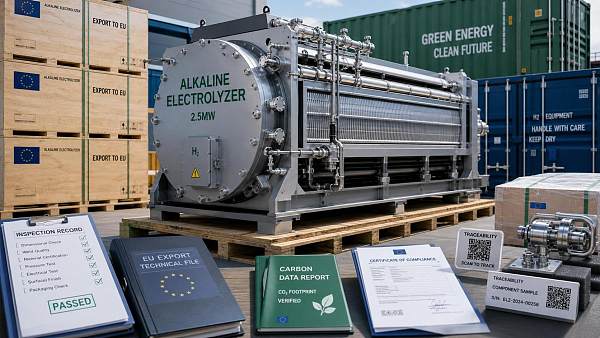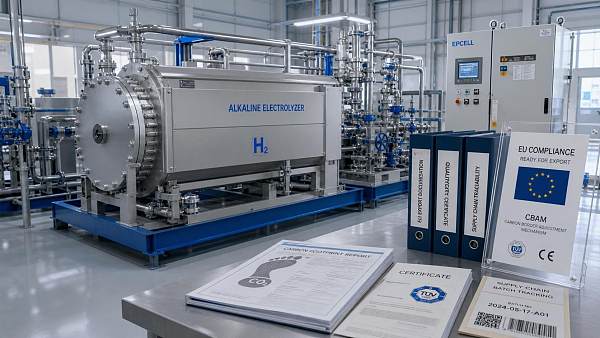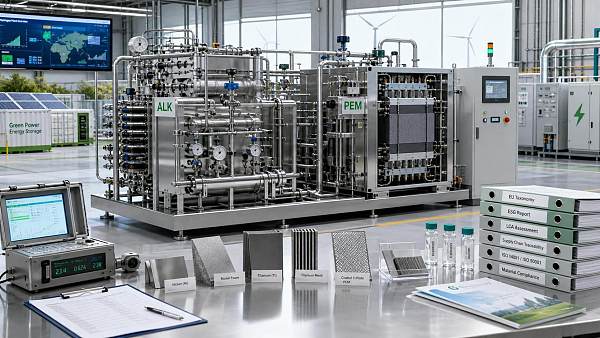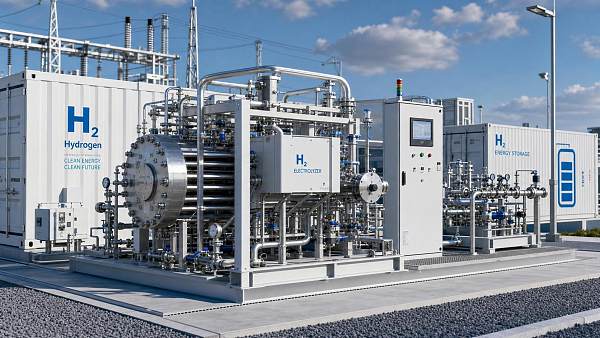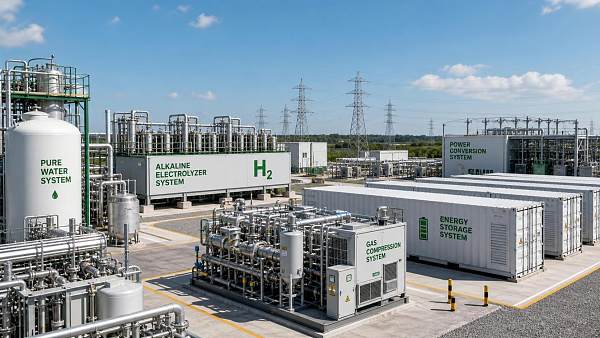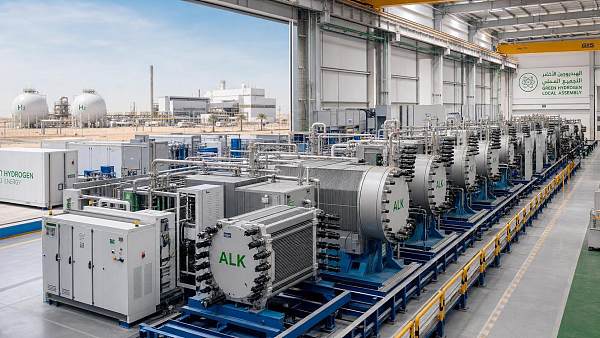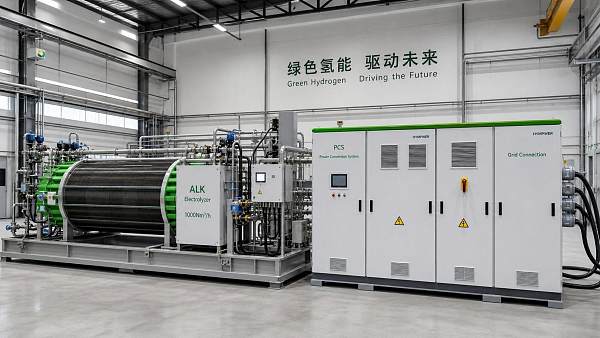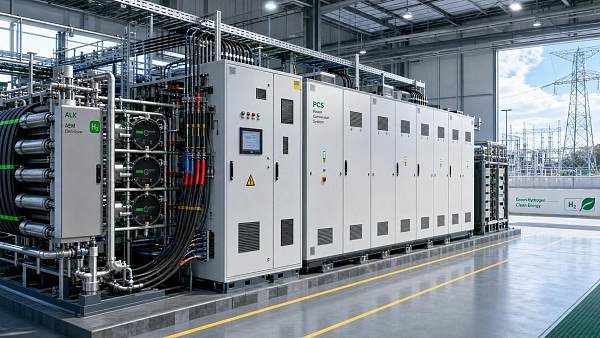
On June 30, 2026, a sharp increase in global ALK electrolyzer orders emerged alongside the first disbursements under the EU Hydrogen Bank’s €800M auction round. For the industry, this is not just a demand update; it is a practical signal that public funding mechanisms are beginning to shape procurement timing, project configuration, and delivery expectations. Manufacturers, buyers, supply chain service providers, certification-related firms, and export-facing businesses should pay close attention because the order mix already points to clearer preferences in market execution, especially around modular skid-mounted systems designed for Power-to-X microgrids.
What Has Been Confirmed So Far
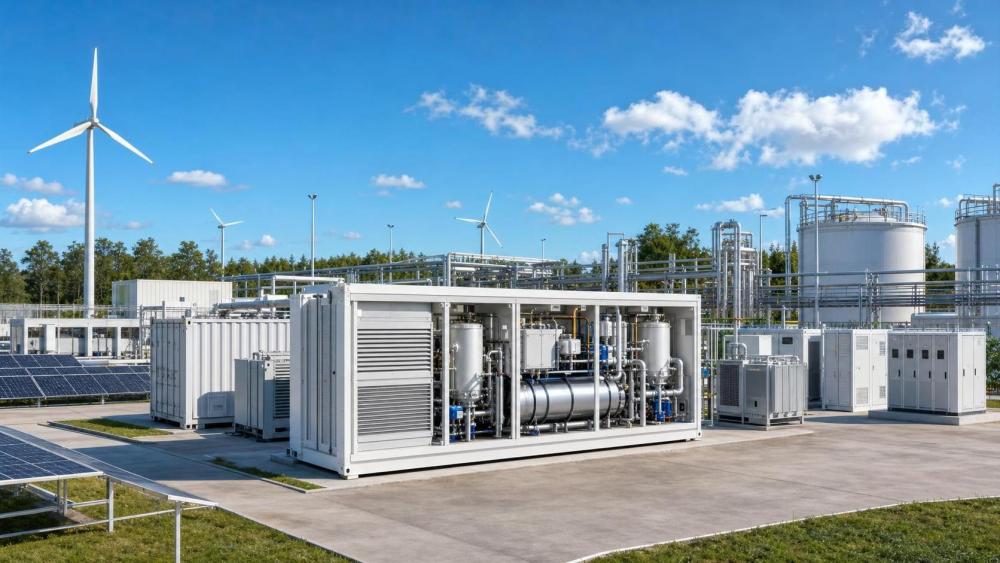
According to IEA Hydrogen Reports dated 2026-07-07, global ALK electrolyzer order volume increased by 32% month on month in June 2026. The reported jump was driven by the first disbursements from the EU Hydrogen Bank’s €800M auction round. The orders were led by demand from Spain, Germany, and Chile. The same report states that 68% of these orders specified modular skid-mounted designs that are compatible with Power-to-X microgrids.
Why This Funding Trigger Matters Across the Supply Chain
Procurement teams are facing a clearer funding-linked order pattern
From an industry perspective, buyers and project procurement teams may be among the first to feel the impact because disbursement-linked ordering can tighten the connection between funding milestones and equipment purchasing decisions. In practical terms, that can affect bid timing, supplier selection, technical specification alignment, and delivery sequencing. What deserves closer attention is whether procurement documentation, technical schedules, and project submission materials begin to reflect stronger preference for modular configurations.
Manufacturers may need to respond to configuration-specific demand
Analysis shows that ALK equipment manufacturers are likely to be affected less by volume alone and more by the concentration of orders around modular skid-mounted designs. This can influence production planning, technical documentation, packaging of system boundaries, and coordination with integrators working on Power-to-X microgrid applications. Companies involved in fabrication and assembly should watch for changes in customer requests related to standardized modules, interface descriptions, and delivery readiness documentation.
Trade and logistics service providers may see more documentation-sensitive execution
For export-oriented suppliers and supply chain service providers, the relevance lies in execution rather than headline demand. If more funded projects move from award stage into purchasing stage, the supporting flow of commercial documents, technical files, inspection records, shipment coordination, and handover materials may become more time-sensitive. Observably, this does not yet confirm a new trade rule by itself, but it does point to a business environment in which funding-linked compliance and delivery discipline may carry more weight.
Testing, certification, and after-sales functions may move earlier in the project cycle
Certification-related firms, inspection bodies, and after-sales service providers should also pay attention. Where procurement becomes more structured around funded project execution, technical conformity review, document completeness, and traceability expectations can move earlier in the order cycle. Analysis shows that businesses supporting commissioning, service readiness, and quality follow-up may need closer alignment with customers whose purchasing decisions are now tied more directly to formal project disbursement steps.
What Companies Should Watch Next
Track whether funding language starts reshaping bid documents
What deserves closer attention is whether future tender files, purchase specifications, or supplier qualification requests more clearly reflect the practical effects of the EU Hydrogen Bank disbursement process. The current information confirms a funding-triggered increase in orders, but it does not provide detailed execution rules. Companies should therefore monitor how project documents evolve before treating current demand signals as a fully standardized procurement model.
Review technical files for modular system alignment
Because 68% of the reported orders specified modular skid-mounted designs compatible with Power-to-X microgrids, suppliers should review whether their technical documents, interface descriptions, inspection materials, and configuration lists are ready for this type of demand. This is not proof that all future orders will follow the same pattern, but it is a concrete signal that modularization is becoming more prominent in current purchasing activity.
Prepare for tighter coordination between delivery plans and compliance evidence
Analysis shows that companies should pay attention to the practical link between delivery schedules and supporting records such as technical dossiers, quality documents, test records, and project-facing submission files. The available information does not establish any new mandatory certification rule, but it does suggest that funded order execution may place more emphasis on document readiness and handover discipline.
Watch country concentration without overgeneralizing it
Spain, Germany, and Chile dominated the reported orders, which makes these markets worth following from a sales, export, and service planning perspective. At the same time, the current information should not be overstated into a universal market conclusion. Businesses should treat this as a live signal about where funded purchasing momentum is currently visible, while continuing to verify whether the same pattern appears in later orders and project documentation.
How This Signal Should Be Read
Observably, this development is better understood as an execution signal rather than a complete regulatory conclusion. The confirmed fact is that disbursement from a public funding mechanism coincided with a significant month-on-month increase in ALK electrolyzer orders, with a strong tilt toward modular skid-mounted systems. From an industry perspective, that matters because it suggests rules and funding mechanisms are now influencing not only project economics but also how equipment is being specified and purchased. Still, the current information does not establish the full downstream requirements for certification, trade documentation, or delivery compliance, so further market observation remains necessary.
What This Means for Near-Term Market Interpretation
At this stage, it is more appropriate to understand the June order surge as evidence that funding disbursement is beginning to convert policy support into executable procurement behavior. The industry significance lies in the visible shift from policy intent to order placement, especially where modular ALK systems fit Power-to-X microgrid use cases. A neutral reading is warranted: the signal is concrete, but the detailed operating rules that may shape certification practice, procurement wording, and supplier qualification still need continued observation.
About the Basis of This Article
This article is generated based on the user-provided news title, event date, and event summary. The currently available facts come from the provided reference to IEA Hydrogen Reports dated 2026-07-07 and the stated event timing of 2026-06-30. For this type of development, source categories that are usually relevant include official announcements, regulatory publications, trade or customs authorities, industry association updates, standard-setting documents, tender materials, and reporting from authoritative industry media. No specific official source link was provided in the input, so the precise official documentation path still requires continued verification. What remains worth monitoring includes any subsequent policy detail, certification interpretation, procurement document changes, market feedback, and company-level execution outcomes.
Related News
 EU Funding Signals a New ALK Procurement ShiftHydrogen Tech ScientistEU funding and ALK procurement are reshaping the hydrogen market. Discover how EU Hydrogen Bank payouts boosted ALK electrolyzer orders and why modular Power-to-X systems are gaining ground.
![]() DOE Opens $420M ALK Export Loan TrackHydrogen Tech ScientistDOE Opens $420M ALK Export Loan Track: learn how the new DOE loan guarantee could reshape ALK electrolyzer exports, U.S. assembly strategy, foreign OEM access, and supply chain readiness.
DOE Opens $420M ALK Export Loan TrackHydrogen Tech ScientistDOE Opens $420M ALK Export Loan Track: learn how the new DOE loan guarantee could reshape ALK electrolyzer exports, U.S. assembly strategy, foreign OEM access, and supply chain readiness. ALK Electrolyzer Prices Fall as Export Rules TightenHydrogen Tech ScientistALK electrolyzer prices fall 12% as China boosts capacity, cuts lead times, and tightens export rules. Explore buyer risks, delivery shifts, and compliance impacts now.
 China Tightens ALK Export Checks for EU ShipmentsHydrogen Tech ScientistChina Tightens ALK Export Checks for EU Shipments: learn how new carbon data and Tier-2 traceability rules may disrupt EU-bound deliveries, impact compliance, and reshape export planning.
 EU Issues Final CBAM Transition Rules for ALK ElectrolyzersHydrogen Tech ScientistEU Issues Final CBAM Transition Rules for ALK Electrolyzers: learn how quarterly emissions reporting, traceability, and Q4 2026 verification will impact EU exports and compliance readiness.
 EU Moves to Bring Electrolyzers Into CBAMHydrogen Tech ScientistEU Moves to Bring Electrolyzers Into CBAM: learn how the 2027 proposal affects ALK and PEM electrolyzer suppliers, carbon reporting, ISO 14067 EPDs, and EU hydrogen project compliance.
 Hydrogen Electrolyzers ISO Certification ChecklistHydrogen Tech ScientistHydrogen electrolyzers ISO certification checklist: learn key standards, audit gaps, and practical steps to speed approval, reduce risk, and strengthen project credibility.
 Alkaline Electrolyzer Efficiency vs CAPEX: What Matters Most in Project PlanningHydrogen Tech ScientistAlkaline electrolyzer project planning starts with more than efficiency alone. Discover how CAPEX, power cost, utilization, and bankability shape smarter hydrogen investment decisions.
 NEOM Starts ALK Assembly Program, Grants First China LicensesHydrogen Tech ScientistNEOM starts its ALK assembly program with first China licenses, setting a $2.1/kg LCOH cap and ISO 22734-2:2025 interface rule. Learn what it means for suppliers, bids, compliance, and project delivery.
 Brazil ANP Sets PCS Integration Rule for ALK ExportsHydrogen Tech ScientistBrazil ANP sets PCS integration rule for ALK exports, requiring shared-cabinet control and on-site validation. Learn how electrolyzer makers and buyers can prepare for Brazil compliance.
 Brazil Mandates PCS-Integrated ALK ElectrolyzersHydrogen Tech ScientistBrazil mandates PCS-integrated ALK electrolyzers for new orders, requiring IEEE 1547-2018 Rev.2 support and joint certification. Learn what exporters, buyers, and project teams must do now.
 Brazil Sets Integrated PCS Rule for ALK Hydrogen BidsHydrogen Tech ScientistBrazil Sets Integrated PCS Rule for ALK Hydrogen Bids: discover how ANP’s new co-architecture and IEC 61850-7-42 requirements could reshape bidding, compliance, and market access.