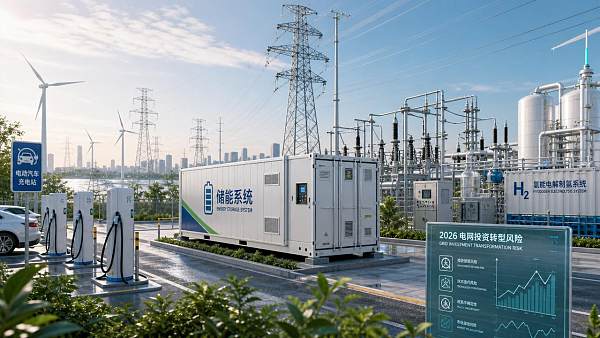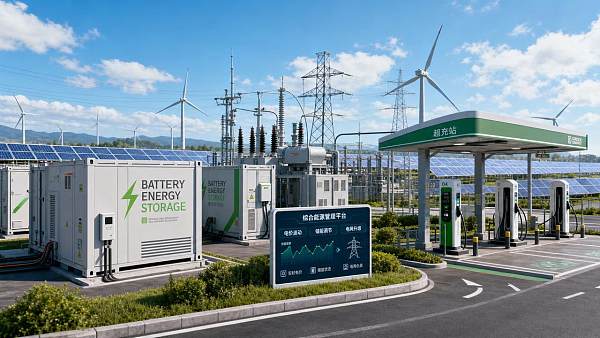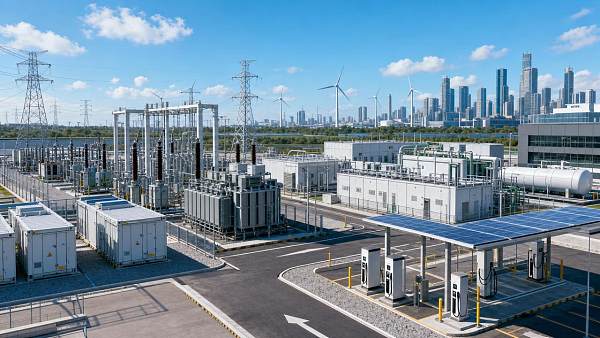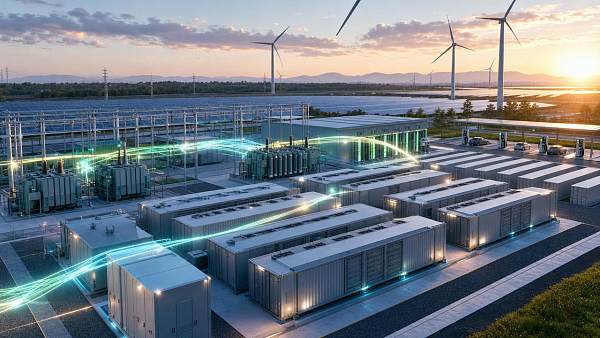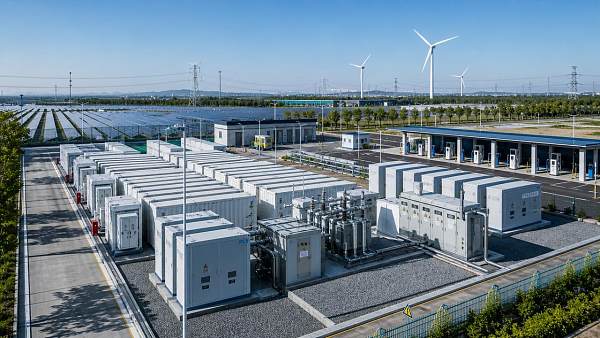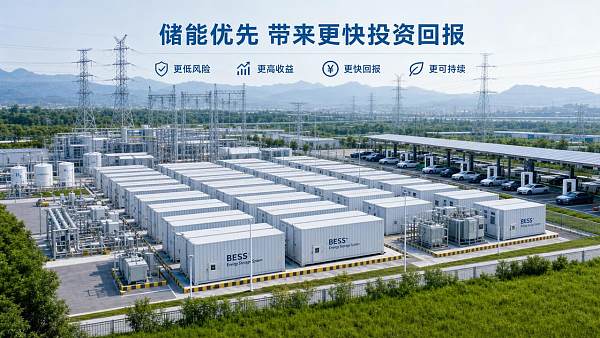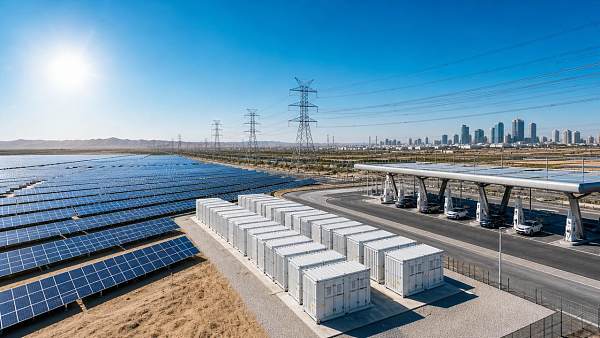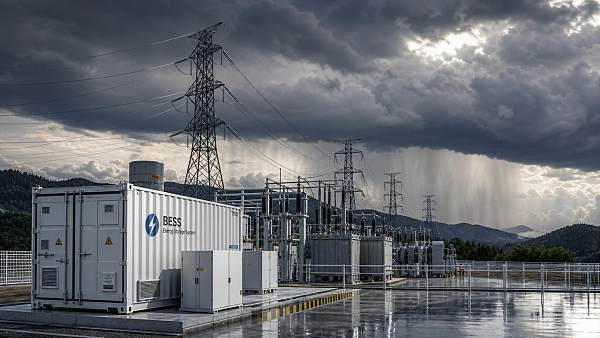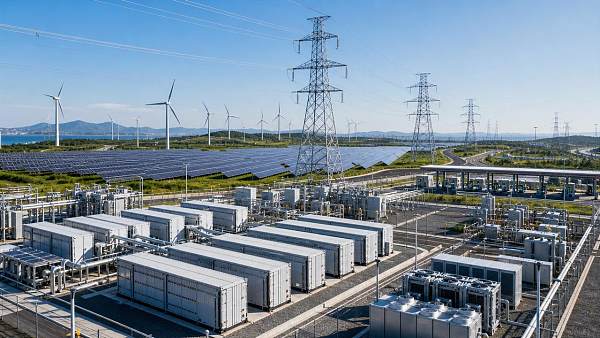
In 2026, energy transition risk has moved from scenario planning into capital allocation. Grid investment now sits at the intersection of reliability pressure, decarbonization targets, volatile equipment economics, and geopolitical uncertainty. For utilities, infrastructure investors, and industrial power users, the central question is no longer whether the energy transition will reshape the grid, but which risks will determine which assets remain bankable.
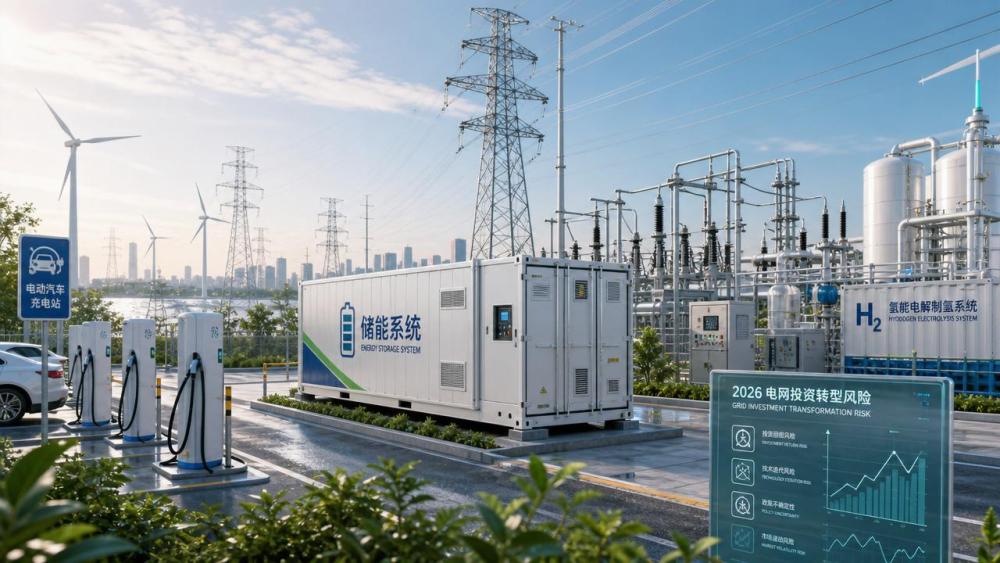
That shift matters because modern grid spending is no longer about wires alone. It includes grid-scale BESS containers, UHV transmission, smart T&D equipment, hydrogen electrolyzers, and EV charging networks. Each one expands flexibility, yet each also introduces new exposure around safety, dispatch complexity, regulation, and return timing.
Seen this way, energy transition risk is not simply a threat. It is a filter for better investment decisions. The organizations that understand where technical risk meets commercial risk are more likely to build resilient portfolios and avoid stranded grid capital.
Why 2026 marks a different stage of grid investment
The energy transition entered an earlier phase with strong emphasis on capacity additions. Solar, wind, storage, and charging deployment expanded quickly, often supported by policy momentum and abundant project finance.
By 2026, the market focus is sharper. Investors want assets that can survive grid congestion, changing tariff structures, cyber threats, permitting delays, and technology performance scrutiny. Growth still matters, but operational durability matters more.
This is especially visible in assets linked to power flow timing. BESS containers may improve peak shaving and ancillary services, yet value can erode if thermal management underperforms or market spreads compress. UHV lines can unlock remote renewables, yet returns slip when right-of-way, approvals, or interconnection sequencing fails.
In practical terms, the energy transition is now judged less by installed megawatts and more by controllable megawatts. That difference is reshaping how boardrooms rank projects.
What energy transition risk really means in grid terms
Energy transition risk is often discussed as a broad macro theme. For grid investment, it is more useful to treat it as a layered set of uncertainties affecting asset performance, system integration, and financing confidence.
Technical exposure
This includes battery degradation, thermal runaway pathways, transformer stress, inverter behavior, electrolyzer efficiency drift, and charging load volatility. These are engineering issues, but they directly influence insurance terms and revenue assumptions.
Network exposure
A project can be technically sound and still lose value inside a constrained network. Curtailment, substation bottlenecks, weak grid nodes, and frequency instability can reduce expected utilization.
Policy and compliance exposure
Grid assets live within evolving market rules. Safety codes, local content rules, export restrictions, interconnection reform, and storage fire standards can all change project economics.
Capital exposure
Interest rates, equipment price swings, merchant revenue volatility, and slower offtake decisions can undermine project models. In 2026, many assets look attractive on paper but fragile under stress testing.
The risk categories attracting the most attention
Several areas now dominate grid investment reviews because they sit closest to both system reliability and return visibility.
These categories are interconnected. A transmission bottleneck can reduce storage value. A charging hub can become a grid asset through V2G, but only with strong control systems. Hydrogen can absorb curtailed power, but only where electricity, water, and transport economics align.
How grid infrastructure priorities are changing
The most visible change is a move from single-asset thinking to system architecture thinking. A battery project, for example, is no longer evaluated only on duration and capex. It is assessed alongside PCS behavior, cooling design, fire separation, grid node value, software control, and service stacking potential.
The same logic applies to transmission. UHV transformers and HVDC corridors are gaining strategic relevance because they reduce spatial mismatch between remote clean generation and urban demand. In an energy transition shaped by geographic imbalance, long-distance transmission becomes a risk reducer, not just a transport asset.
Smart grid T&D equipment is also moving higher on the priority list. Fast fault isolation, substation intelligence, and millisecond-level power flow control are increasingly essential where renewable penetration is high. Without these capabilities, grid operators face growing balancing costs and weaker resilience during disturbance events.
This is where intelligence-led market interpretation becomes valuable. ESGS follows the technical and commercial links across BESS containers, UHV systems, electrolyzers, and charging infrastructure, helping decision frameworks reflect how these assets actually behave inside the same evolving power ecosystem.
Where practical business value is created
Grid investment in the energy transition creates value when flexibility becomes monetizable and reliability becomes measurable. That happens in several recurring scenarios.
- Independent storage sites capture peak-valley spreads, capacity payments, and grid services when dispatch algorithms and LCOS assumptions remain realistic.
- Industrial clusters reduce outage exposure by combining on-site storage, microgrid controls, and demand response.
- Mega charging and swapping hubs become flexible load centers when paired with smart scheduling and bidirectional charging.
- Hydrogen projects turn curtailed renewable output into storable energy carriers where direct grid export is constrained.
- Long-haul transmission unlocks stranded renewable value by linking distant generation to high-demand regions.
In each case, the best opportunities appear where physical assets and digital control are designed together. Hardware quality still matters, but software visibility, compliance readiness, and revenue design now shape investment outcomes just as strongly.
What to test before committing capital
Energy transition projects now require deeper diligence than a standard capacity-and-demand review. A more reliable approach is to test whether the asset can defend both stability and returns under imperfect conditions.
Look beyond nameplate metrics
Check usable performance in real operating windows. For storage, that includes thermal consistency, degradation pathways, response speed, and safety validation such as UL 9540A relevance.
Model grid interaction, not just asset output
A strong project model should include congestion, curtailment probability, ancillary service access, and local network reinforcement needs. Many energy transition failures start with weak interconnection assumptions.
Stress-test the control layer
Virtual coordination, cybersecurity, telemetry quality, and dispatch logic affect whether distributed assets can truly support the grid. This is especially critical for VPP-linked charging and C&I storage fleets.
Treat compliance as a value driver
Permitting, fire codes, export standards, and grid rules should be evaluated early. Compliance delays can destroy timing advantages even when the underlying technology is sound.
A clearer framework for the next decision cycle
The energy transition will keep expanding grid investment, but capital will flow more selectively. In 2026, the strongest projects are likely to be those that combine flexible hardware, secure digital coordination, credible safety design, and realistic monetization pathways.
A useful next step is to review planned grid assets through five lenses: technical resilience, network fit, compliance exposure, revenue durability, and optionality across future market rules. That framework helps separate headline growth stories from investments that can operate through volatility.
For anyone tracking BESS containers, UHV transmission, smart T&D systems, hydrogen electrolyzers, or charging infrastructure, the priority is not chasing every trend. It is understanding how energy transition risk changes the value of each asset once it meets the real grid. That is where better judgment begins, and where smarter grid investment is now being built.
Related News
 Energy Transition Risks Reshaping Grid Investment in 2026Mr. Orion SterlingEnergy transition risks are reshaping grid investment in 2026. Explore how storage, transmission, charging, and hydrogen risks impact returns, resilience, and bankable assets.
 Energy Market Insights: 5 Price Signals to Watch in 2026Mr. Orion SterlingEnergy market insights for 2026: discover 5 critical price signals shaping storage, grids, EV charging, and hydrogen—and make smarter investment decisions before volatility hits.
 When Energy Transition Consulting Delivers Measurable ROIMr. Orion SterlingEnergy transition consulting delivers measurable ROI by reducing risk, optimizing asset choices, and improving long-term returns across storage, grid, EV charging, and hydrogen projects.
 LCOS Analysis: What Really Drives Battery Project ROI?Mr. Orion SterlingLCOS analysis reveals what truly drives battery project ROI—utilization, degradation, augmentation, efficiency, and financing. Discover how to assess bankability and long-term returns.
![]() Renewable Energy Hubs: 2026 Market Shifts and Investment RisksMr. Orion SterlingRenewable energy hubs face major 2026 market shifts as investors focus on storage, grid resilience, EV demand, and hydrogen risks. See what makes projects bankable.
Renewable Energy Hubs: 2026 Market Shifts and Investment RisksMr. Orion SterlingRenewable energy hubs face major 2026 market shifts as investors focus on storage, grid resilience, EV demand, and hydrogen risks. See what makes projects bankable. Energy Arbitrage Explained: How Revenue Depends on Price SpreadsMr. Orion SterlingEnergy arbitrage explained: learn how price spreads, efficiency, timing, and market rules shape real battery storage returns—and how to judge profitable opportunities.
 Grid-Scale BESS Cost Drivers in 2026: Capex vs Lifetime ValueMr. Orion SterlingGrid-scale BESS costs in 2026 go beyond capex. Discover what really drives lifetime value, LCOS, efficiency, warranty strength, and long-term project returns.
 Energy Transition Solutions: What Delivers ROI First?Mr. Orion SterlingEnergy transition solutions ranked by fastest ROI: see why grid-scale BESS leads, where EV charging wins, and when smart grid, UHV, or hydrogen make financial sense.
 Energy Transition Technologies: Which Options Scale Safely in 2026?Mr. Orion SterlingEnergy transition technologies in 2026: discover which options scale safely across BESS, UHV, EV charging, and hydrogen—and what to verify before investing.
![]() 2026 Energy Intelligence Trends Reshaping Grid Investment ReturnsMr. Orion SterlingEnergy intelligence is redefining 2026 grid returns. Discover how smarter dispatch, safety data, and flexible asset strategy can improve ROI across storage, charging, transmission, and hydrogen.
2026 Energy Intelligence Trends Reshaping Grid Investment ReturnsMr. Orion SterlingEnergy intelligence is redefining 2026 grid returns. Discover how smarter dispatch, safety data, and flexible asset strategy can improve ROI across storage, charging, transmission, and hydrogen. Grid Resilience Solutions for Extreme WeatherMr. Orion SterlingGrid resilience solutions for extreme weather: integrate BESS, smart T&D, UHV, EV charging, and hydrogen systems to reduce outages and protect clean energy ROI.
 Grid Modernization Costs: What Impacts ROI MostMr. Orion SterlingGrid modernization costs can make or break ROI. Learn which investments improve reliability, reduce risk, unlock flexibility, and strengthen your business case.