In utility-scale storage and smart grid operations, millisecond grid control is no longer a technical luxury—it is a direct lever on ROI. For PCS and EMS planning, reaction speed now shapes dispatch quality, compliance certainty, and revenue capture.
As renewable penetration rises, frequency deviations, ramp events, and load swings happen faster and more often. That shift changes how storage, transformers, chargers, and hydrogen loads must coordinate in real time.
For the broader energy ecosystem, millisecond grid control links technical precision with commercial outcomes. It determines whether assets become flexible profit centers or underused infrastructure exposed to penalties and curtailment.
Why millisecond grid control is becoming a financial threshold

Grid economics used to reward installed capacity first. Today, markets increasingly reward response quality, response speed, and dispatch accuracy. That is where millisecond grid control starts changing project economics.
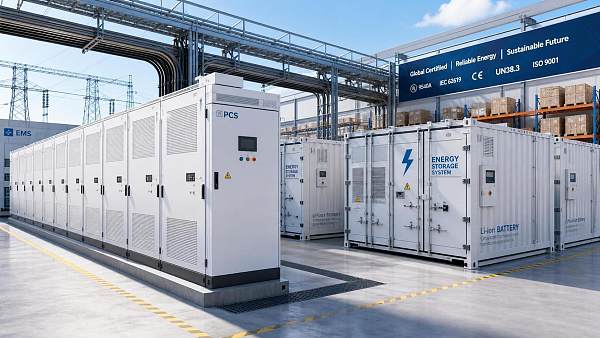
PCS hardware can switch power rapidly, but value appears only when EMS logic, communications, and site controls keep pace. A fast inverter with slow orchestration still leaves revenue on the table.
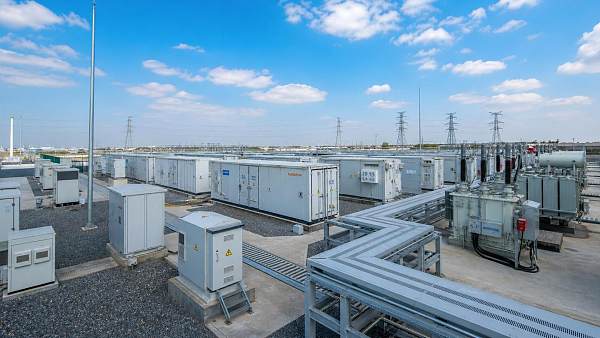
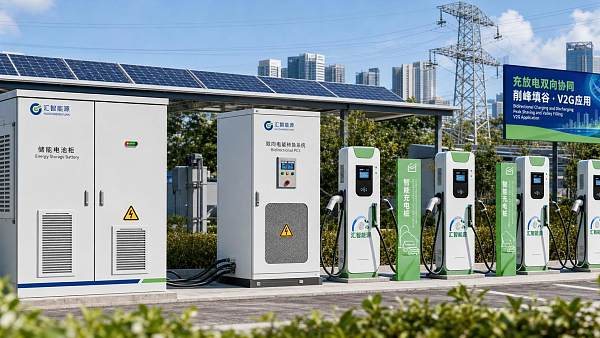
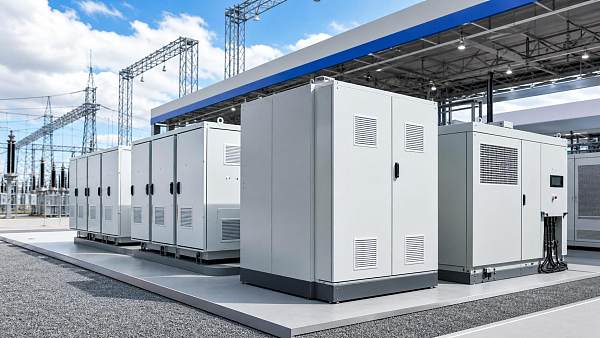
This is especially visible in grid-scale BESS containers, mega charging hubs, and hybrid renewable plants. Each depends on sub-second decisions to stabilize voltage, monetize flexibility, and protect equipment health.
In practical terms, millisecond grid control influences four profit lines: ancillary service revenue, renewable integration gains, asset life preservation, and avoidance of downtime or compliance losses.
The trend signals are clear across storage, transmission, charging, and hydrogen systems
Several market signals show that speed is moving from engineering preference to operating requirement. These signals appear across multiple infrastructure categories, not only inside battery projects.
- Ancillary service markets increasingly reward fast frequency response and precision dispatch.
- Renewable curtailment costs are pushing tighter control between generation, storage, and load centers.
- Ultra-fast EV charging sites create sharper power spikes that require smarter coordination.
- Hydrogen electrolyzers are being scheduled as flexible loads, demanding accurate grid interaction.
- Digital twins and VPP platforms now expose latency gaps that were previously hidden.
These shifts matter because modern infrastructure behaves like an interconnected control fabric. A delay in one node can reduce value across BESS, UHV transmission support, charging orchestration, and industrial load balancing.
What is driving the rise of millisecond grid control
The acceleration is not caused by one technology alone. It comes from market design, renewable variability, and the growing need to turn electrical flexibility into measurable earnings.
This explains why millisecond grid control is now discussed together with LCOS, dispatch algorithms, thermal management, and export compliance. The technical stack is becoming inseparable from the financial model.
Where speed changes ROI inside PCS and EMS architecture
Frequency response revenue becomes more bankable
Fast frequency response depends on detection, decision, and execution working together. Millisecond grid control shortens the path from disturbance sensing to inverter action and improves dispatch scoring.
That can increase cleared service hours, reduce underdelivery risk, and support stronger revenue forecasts. In volatile power systems, even small latency improvements can produce meaningful annual gains.
Peak-valley arbitrage becomes more accurate
Arbitrage is not only about buying low and selling high. It also depends on entering and exiting dispatch windows at the right moment, especially when prices move with renewable swings.
EMS platforms with stronger forecasting and lower control latency can align charge-discharge behavior with real conditions. That protects spreads and reduces missed opportunities caused by delayed execution.
Asset health improves when control speed prevents stress
Rapid control is also defensive. Faster coordination between PCS, BMS, and cooling systems can reduce harmful overshoot, thermal imbalance, and unstable cycling during grid events.
For large BESS fleets, that means lower degradation, fewer alarms, and better lifecycle economics. In many cases, preserved asset value rivals direct market revenue.
The impact spreads across interconnected business links
The value of millisecond grid control extends beyond storage dispatch. It influences how multiple energy assets cooperate across generation, transmission support, demand response, and transport electrification.
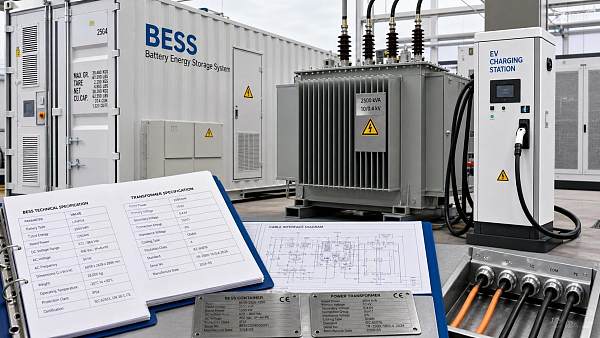
- BESS containers: faster balancing, tighter SOC control, and safer thermal coordination.
- Smart T&D equipment: improved fault ride-through and cleaner power flow adjustment.
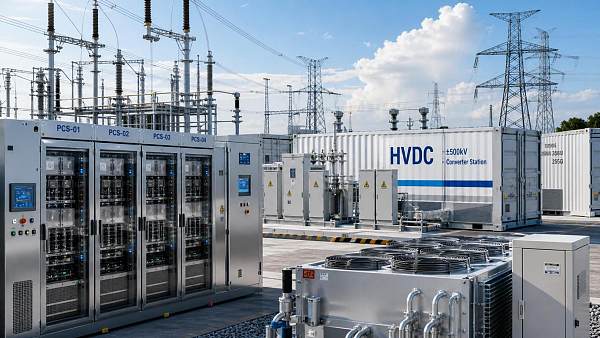
- UHV transmission interfaces: better support for remote renewable delivery stability.
- EV charging hubs: lower peak stress through coordinated ramp control and V2G timing.
- Hydrogen electrolyzers: more profitable flexible load participation during surplus generation periods.
This matters for integrated energy strategies. A site may earn more when storage, charging, and electrolyzer loads act as one coordinated portfolio rather than isolated assets with separate timing logic.
What deserves close attention before investing in faster control
Not every fast-control claim delivers equal value. The critical question is whether millisecond grid control improves full-system performance under real operating constraints, not only in lab conditions.
- Measure end-to-end latency, not inverter speed alone.
- Check EMS forecasting quality against local volatility patterns.
- Review communications architecture for bottlenecks and redundancy.
- Verify coordination with BMS, cooling, protection, and safety logic.
- Compare speed gains with revenue stack priorities in the target market.
- Test performance during abnormal events, not only normal dispatch cycles.
This is where intelligence platforms like ESGS add value. The real advantage comes from stitching control, safety, market design, and capital logic into one decision framework.
How to judge the next move in PCS and EMS strategy
A useful rule is simple: prioritize speed where the market pays for precision, where volatility is rising, and where coordination failures create expensive stress on assets.
The practical takeaway for the next planning cycle
The business case for millisecond grid control is no longer theoretical. In PCS and EMS design, speed increasingly determines whether infrastructure can fully monetize flexibility while staying safe and grid-compliant.
The strongest results come from treating control speed as a portfolio issue. Storage, transmission support, charging, and hydrogen loads should be assessed as coordinated value streams, not separate technical silos.
For the next step, benchmark actual latency, map revenue exposure, and test event-response quality under live scenarios. That is where millisecond grid control stops being a feature and starts becoming a return multiplier.
Related News
 Power Conversion Systems Manufacturer Checklist for Grid-Scale ProjectsGrid Storage ArchitectPower conversion systems manufacturer checklist for grid-scale projects: compare compliance, thermal design, integration, safety, and service to reduce risk and improve long-term returns.
 How Power Flow Control Systems Hardware Improves Grid StabilityGrid Storage ArchitectPower flow control systems hardware improves grid stability with faster fault response, voltage control, and renewable balancing. See how it supports BESS, EV charging, HVDC, and resilient power networks.
 How to Use an Energy Equipment Specification Format Without Missing Critical DataGrid Storage ArchitectEnergy equipment specification format guide: learn how to capture critical technical, compliance, and lifecycle data, reduce vendor gaps, and improve project delivery with a practical checklist.
 How Power Flow Algorithms for Grids Improve Stability and Dispatch AccuracyGrid Storage ArchitectPower flow algorithms for grids improve stability, congestion visibility, and dispatch accuracy across BESS, UHV, EV, and hydrogen networks—see how smarter modeling boosts grid decisions.
 FERC Order 2222 Lifts PCS and EMS OrdersGrid Storage ArchitectFERC Order 2222 lifts PCS and EMS orders as certified-unit lead times stretch to 26 weeks. Discover what this means for procurement, compliance, and market-ready delivery.
 When a Bidirectional Power Conversion System Pays OffGrid Storage ArchitectPower conversion system bidirectional designs pay off when arbitrage, demand shaving, grid services, and resilience stack together. Learn when the ROI is strong.
 Japan JIS C 8715-2:2026 Adds RISC-V Firmware Audit RulesGrid Storage ArchitectJapan JIS C 8715-2:2026 adds RISC-V firmware audit rules for PCS and EMS exports to Japan. Learn the new requirements for traceability, PMP, and secure boot compliance.
 TUV Rheinland Tightens PCS and EMS Cybersecurity TemplateGrid Storage ArchitectTUV Rheinland tightens PCS and EMS cybersecurity certification with a new IEC 62443-4-2:2026 SDL audit. Learn how this update may affect Germany and Europe energy storage exports, compliance timing, and certification readiness.
 Power Flow Control Systems: Key Selection FactorsGrid Storage ArchitectPower flow control systems are critical for BESS, EV charging, and grid stability. Discover the key selection factors that improve performance, reliability, and lifecycle value.
 Kehua Releases Grid-Forming Storage PaperGrid Storage ArchitectKehua Releases Grid-Forming Storage Paper, outlining grid-forming PCS functions, weak-grid delivery impact, and compliance signals shaping bids, testing, and project acceptance.
 Technical Comparison Resources for PCS and EMS Selection in BESS ProjectsGrid Storage ArchitectTechnical comparison resources for PCS and EMS selection in BESS projects: compare control logic, thermal safety, grid compliance, and lifecycle value to choose smarter, bankable storage solutions.
 Grid Dispatch Intelligence in Renewable Peak-Shaving ApplicationsGrid Storage ArchitectGrid dispatch intelligence drives smarter renewable peak-shaving by coordinating storage, transmission, EV charging, and hydrogen loads to cut curtailment, protect assets, and boost grid value.