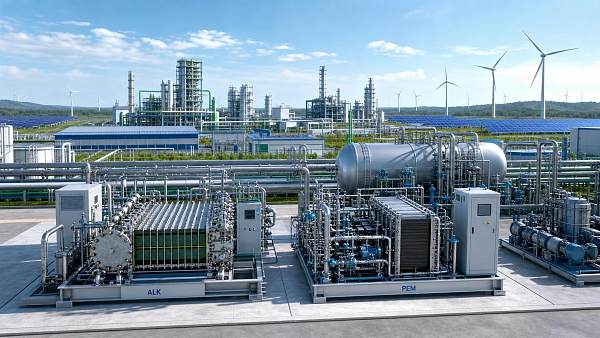
As green hydrogen projects move from pilot to scale, technical evaluators need a sharper lens on ALK electrolyzers and their real-world performance gaps.
In 2026, the central issue is no longer nameplate efficiency alone. It is where ALK electrolyzers lose energy across rectification, electrolyte circulation, gas separation, thermal control, and dynamic operation.
That shift matters across the broader energy infrastructure chain. It affects renewable matching, hydrogen delivery cost, grid flexibility, and the bankability of power-to-hydrogen assets.
For projects linked with BESS, UHV transmission, and smart dispatch, understanding ALK electrolyzers at loss-point level creates better benchmarking, cleaner specifications, and stronger system optimization.
Why 2026 puts ALK electrolyzers under a more exact efficiency lens
ALK electrolyzers remain attractive for large hydrogen plants because of mature design, lower stack cost, and long operating history.
Yet the operating context is changing fast. More systems now follow variable solar and wind power instead of steady industrial electricity.
That exposes losses which rated figures can hide. A stack may look efficient at nominal load, while auxiliary consumption rises sharply during ramping or partial-load operation.
At the same time, hydrogen buyers are asking for stricter purity, lower specific energy consumption, and clearer guarantees over annualized performance.
This is why ALK electrolyzers in 2026 should be assessed as integrated systems, not only as electrochemical stacks.
The strongest trend signals now come from system-level loss visibility
A clear market signal is the move from single-point efficiency claims toward full operating maps.
Those maps show how ALK electrolyzers behave at 20%, 40%, 60%, and 100% load, including startup, standby, and restart periods.
Another signal is the tighter connection between electrolyzers and grid services. Flexible plants are expected to absorb curtailed power without severe energy penalties.
A third signal is digitalization. Better sensors and SCADA analytics now reveal hidden losses in pumps, heat exchangers, degassers, and DC power electronics.
For a portal like ESGS, this is a familiar infrastructure story. As with BESS or HVDC systems, the biggest value often comes from understanding invisible conversion losses.
Where ALK electrolyzers typically lose efficiency in real operation
The most critical loss points can be grouped into electrochemical, electrical, thermal, and balance-of-plant categories.
1. Stack voltage losses and current distribution
Core stack losses arise from activation overpotential, ohmic resistance, and concentration effects inside ALK electrolyzers.
These losses increase when electrode aging, electrolyte contamination, separator degradation, or poor current distribution develops over time.
Cell-to-cell mismatch is especially important. Uneven voltage spreads can reduce average efficiency before alarms appear.
2. AC/DC conversion and rectifier losses
Many evaluations still underweight rectifier efficiency. However, AC/DC conversion losses can materially raise specific power consumption.
This becomes more visible when ALK electrolyzers operate under fluctuating renewable input and broad load ranges.
Low harmonic quality, transformer mismatch, and suboptimal power factor can also create hidden penalties upstream.
3. Gas purity control and crossover management
Hydrogen purity is not free. ALK electrolyzers spend energy managing gas-liquid separation, electrolyte carryover, and impurity removal.
At low load, gas crossover risk often rises. That may force conservative operation, purge routines, or additional separation duty.
Those measures protect safety, but they can reduce net efficiency and usable hydrogen output.
4. Thermal imbalance and cooling inefficiency
ALK electrolyzers work best within a controlled temperature band. Too cold, and resistance rises. Too hot, and degradation risk increases.
Inefficient heat removal, poor exchanger sizing, and uneven circulation can produce thermal pockets across the stack.
That weakens both efficiency and durability, especially during cycling operation linked to renewable variability.
5. Auxiliary load growth in balance-of-plant
Pumps, blowers, valves, water treatment, controls, and safety systems all consume power beyond the stack itself.
In large ALK electrolyzers, balance-of-plant losses can become decisive when operating hours are fragmented or capacity factor drops.
A plant with strong stack efficiency may still disappoint at net system level because auxiliaries are not optimized.
What is driving this tighter focus on ALK electrolyzers efficiency losses
Several forces are pushing the industry toward more granular performance checks.
How these losses affect projects beyond the electrolyzer island
The impact of ALK electrolyzers losses extends beyond hydrogen production volume.
In renewable-heavy plants, lower net efficiency means more solar or wind capacity is needed for the same hydrogen output.
In grid-connected configurations, poor load response can limit participation in curtailment absorption or flexible power dispatch.
When paired with BESS containers, mismatched electrolyzer dynamics may force extra battery cycling and raise total system cost.
For transmission-linked industrial corridors, lower electrolyzer efficiency can also weaken the value of long-distance green power delivery through UHV assets.
In short, ALK electrolyzers influence the economics of the whole green infrastructure chain, not just the hydrogen unit itself.
The most important checkpoints to review in 2026
When comparing ALK electrolyzers, the following checkpoints deserve close attention.
- Net system efficiency, not stack-only efficiency.
- Performance curves across broad load ranges.
- Rectifier efficiency under dynamic operation.
- Gas purity stability at partial load.
- Hydrogen crossover limits and safety margins.
- Auxiliary power share during startup and standby.
- Thermal control consistency between cells or modules.
- Electrolyte quality management and contamination sensitivity.
- Degradation rate under cycling rather than constant full-load testing.
- Data transparency from SCADA, historian, and diagnostics layers.
A practical judgment framework for benchmarking ALK electrolyzers
What deserves attention next as ALK electrolyzers scale further
The next phase will reward projects that link electrolyzer analytics with broader power system intelligence.
That means connecting ALK electrolyzers to forecasting, dispatch optimization, battery buffering, and thermal digital twins.
It also means moving from quarterly troubleshooting toward continuous loss accounting by subsystem.
A practical next step is to request time-series efficiency data, auxiliary load breakdowns, and part-load purity records before final technical conclusions.
In 2026, the most credible view of ALK electrolyzers will come from operational transparency, not headline claims.
For energy infrastructure strategies built around zero-carbon grids and transport, that level of detail is no longer optional. It is a core decision input.
Related News
 DOE Tightens ALK Import Traceability RulesHydrogen Tech ScientistDOE Tightens ALK Import Traceability Rules: learn how new U.S. origin declaration requirements for alkaline electrolyzers may affect exports, sourcing, customs clearance, and compliance planning.
 DOE Adds UL 62271-200 for Imported ElectrolyzersHydrogen Tech ScientistDOE Adds UL 62271-200 for Imported Electrolyzers: learn how the new U.S. rule affects ALK and PEM shipments, certification timing, compliance costs, and market access from Sept. 1, 2026.
 DOE Opens ALK Export Pre-Screening for Southeast Asia and Middle EastHydrogen Tech ScientistDOE opens ALK export pre-screening for Southeast Asia and the Middle East via H2Export Portal 3.0. Learn how the 72-hour compliance review can speed bids, reduce risk, and improve export readiness.
 DOE Opens Export Support for ALK Electrolyzer SuppliersHydrogen Tech ScientistDOE opens export support for ALK electrolyzer suppliers, covering up to 30% of certification, packaging, and pre-testing costs. See who qualifies and how to act before the 2026 deadline.
 Hydrogen Electrolyzer for Ammonia Plant: ALK vs PEM Selection FactorsHydrogen Tech ScientistHydrogen electrolyzer for ammonia plant selection starts here: compare ALK vs PEM on flexibility, purity, CAPEX, and lifecycle fit to choose the right solution with confidence.
 EU Funding Signals a New ALK Procurement ShiftHydrogen Tech ScientistEU funding and ALK procurement are reshaping the hydrogen market. Discover how EU Hydrogen Bank payouts boosted ALK electrolyzer orders and why modular Power-to-X systems are gaining ground.
![]() DOE Opens $420M ALK Export Loan TrackHydrogen Tech ScientistDOE Opens $420M ALK Export Loan Track: learn how the new DOE loan guarantee could reshape ALK electrolyzer exports, U.S. assembly strategy, foreign OEM access, and supply chain readiness.
DOE Opens $420M ALK Export Loan TrackHydrogen Tech ScientistDOE Opens $420M ALK Export Loan Track: learn how the new DOE loan guarantee could reshape ALK electrolyzer exports, U.S. assembly strategy, foreign OEM access, and supply chain readiness. ALK Electrolyzer Prices Fall as Export Rules TightenHydrogen Tech ScientistALK electrolyzer prices fall 12% as China boosts capacity, cuts lead times, and tightens export rules. Explore buyer risks, delivery shifts, and compliance impacts now.
 China Tightens ALK Export Checks for EU ShipmentsHydrogen Tech ScientistChina Tightens ALK Export Checks for EU Shipments: learn how new carbon data and Tier-2 traceability rules may disrupt EU-bound deliveries, impact compliance, and reshape export planning.
 EU Issues Final CBAM Transition Rules for ALK ElectrolyzersHydrogen Tech ScientistEU Issues Final CBAM Transition Rules for ALK Electrolyzers: learn how quarterly emissions reporting, traceability, and Q4 2026 verification will impact EU exports and compliance readiness.
 EU Moves to Bring Electrolyzers Into CBAMHydrogen Tech ScientistEU Moves to Bring Electrolyzers Into CBAM: learn how the 2027 proposal affects ALK and PEM electrolyzer suppliers, carbon reporting, ISO 14067 EPDs, and EU hydrogen project compliance.
 Hydrogen Electrolyzers ISO Certification ChecklistHydrogen Tech ScientistHydrogen electrolyzers ISO certification checklist: learn key standards, audit gaps, and practical steps to speed approval, reduce risk, and strengthen project credibility.